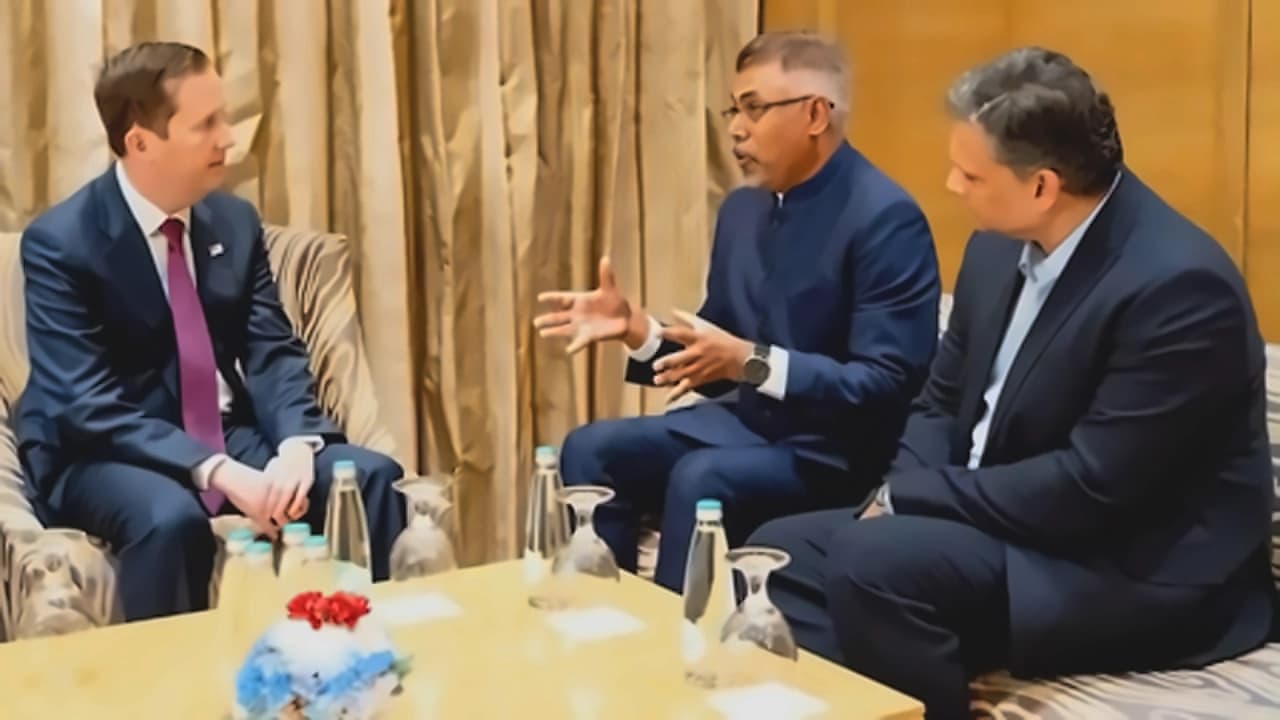
US Ambassador to India Sergio Gor announced that Washington and New Delhi are moving towards joint space technology development, startup funding and lunar exploration, with both countries seeking to deepen cooperation beyond traditional cooperation. Speaking at the ninth edition of the Bengaluru Space Expo (BSX) 2026, Gor emphasized that "We are no longer just sharing data; we are co-designing instruments, co-funding startups, and co-authoring the future of human discovery." The ambassador noted that the ninth US-India Civil Space Joint Working Group recently held in Bengaluru affirmed that our partnership is no longer just about cooperation; it is about co-creation. He highlighted that US President Donald Trump and Prime Minister Narendra Modi had recognised this synergy when they established the TRUST initiative -- Transforming the Relationship Utilizing Strategic Technology.
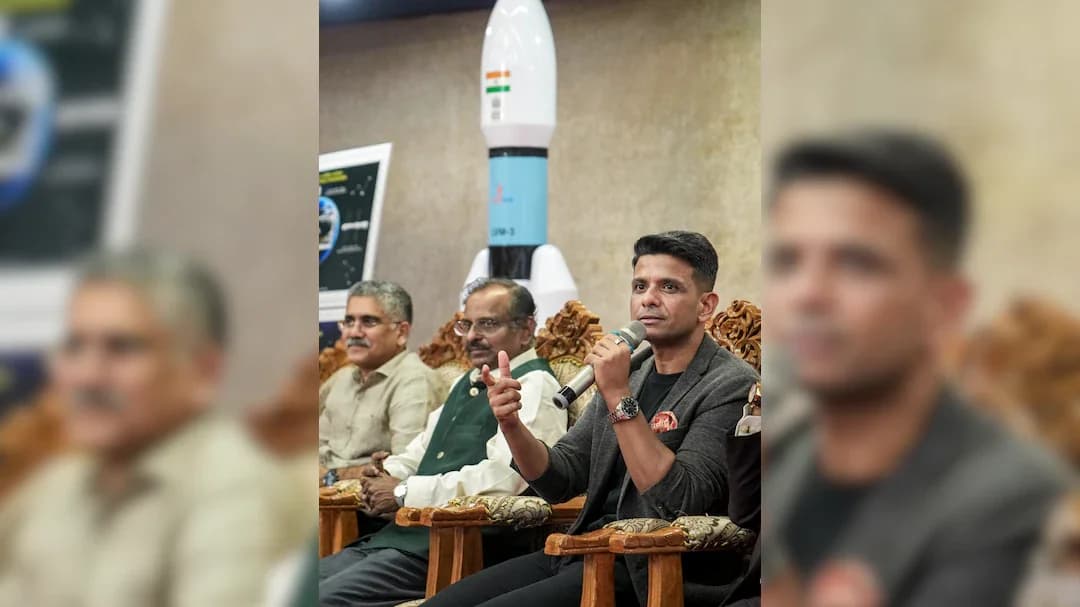
Group Captain Shubhanshu Shukla, India's second astronaut who traveled to space in June 2025 as mission pilot of Axiom Mission 4, emphasized that international collaboration remains the inherent strength of the space sector during his address at BSX 2026. As reported by Business Standard, Shukla stated that "People from different parts of the world came together and worked towards a common cause to accomplish the mission I was part of. It was truly heartening to witness this spirit of cooperation, which is an inherent strength of the space sector." He noted that "The strongest feeling one experiences when seeing the Earth from space is that Earth is home. It is not the country or the city, but planet Earth that becomes your identity." Shukla highlighted that India's space sector is exploding with very important missions ahead, including the Bharatiya Antariksh Station and lunar landing missions.
US Ambassador to India Sergio Gor and Karnataka Chief Minister DK Shivakumar on Sunday jointly pitched for deeper India-US cooperation in technology, education, innovation, research, investment and culture. Speaking at an event marking the 250th anniversary of American independence, Shivakumar said the India-US relationship was moving beyond traditional government-to-government engagement, with universities, scientists, entrepreneurs, start-ups and businesses playing an increasingly important role. "Washington and New Delhi may guide the strategic partnership between our countries. But Bengaluru and Silicon Valley give it a powerful technological dimension," he stated. The chief minister emphasized that Karnataka's ambition is to be among those who shape, build and lead the technologies of tomorrow, with the relationship between the two countries needing to be strengthened through the exchange of knowledge, ideas and talent, apart from commerce and investment.
Shivakumar highlighted that more than 1,000 American companies operate in Karnataka, accounting for nearly half of the total American corporate presence in India, while more than 80,000 American citizens live in Bengaluru. He said Bengaluru has emerged as a major global gateway to India, with the city having one of the highest concentrations of international schools in the country. The chief minister noted that Foxconn, which manufactures Apple iPhones, has its largest presence in India in Bengaluru, and the state's Aerospace Park is also expanding. He recalled former prime minister Atal Bihari Vajpayee's observation that "today, the world comes to Bengaluru," stating "The world looks at India through Bengaluru."
Gor highlighted the success of the NISAR joint NASA-ISRO Earth observation satellite, stating "When a devastating earthquake struck Venezuela just two months ago, NISAR's radar data penetrated dense cloud cover and dust to guide emergency responders directly to ground zero." He also recalled that last year, Group Captain Shubhanshu Shukla flew to the International Space Station in a landmark moment for India, made possible through American partnership. The ambassador noted that India was a proud signatory of the Artemis Accords and that NASA had officially invited ISRO to join the Moon base programme, stating "Make no mistake: we're going back to the Moon, and we want India by our side on the lunar surface." Shukla emphasized that India's space sector reforms had ignited a commercial awakening, with startups emerging in areas including Earth observation, space situational awareness and launch technologies.
Biju S R, Director, Human Space Flight Centre (HSFC), ISRO, provided comprehensive updates on India's human spaceflight programme during the BSX 2026 plenary session. As reported by Business Standard, he highlighted that ISRO has progressed from developing a rocket capable of placing a 40-kg-class payload into low Earth orbit in 1980 to developing the LVM3 capable of carrying about 10 tonnes to LEO. S S Vinod, Project Director, Gaganyaan, ISRO, emphasized that crew safety remains the foremost priority across every mission stage, from pre-launch and ascent to on-orbit, descent and recovery phases. The Gaganyaan programme includes human-rated launch vehicles, crew and service modules, advanced crew escape systems and integrated health-monitoring systems. The Gaganyaan Crew Module is equipped with a parachute-based deceleration system comprising 10 parachutes of four types, developed with support from DRDO, to bring touchdown velocity down to about 8 m/s. ISRO has established Gaganyaan Control Centres at Sriharikota and Bengaluru to support mission operations.