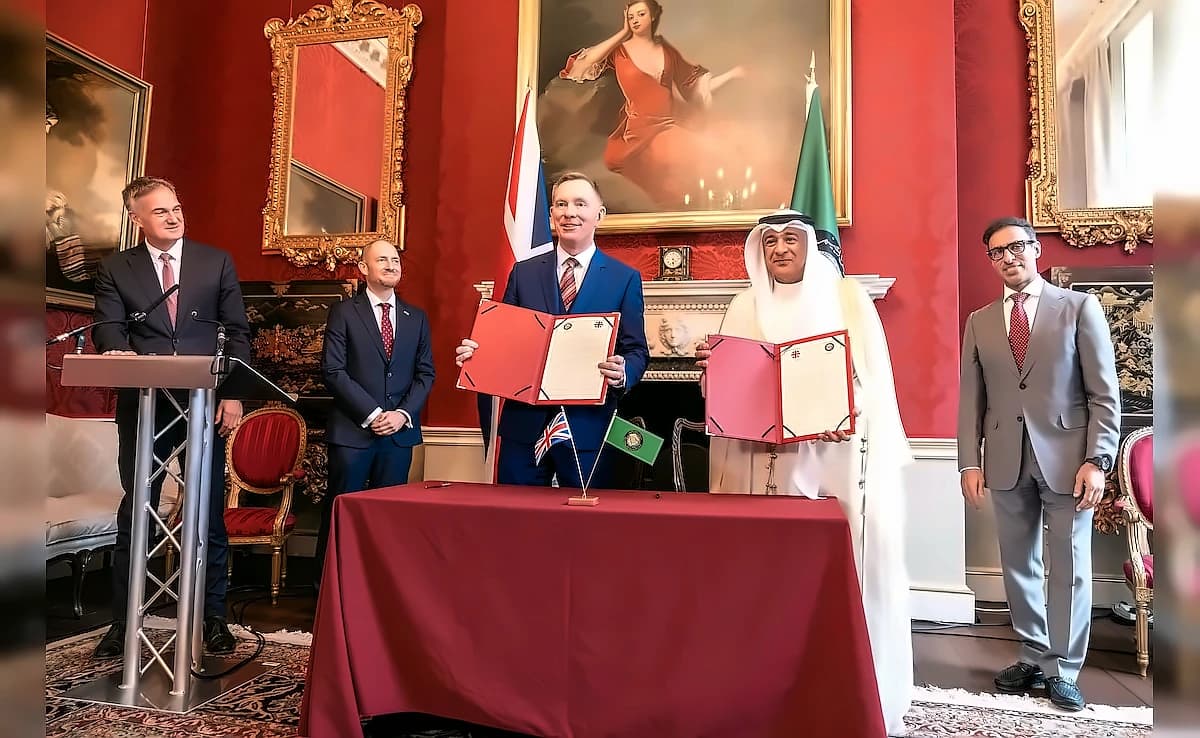
Maharashtra Chief Minister Devendra Fadnavis made a strong pitch to the UK trade delegation, emphasizing the state's investment-friendly ecosystem and inviting UK businesses to invest in the region. The CM's pitch was delivered during the delegation's visit to Maharashtra, with Protocol Minister Jaykumar Rawal, Principal Secretary of the Industries Department P. Anbalagan, Chief Protocol Officer Rajesh Gawande and Chief Minister's Investment Adviser Kaustubh Dhavse present at the event. The delegation included Scotland's Cabinet Secretary for Rural Affairs, Land Reform and Islands Dame Angela Eagle; UK Secretary of State Douglas Alexander; Director for EU and International Trade Sophie Bryce; UK Deputy Trade Commissioner for South Asia Harshbir Sangha; and UK Trade Commissioner for South Asia and Deputy High Commissioner for Western India Harjinder Kang, along with mayors and other officials, as reported by ANI.
A significant UK trade delegation has signed a growth partnership aimed at deepening economic cooperation between the UK and India, as reported by Business Standard. The delegation is headed by His Majesty's Trade Commissioner for South Asia Harjinder Kang, Deputy Trade Commissioner for South Asia Jaya Chordia and Trade Counsellor Mark Birrell. The visiting delegation includes three Cabinet ministers, seven mayors and around 200 businesses, universities and organisations, making it one of the largest UK trade delegations to visit India. Officials accompanying the delegation said communities across the UK and India are expected to benefit from more than £1 billion in new deals. Secretary of State for Business, Innovation, Science and Trade Jonathan Reynolds said the agreement had created a platform for deeper regional and business engagement, with businesses on the delegation reporting that opportunities are even greater than initially anticipated. As per Fortune India, Reynolds emphasized that "this is one of the biggest trade delegations UK has ever taken to any country" and noted that the CETA trade deal is having a significant impact on business engagement.
The partnership comes as the UK-India Free Trade Agreement now in force, which is expected to generate an additional £25 billion in annual bilateral trade over the long term, according to Business Standard reports. The FTA is supported by tariff reductions and provisions intended to ease business mobility between the two countries. Secretary of State Jonathan Reynolds highlighted advanced manufacturing, life sciences, sport and culture as areas with significant potential for collaboration. He emphasized the importance of state-level partnerships in ensuring that the benefits of the trade agreement reach businesses on the ground, stating that regional businesses are now walking through the door opened by the trade deal. As per Fortune India, Reynolds noted that "no sector would be left untouched" and highlighted that "the wins for Indian businesses are extensive, particularly agriculture, leather goods and improving business mobility". He emphasized the importance of translating FTA gains into investments, business contracts and jobs, with the focus on converting initial discussions into measurable outcomes.
Greater Manchester Mayor Bev Craig highlighted Maharashtra's business ecosystem, infrastructure development and fintech sector as areas of significant opportunity for collaboration, as reported by Business Standard. The region is targeting collaboration across life sciences, digital technology, artificial intelligence, cybersecurity, financial and professional services, and advanced materials. Craig cited ongoing engagement with Indian companies such as Tata Consultancy Services, Hexaware, Infosys and Keva, alongside opportunities for university partnerships and business-to-business deals. She emphasized that Greater Manchester is known for getting things done and delivering, with businesses already reporting progress in their discussions. According to Fortune India, Craig disclosed that "by the end of the week, several company-related announcements will be made" and noted that "Greater Manchester has grown at near 3.1% pace of growth, which is anywhere else in the UK." She emphasized that "jobs and investments can be taken back home, would be hugely beneficial to businesses here in India" and highlighted the potential for sports collaboration through cricket franchises.

Craig announced that Indian businesses had announced investments worth £50 million in Manchester, which are expected to create jobs, as reported by The Times of India. The North East region is also targeting finance, digital technology and other emerging sectors. McGuinness emphasized supporting small businesses looking to enter new markets, stating that mayors provide introductions to like-minded businesses and highlighting the role of UK government in encouraging Indian authorities to provide similar support. She noted that businesses may require more than one visit to convert initial discussions into investments, underlining the importance of continued engagement between the two markets. As per Fortune India, Craig emphasized that "by the end of the week, some clear things will be announced, there will be partnerships, trades, business partnerships. TCS, Hexaware and Infosys bring job opportunities" and noted that the Sanjiv Goenka-led RPSG Group owns a 70% stake in Manchester Originals, in The Hundred cricket franchise, with the balance being held by Lancashire Cricket Club.
The delegation's engagement with India extends beyond large corporations to include smaller businesses, with North East England Mayor Kim McGuinness emphasizing support for smaller businesses building connections with potential partners and investors, as reported by The Times of India. The UK has also identified India as a market for deeper collaboration in education, research, sport and culture, with officials highlighting the potential for partnerships between universities and businesses. The delegation will travel across Delhi, Mumbai, Bengaluru and Kolkata from October 12 to 16, 2026, according to The Times of India. As both countries seek to capitalize on the trade agreement, the focus will increasingly be on whether regional partnerships produce measurable investments, new contracts and employment opportunities, with officials pointing to "states as the starting point for expanding economic cooperation" beyond federal-level agreements.