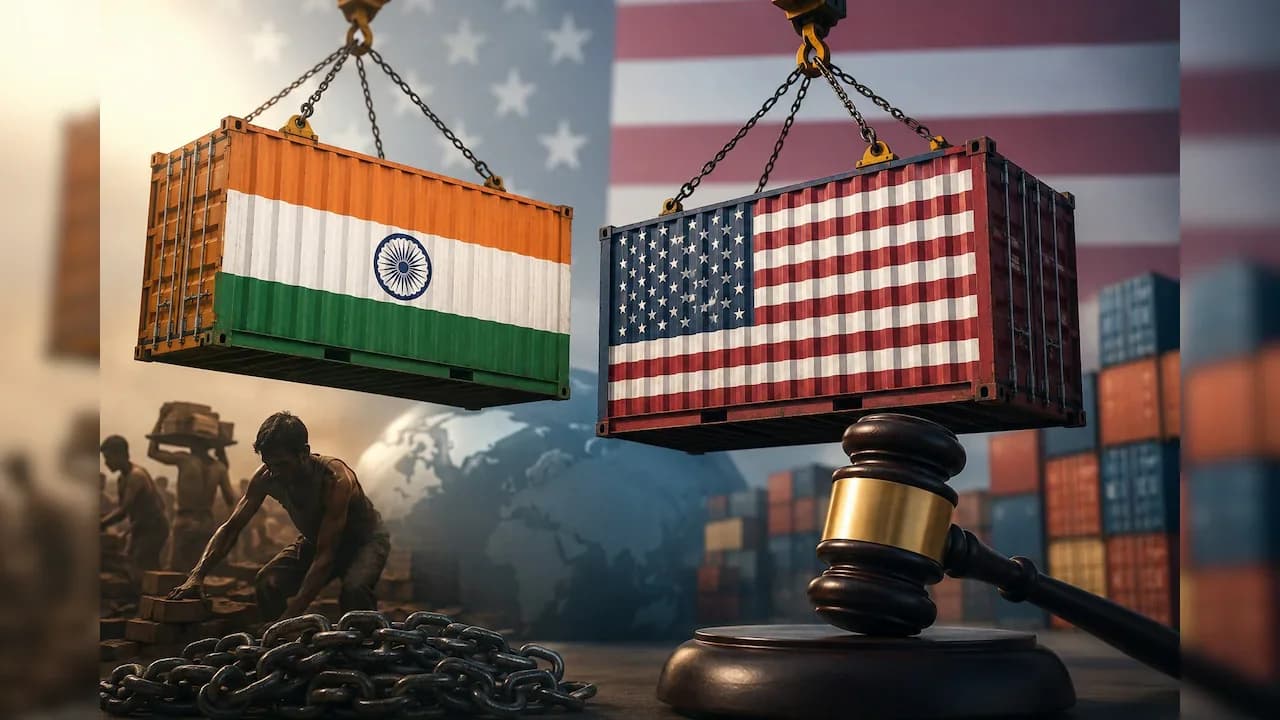
The 10% temporary tariff imposed by the US on imports from India and other trading partners is set to expire at 9:31 am IST on July 24, unless President Donald Trump's administration extends the measure or announces a new tariff regime. According to Business Standard, if no fresh announcement is made in the next few hours, imports from India and other US trading partners will revert to the tariff regime that existed before April 2, 2025, when no additional duty was in place. The Section 122 tariff, announced on February 20, 2026, took effect on February 24, 2026, and remained in force for the maximum statutory period of 150 days. For example, a shirt exported from India that attracted a 5% Most Favoured Nation (MFN) duty in the US has been subject to an additional 10% tariff since February 24, but will again attract only the 5% MFN duty if the temporary tariff expires without being extended.
With the current authority expiring this week and Congress unlikely to extend it, the White House is now expected to shift to Section 301 of the Trade Act of 1974, a provision that authorises tariffs in response to what the US considers unfair foreign trade practices or violations of international trade agreements. According to Business Standard, the US, on Wednesday, said it will release the 'final responsive action' on Section 301 investigations on 60 trading partners, including India, on the issue of forced labour 'as soon as tomorrow', before the 10% additional tariffs on all countries expire. The Office of the US Trade Representative (USTR) has proposed tariffs of 10% on imports from 14 countries and the European Union, while 45 other countries, including China, could face 12.5% duties. As reported by The Times of India, USTR Jamieson Greer told CNBC that the proposed 301 tariffs on 60 countries would cover about 99% of US trade, highlighting the comprehensive scope of the administration's enforcement strategy. The administration has also invoked the never-used Section 338 of the Tariff Act of 1930 to impose 50% duty on $20 billion Canadian goods, including wine, hockey sticks, cement and other products, while excluding energy, potash, fish and critical minerals.
US Trade Representative Jamieson Greer told the Senate Finance Committee on Wednesday that his office would release its 'final responsive action' on the forced-labor investigation 'as soon as tomorrow', as reported by The Economic Times. The announcement is expected just ahead of the July 24 expiry of President Donald Trump's 10% global tariffs imposed under Section 122 of the Trade Act of 1974. The investigation, launched in March under Section 301 of the Trade Act of 1974, concluded that the acts, policies and practices of the economies concerned were 'unreasonable' and burden or restrict US commerce, making them actionable under the law. Under the USTR's proposal, India is among 54 economies that have neither adopted nor effectively enforced prohibitions on imports produced with forced labour, along with China, Australia, Brazil, Japan, South Korea, the United Kingdom, Saudi Arabia, Singapore, Switzerland, Thailand, Vietnam and the United Arab Emirates. These economies would face an additional tariff of 12.5%, while the remaining six economies -- Canada, Ecuador, the European Union, Indonesia, Mexico and Pakistan -- were found to have failed to effectively enforce existing prohibitions and may face an additional 10% tariff. India has challenged both investigations, arguing that they do not meet the legal requirements for initiation and has urged the USTR to terminate the proceedings, according to the Commerce Ministry.

The administration is also investigating global manufacturing overcapacity, a move that could provide the legal foundation for additional tariffs on countries accused of using excessive industrial subsidies or maintaining artificially high production levels that distort global markets. According to the Financial Times, this investigation represents a significant expansion of the administration's trade enforcement capabilities beyond the immediate tariff measures. The second major Section 301 probe examines whether 16 trading partners, including India, China and the European Union, are creating structural excess manufacturing capacity that depresses global prices and disadvantages US producers. India has rejected allegations in this structural excess capacity investigation, calling them unsubstantiated and lacking a cogent rationale, as reported by the Commerce Ministry. The ministry confirmed that products already covered under Section 232 tariffs, along with certain other items, have been excluded from the proposed action, and pointed to a special mechanism for textiles and apparel that could allow a specified volume of imports from selected economies to enter the US market at lower tariff rates.
Over the past year, Indian exports to the United States have passed through three distinct tariff regimes, according to the Global Trade Research Initiative (GTRI). Between August 27, 2025 and February 23, 2026, most Indian exports faced additional reciprocal tariffs imposed by the Trump administration. About 55% of India's exports, including engineering goods, textiles and garments, chemicals, machinery, plastics, leather products, gems and jewellery, furniture and most other manufactured goods, paid the normal US MFN tariff plus an additional 50% tariff consisting of a 25% reciprocal tariff and another 25% surcharge linked to India's purchases of Russian oil. However, another 37% of India's exports, including smartphones, semiconductors, pharmaceuticals and energy products, were exempt from the reciprocal tariff regime and continued to pay only the applicable MFN tariff. During April-June 2026-27, India's merchandise exports to America declined marginally by 0.06% to $25.46 billion, while imports increased 23.82% to $16.65 billion. Economic think tank GTRI said that from 9:31 am IST on July 24, around 92% of India's $87.2-billion merchandise exports to the US will once again be subject only to the normal WTO-compatible US MFN tariffs. The relief comes after the US Supreme Court struck down Trump's reciprocal tariffs on February 20, ruling that the administration lacked authority under the International Emergency Economic Powers Act (IEEPA) to impose them.