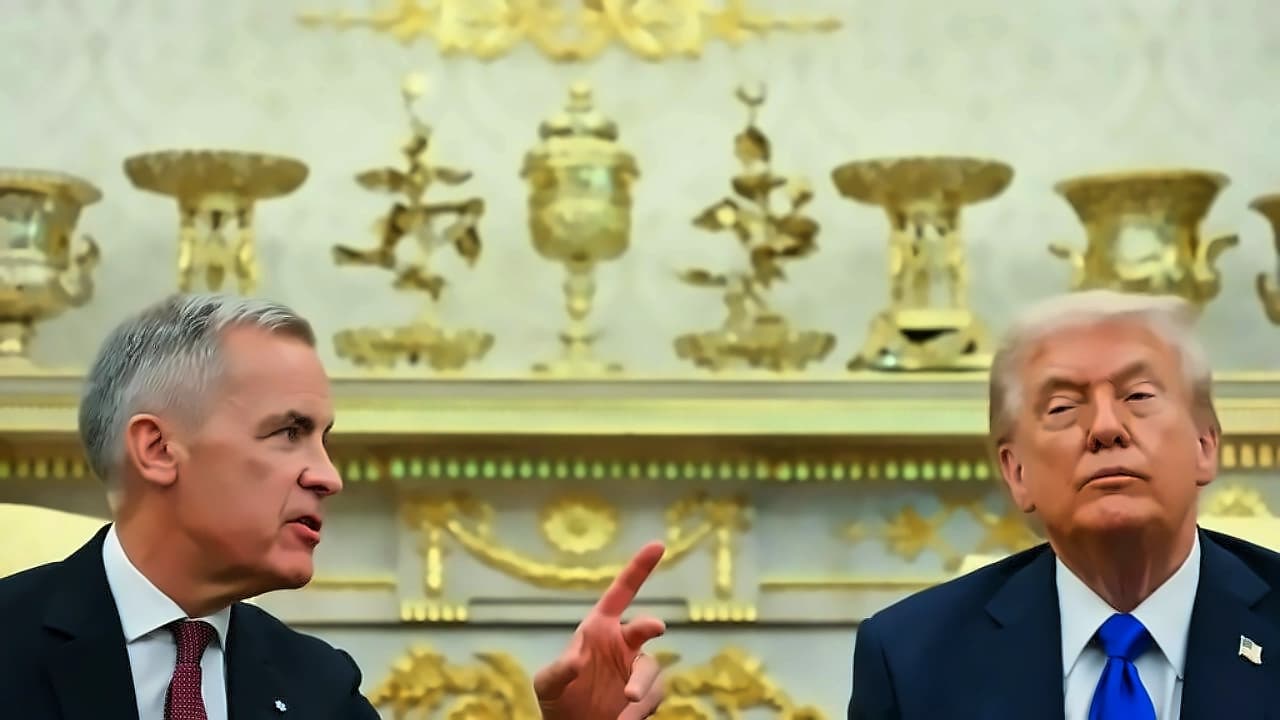
The latest U.S. tariffs on Canadian goods took effect Tuesday as Washington continued its trade war with Canada. According to The Canadian Press, the White House imposed 50% tariffs on goods representing about 0.6% of U.S. imports from Canada, including outboard motorboats and metal and paper products. However, American officials also removed 50% tariffs on goods representing about 0.5% of U.S. imports from Canada, including cement, sugar, toilet paper and fishing rods. This represents the latest stage of an evolving trade war that erupted after Canada walked away from formal trade negotiations last month, with Prime Minister Mark Carney stating the Americans made last-minute demands that would have undermined Canada's sovereignty. The escalation comes as Trump has slapped 50% tariffs on $20 billion worth of Canadian goods imported into the US, with the latest measures targeting specific products such as whey, some alcoholic beverages, motorcycles and mopeds when Canada retaliated with matching tariffs.
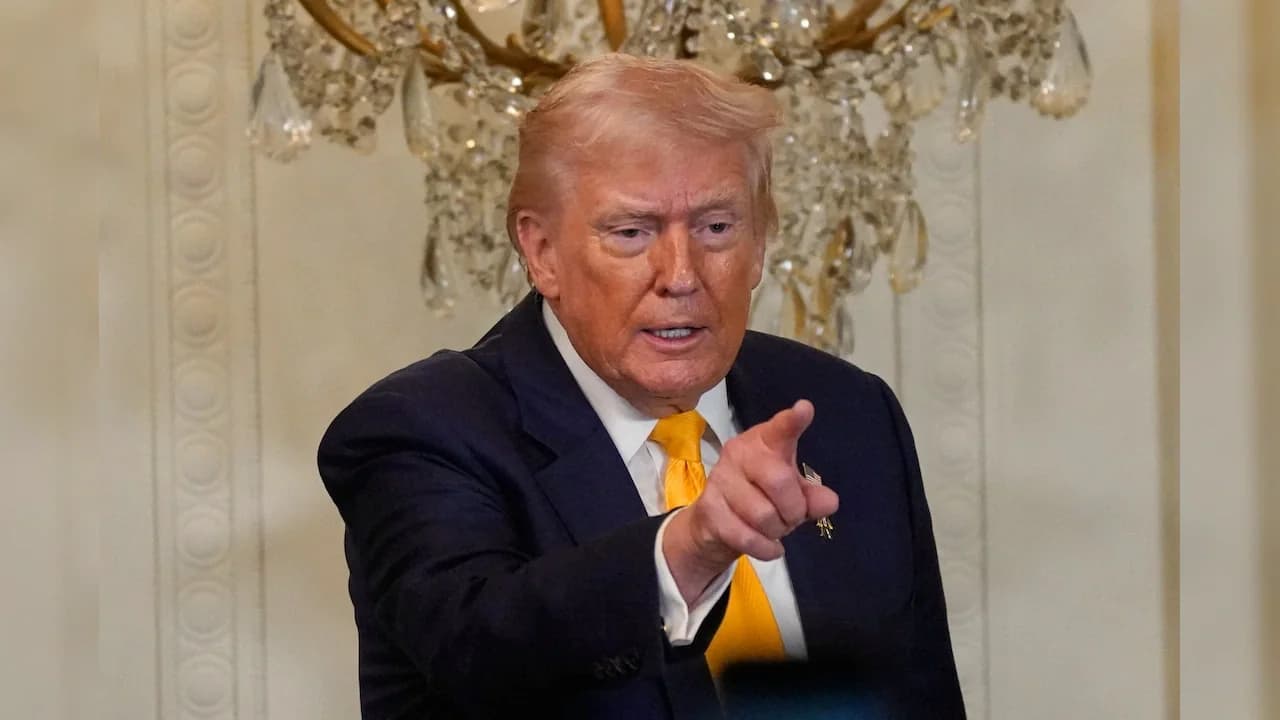
US President Donald Trump has signed a Presidential Memorandum directing federal agencies to remove Canadian-origin goods from the US federal civil procurement system. According to reports from The Times of India, Trump directed the Office of Management and Budget and the US Trade Representative, in coordination with the Federal Acquisition Regulatory Council, to identify Canadian-origin products and take steps to remove them from the list of goods available for purchase by the federal government. The directive specifically targets more than $50 billion USD in government purchasing through federal procurement schedules, representing a significant escalation from previous tariff-based measures. Additionally, Trump has directed the US General Services Administration to exclude Canadian products from its long-term government procurement contracts unless Ottawa restores what he called 'full and fair reciprocity' for American farmers and companies, as reported by The Times of India.
The US Trade Representative has been specifically directed to monitor Canada's treatment of US-origin goods in its government procurement system, as reported by The Times of India. Additionally, Trump has moved to ban certain Canadian products from entering the US altogether, rather than simply subjecting them to higher tariffs. This dual approach of removing products from procurement lists while blocking imports altogether represents a comprehensive strategy to restrict Canadian goods from both government and private sector markets. Trump has also threatened to block Canadian aircraft maker Bombardier from selling planes in the US unless it manufactures them in the United States, as reported by The Times of India. In a post from Trump's Truth Social account on September 7, he specifically called out Bombardier, stating 'NO MORE SELLING BOMBARDIER IN THE UNITED STATES! Their products aren't good enough! Over 50% of their revenue comes from the United States'. The escalation beyond tariffs signals the administration's commitment to addressing what it perceives as unfair trade practices through multiple enforcement mechanisms.
Despite the escalating trade tensions, several Canadian companies report minimal impact on their operations. Bombardier CEO Eric Martel told reporters at an investment summit that the trade dispute isn't getting in the way of the company's expansion plans, stating 'We, Bombardier, are creating tens of thousands of jobs in the United States' and have plans to invest further. Linamar CEO Linda Hasenfratz said the trade war isn't having an impact on business, noting they've won record levels of new business for their Canadian plant over the last 12 months. CAE President Matthew Bromberg told reporters the U.S. remains their largest market, stating 'We're not seeing any slowdown in interest on either side' and that demand remains strong. The companies are taking advantage of customers on-shoring product from Asia and Europe into North America, with business being awarded to all of Canada, the U.S. and Mexico. However, Trump has separately irked the Canadian public by repeatedly floating the idea of making Canada the 51st US state and has launched personal attacks on Canadian leaders, including signing an executive order to change Lake Ontario's name to Lake America.
The Trump administration's trade actions are driven by significant trade imbalances, with goods trade with Canada totalling $715.5 billion in 2025, according to the Office of the US Trade Representative. Exports to Canada were $333.6 billion, compared with imports from Canada of $381.9 billion, resulting in a US goods trade deficit with Canada of $48.3 billion, a 21 percent decrease ($12.9 billion) over 2024. Trump has also accused Canada of not doing enough to stem the flow of fentanyl, a highly addictive synthetic opiate drug, into the US. Prime Minister Mark Carney expressed optimism at Tuesday's investment summit, stating 'If a mutually beneficial deal' on trade with the White House emerges, Canada stands 'ready to develop that and pursue it'. He emphasized 'It has to be one that there's clear alignment of interests, and a sequencing that is consistent with implementation'. The escalation beyond tariffs signals the administration's commitment to addressing what it perceives as unfair trade practices through multiple enforcement mechanisms, with the latest developments pushing Ottawa to explore deeper relationships with the European Union.