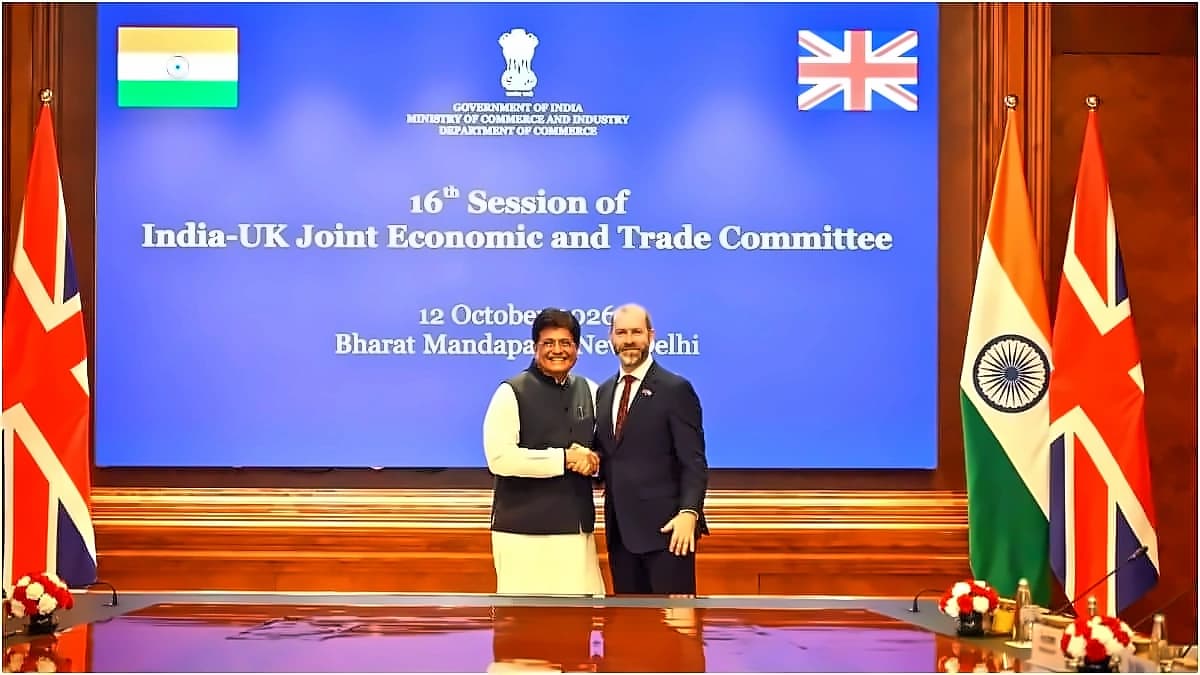
Domestic medical device manufacturers have raised concerns about potential third-country circumvention of the India-UK Comprehensive Economic and Trade Agreement (CETA), which came into effect on July 15. According to reports from Business Standard, the Association of Indian Medical Device Industry (AIMED) has sought stricter Rules of Origin and customs safeguards to prevent third-country producers, particularly China-based device manufacturers, from exploiting reduced duty access through the UK route. Rajiv Nath, forum coordinator at AIMED, noted that the concern extends beyond Chinese-origin goods to include European Union products that may exploit lower duty access, citing India's previous experience with Singapore and the Netherlands as transit hubs.
India's medical device trade with the UK shows mixed trends, with exports growing while imports declined significantly. As reported by Business Standard, India exported medical devices worth $115.49 million to the UK in FY25, representing a 7% year-on-year increase from $107.40 million in FY24. Conversely, UK medtech exports to India fell 15.8% to $230.24 million in FY25 from $275.68 million in FY24. The UK ranks as India's 9th-largest device export destination with a 2.89% share, and the 11th largest import source. According to AIMED, this reflects India's continued reliance on imports for sophisticated medical equipment, with the UK supplying equipment that India does not manufacture at scale.
Indian manufacturers face significant regulatory barriers when entering the UK market compared to UK companies accessing India. As reported by Business Standard, UK manufacturers obtain India's Central Drugs Standard Control Organisation (CDSCO) approvals through a relatively faster and less-expensive process that does not involve factory inspections. In contrast, Indian manufacturers struggle with expensive and slow regulatory approvals required by the UK's Medicines and Healthcare products Regulatory Agency (MHRA) or the EU's CE mark. The agreement mandates that India will phase down duties on UK-origin devices from the 7.5-15% band to roughly 3% over a scheduled tranche, easing costs for high-end imaging and diagnostic equipment.
Industry leaders emphasize that the two-way flows are complementary rather than competitive, with different product categories serving distinct market segments. According to Business Standard, Pavan Choudary, chairman at Medical Technology Association of India (MTaI), noted that India's exports to the UK are led by consumables and value-driven devices such as contact lenses, diagnostic reagents, and surgical appliances where India's cost advantage is decisive. Imports from the UK are concentrated on capital-intensive and technology-heavy medical equipment, such as ventilators and X-ray apparatus. The more significant provision is the Mutual Recognition Agreement for medical devices, which grants Indian-certified products streamlined access to the UK and opens pathways for collaboration in research and development, digital health, and skilling.
The agreement reinforces India's ambition to become one of the top five global medtech manufacturing hubs by 2030. As reported by Business Standard, with CETA coming into effect, close to 99% of Indian product lines will now enter the UK duty-free, formalizing the tariff-free status of cost-competitive devices such as syringes, catheters, monitoring systems, and surgical instruments. The binding question remains whether Indian firms can realign their procurement, manufacturing, and partnership strategies quickly enough to capture the upside rather than simply absorbing lower tariffs. The agreement opens pathways for collaboration in research and development, digital health, and skilling, positioning India as a key player in the global medical technology supply chain.