India's trade deficit widened significantly to $28.21 billion in May 2026, reflecting the ongoing challenges in managing import costs despite some positive export trends. According to Dolat Capital report, merchandise imports surged to $73.41 billion (+20.62% YoY) in May 2026, while cumulatively reaching $145.35 billion (+15.14% YoY) during April-May FY27. However, merchandise exports also showed growth, reaching $45.20 billion (+18.00% YoY) in May 2026 and $88.91 billion (+16.09% YoY) cumulatively. The report indicates that export growth is becoming more broad-based across products and markets, reducing reliance on commodity segments.
The conflict in West Asia has triggered a dramatic reordering of India's trade flows, with Oman emerging as the 10th-largest import source in the first two months of FY27, jumping from 30th place in April-May 2025. Imports from Oman surged 3.8 times to $3.4 billion, largely driven by energy shipments as the disruption of shipping routes through the Strait of Hormuz elevated the Gulf nation's strategic importance. Meanwhile, the UAE slipped to fourth place among India's import partners, while Russia reclaimed the second spot, followed by the US. Commerce Secretary Rajesh Agrawal noted that Oman, with which India recently operationalised a free trade agreement, has opened ports of Sohar, Salalah and Duqm for transit of Indian goods to destinations across the region, including the UAE.
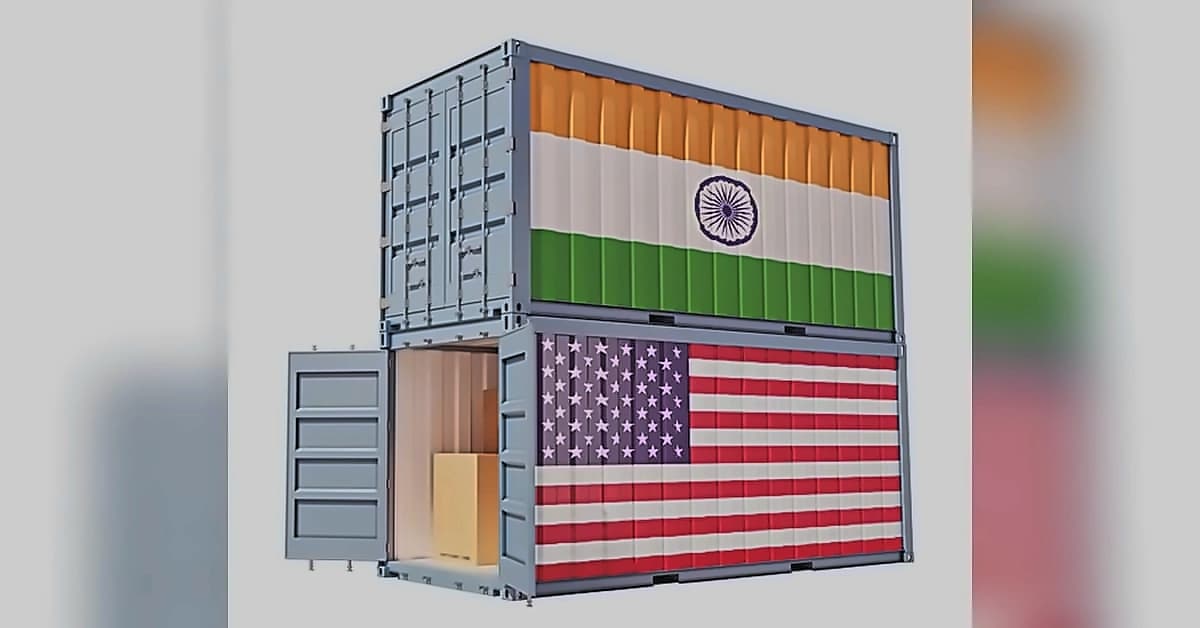
India's trade surplus with the US moderated to ₹53,000 crore ($6.15 billion) in April-May from ₹66,000 crore ($7.87 billion) in the corresponding period last year. As reported by Business Standard, this decline was primarily driven by goods imports from the US rising nearly 55% year-on-year to a record high of $5.87 billion in May, while exports remained largely unchanged. The narrowing surplus reflects the impact of increased US imports on India's trade balance, with Dolat Capital noting that softer crude oil prices amid easing geopolitical tensions in West Asia could lower the oil import bill and help narrow the trade deficit.
India achieved remarkable trade surplus improvements with several Asian economies during this period. According to Business Standard, exports to Singapore rose sharply, taking the trade balance to a surplus of ₹5,300 crore ($665 million) in April-May from a deficit of ₹11,000 crore ($1.3 billion) in the year-ago period. Singapore overtook China and the Netherlands to become India's third-largest export destination during April-May, with exports touching $5.1 billion driven by a 2.2-fold increase in imports of Indian petroleum products. The island nation has been among the economies most affected by disruptions caused by the conflict in West Asia, helping it edge past China despite a more than 25% increase in Indian exports to the world's second-largest economy.
The most dramatic shifts occurred within India's immediate neighbourhood and African markets. As reported by Business Standard, India's trade surplus with Tanzania ballooned to ₹14,000 crore ($1.71 billion) from a mere ₹680 crore ($77 million), propelled by a 172% surge in exports. Tanzania emerged as the eighth-largest destination for Indian exports, up from 25th place a year ago, with exports increasing from $800 million in April-May last year to $2.2 billion this year, driven by oil products and gems and jewellery shipments. Sri Lanka followed a similar trajectory, where exports nearly tripled to $1.8 billion, lifting the island nation to 12th place among India's export markets. The latest data shows India's non-petroleum imports remained robust at $104.1 billion as against $90.8 billion a year ago, driven by demand for electronics, machinery, capital goods and industrial inputs.
While the geographical shift was largely positive, some regions presented challenges. According to Business Standard, India's trade deficit with the UAE fell to ₹36,000 crore ($4.53 billion) from ₹51,000 crore ($6.18 billion) as trade has yet to fully recover following disruptions caused by the West Asia conflict. Meanwhile, India's deficit with China worsened significantly, crossing the ₹1,60,000 crore ($20 billion) mark in the first two months of the financial year. In Europe, demand presented a mixed picture with exports to Italy and Spain surging more than 40%. Looking ahead, Dolat Capital expects higher duties on gold imports to restrain nonessential imports, while petroleum product exports will likely benefit from favorable excise duty structure and strong pent-up demand, supporting a more balanced and resilient external sector outlook.