India's orthodox tea exports to Russia are experiencing mixed trends, with 31.32 million kg exported in FY26 (April 2025–March 2026), making it the country's third-largest destination by volume after the UAE and Iraq. According to Anil George Joseph, president of the Tea Trade Association of Cochin, Russia accounted for roughly 6.6% of India's total tea-export value. However, exports to Russia weakened during 2025, with shipments declining 23% to 20.84 million kg between January and August compared to 26.92 million kg during the corresponding period of 2024. As reported by The Hindu BusinessLine, Joseph noted that the performance of orthodox tea was considerably better than the overall Russian import trend suggested, with Russian buyers paying good premiums for orthodox teas from South India.
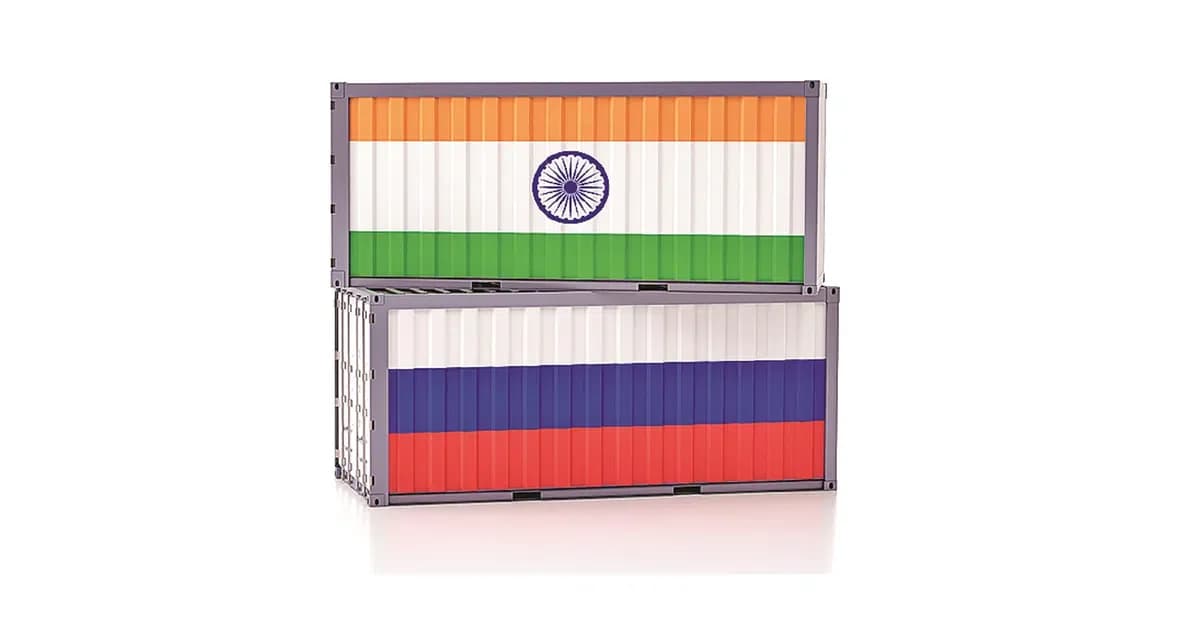
The deepening energy relationship between India and Russia has created favorable conditions for tea exports. Bilateral trade reached approximately $70 billion in 2024, largely driven by Russian oil exports to India, while India's exports to Russia remained comparatively small. According to Russia's Sberbank, around 96% of India-Russia bilateral trade is now being settled through rupee-rouble mechanisms, with most transactions processed rapidly. This improved payments framework could make it easier for Russian importers to purchase Indian goods, as noted by Joseph. The oil relationship can indirectly support Indian orthodox tea exports, with Russia accumulating greater rupee liquidity through bilateral trade while Indian exporters and Russian importers face fewer settlement difficulties. As reported by The Hindu BusinessLine, the enormous trade imbalance means there is considerable scope for Russia to use its rupee holdings to purchase Indian goods, with both Moscow and New Delhi expressing policy objectives to increase Indian exports to Russia.
Indian orthodox tea varieties continue to show greater resilience than the broader Russian market, with Russian consumers and blenders maintaining demand for premium Indian teas. As reported by N Lakshmanan Chettiar of Golden Hill Estates, Russian buyers are paying good premiums for orthodox teas from South India, which they find attractive. The trend is supported by continued buying interest at Kochi auctions, where around 95% of orthodox offerings were recently sold, indicating exporters remain willing to support quality orthodox teas. According to The Hindu BusinessLine, there is a renewed demand for orthodox teas, with Lakshmanan noting that buyers are stocking up due to the highly unstable political situation and the upcoming winter months that could disrupt shipping schedules. Lakshmanan explained that the increased demand is likely due to Russia having too much oil credits, leading them to buy quite a lot of teas from India. Orthodox tea prices have generally increased over the last six months, particularly for good-made-leaf teas, which remain competitively priced compared with Sri Lankan teas.
India's overall tea exports recorded strong performance in FY26, with exports rising 5.45% to 271.93 million kg from 257.88 million kg a year earlier. Average export realisation increased from ₹290.97 per kg to ₹307.04 per kg. However, the trend subsequently softened during January–July 2026, with exports falling 16.11% to 128.56 million kg, though average realisation increased 2.76% to ₹304.04 per kg. According to Joseph, the combination suggests that although volumes have weakened, the value realised per kilogram has remained relatively firm, partly reflecting a more favourable product mix. As reported by The Hindu BusinessLine, India imported roughly $63.8 billion worth of goods from Russia in FY25, compared with exports of only about $4.9 billion, highlighting the significant trade imbalance that could provide opportunities for Indian exporters.
For Indian exporters, particularly those targeting Russia and the CIS region, the emerging trend reflects a shift towards higher-value teas rather than a broad-based recovery in tea volumes. According to Dipak Shah, Chairman of the South India Tea Exporters Association, Russia has traditionally been a major buyer of orthodox tea, with buyers preferring orthodox varieties over CTC teas. The combination of improved payments framework, competitive pricing, and quality positioning suggests that premium orthodox varieties are better positioned to benefit from the changing trade dynamics between India and Russia. Shah noted that there has been a change in consumption patterns, with loose teas declining while packet teas and tea bags are finding an easier market, suggesting CTC small-leaf teas may do better in coming years. He emphasized that good-made orthodox teas seem to have a better future, supported by demand for quality, competitive pricing, and an improving India-Russia payments framework.