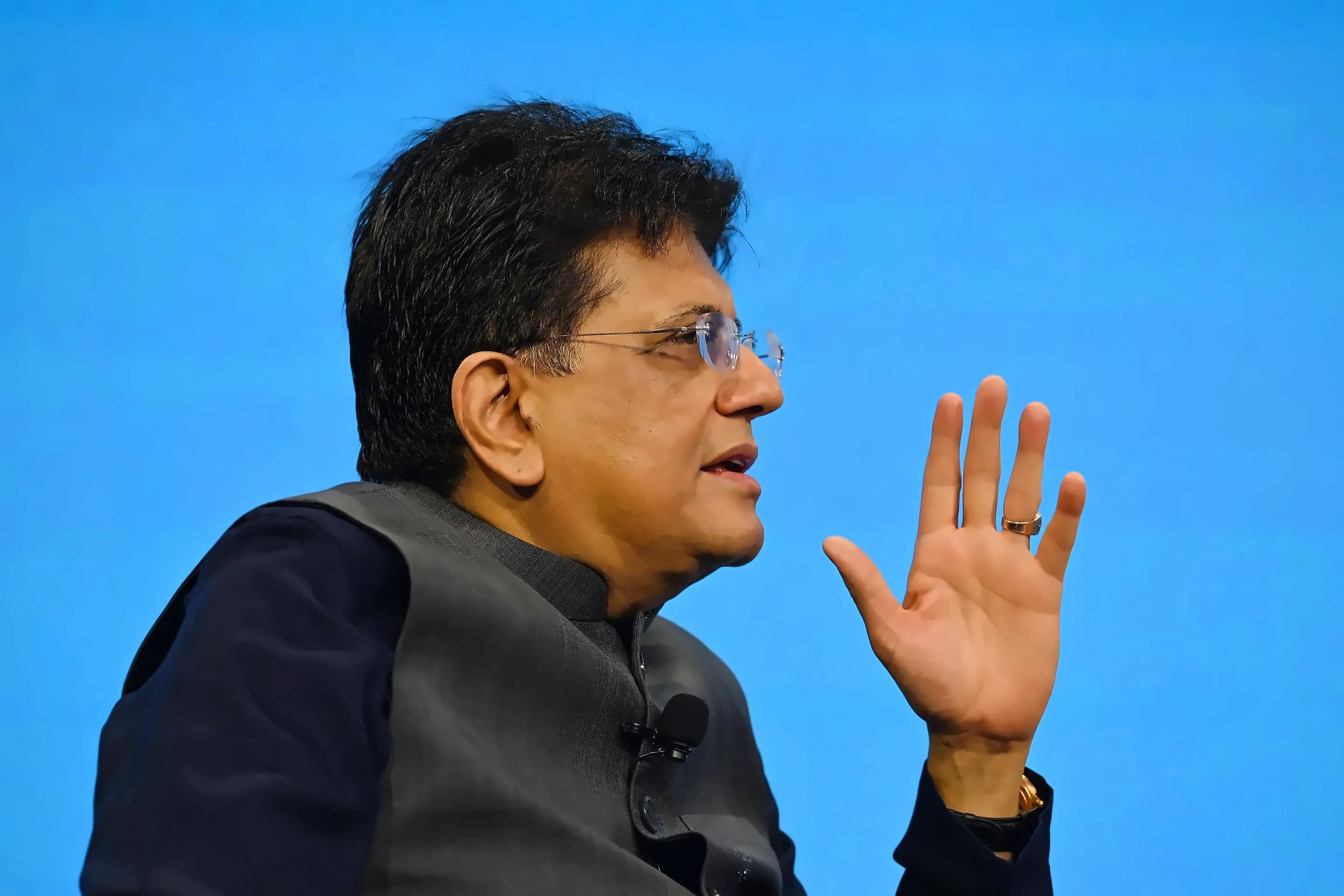
Commerce and Industry Minister Piyush Goyal has announced that India will actively pursue greater market access for basmati rice exports to Japan during the ongoing review of their Comprehensive Economic Partnership Agreement (CEPA). Speaking during his four-day official visit to Japan from August 24, Goyal told reporters that he discussed the rice export issue with his Japanese counterpart, stating "We in the government will have to work on it and will have to talk to the Japanese government. There are several areas which are sensitive for each country, and to the best of my knowledge, rice is a sensitive area in Japan." The minister noted that Japan has restrictions on the quantity of rice that can be imported and duties are applicable beyond the permitted quantity, making it a challenging but potentially rewarding sector for bilateral trade expansion.
India's economy is demonstrating robust performance with core inflation staying stable while headline inflation crossed the 4% target due to food price pressures. According to the Reserve Bank of India, the economy is expected to show more than 4% growth in the April-June quarter, with most high-frequency indicators showing steady manufacturing and services activity. The RBI has maintained its policy rate unchanged at 5.25% all year, citing the stable core inflation environment. India's merchandise exports during April-August 21 have crossed the $200 billion milestone, marking a significant achievement in the country's trade performance. Latest data estimates exports during the third week of August at over $25 billion, representing sustained growth momentum with expectations that this fiscal year may breach the $500 billion level for the first time.
India's export growth has been driven by multiple sectors showing strong performance. Petroleum products have been the primary driver of export growth, while electronics sectors have been booming due to robust mobile phone exports. The engineering sector has powered significant growth, though some traditional segments such as textiles have remained under pressure. The weakening of the rupee against the US dollar is seen to have added to the tailwinds by making Indian goods more competitive against shipments from rival countries. Among export destinations, flows to China, South East Asia and countries in Africa have shown significant growth during April-July, according to the latest official data available.
During August 1-21, India's merchandise exports are estimated to rise by 15% to more than $25 billion, as reported by government sources. This growth trajectory suggests continued momentum in India's export performance, with the latest figures showing $25 billion in exports during the first 21 days of August 2026, compared to $35.10 billion for the entire August 2025. The strong August performance builds on the robust April-July figures that demonstrated robust demand for Indian goods in international markets, with the weakening rupee providing additional competitive advantages for Indian exporters.
Commerce and Industry Minister Piyush Goyal has expressed confidence that India can cross the $1 trillion mark in total exports this financial year, speaking at a Board of Trade meeting in New Delhi. To achieve this ambitious target, the government is targeting merchandise exports of about $530 billion (an increase of $90 billion from $442 billion in FY26) and services exports of about $470 billion (implying growth of around 11%). Goyal emphasized that reaching the $1 trillion target would require merchandise exports to grow about 17% and services exports by 11%, urging Indian businesses to look beyond the domestic market and pursue overseas opportunities. With exports already crossing the $200 billion milestone and showing sustained growth momentum, the government's target appears increasingly achievable.
India and Japan are actively reassessing their trade agreement, with both countries looking to create fresh avenues for enhancing their bilateral ties. The two-way commerce between the countries grew 9.18% to $27.47 billion (exports of $6.03 billion and imports of $21.43 billion) in 2025-26 from $25.16 billion in 2024-25. However, the trade deficit between the countries increased to $15.4 billion in the last fiscal year from $12.66 billion in 2024-25. During his four-day visit that concluded on August 27, Goyal engaged with leading Japanese financial institutions including MUFG, Mizuho, Nomura, Nippon Life, Development Bank of Japan and Morgan Stanley MUFG Securities, focusing on mobilizing long-term Japanese institutional capital for India. The minister also highlighted that Prime Minister of Japan Sanae Takaichi has indicated that Japan would welcome 300,000 Indians in different roles in different aspects of economic activities to support Japanese growth and industry.