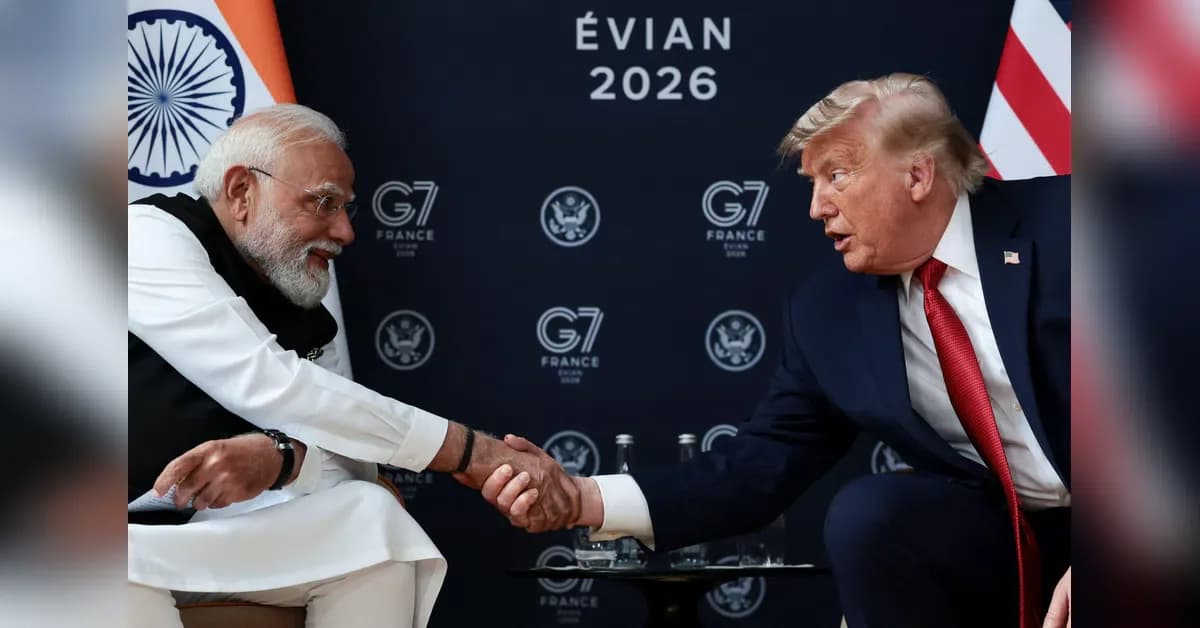
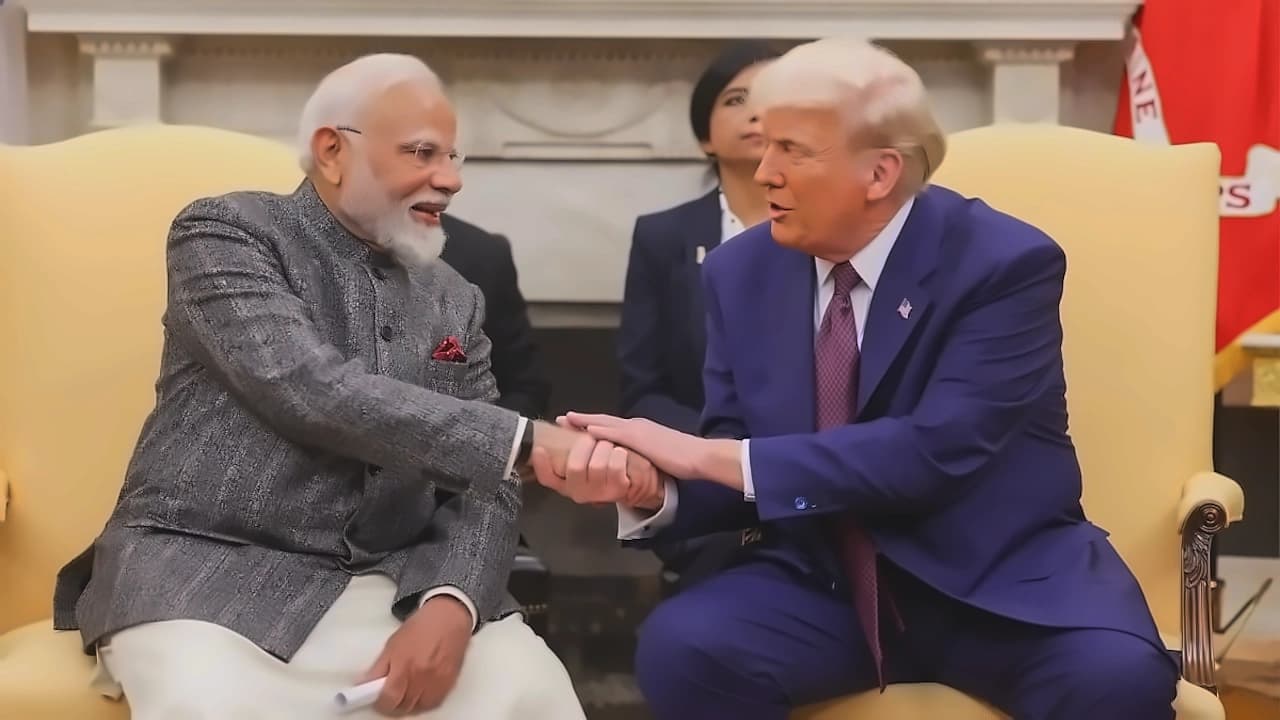
Secretary of State Marco Rubio has confirmed that President Donald Trump is expected to visit India early next year, marking the clearest indication yet of a presidential trip. In an exclusive interview with IANS, Rubio stated 'We're hoping that's what we're working towards - sometime early next year to have the President come' and called the idea 'very positive' for both countries. Rubio described India as one of Washington's 'closest partners' and highlighted the strong personal chemistry between Trump and Prime Minister Narendra Modi, noting that 'the US President is very keen to come' after Modi's invitation. This development comes after Prime Minister Narendra Modi met Trump last week on the sidelines of a summit of the Group of Seven industrial powers in France, where Trump said they had a 'very good' conversation. India has been pressing the United States for months for a Trump visit, potentially as part of a meeting including Japan and Australia.
US Trade Representative Jamieson Greer visited New Delhi from June 22 to 24 to finalise the trade deal, but returned to the US empty-handed according to latest reports. The negotiations face significant challenges as Commerce Minister Piyush Goyal has stated that while the India-US trade agreement is nearly ready, it cannot be signed unless India secures a competitive advantage over other nations. The situation has been complicated by statements from the US administration that contradicted India's stated position and created significant confusion. A primary point of contention was the US side's repeated claim that India had promised not to purchase oil from Russia - an issue that was not even mentioned in the framework agreement. Additionally, the US side claimed India had committed to purchasing goods and services worth $500 billion from the US over the next five years, whereas the framework had merely expressed an intention to make such purchases.
Several major issues remain unresolved despite the February framework agreement, according to economic analyst Ashwani Mahajan. Key red lines include access to agricultural markets, dairy imports, tariff reductions on automobiles and industrial goods, digital trade and data governance, intellectual property concerns, rules of origin, and issues regarding the movement of professionals and visas. The US seeks tariff reductions from India on automobiles, agricultural products, dairy items, medical devices, and alcohol, while India remains firm against lowering these tariffs due to concerns about livelihoods in agriculture and dairy sectors. Regarding dairy, India cannot accept the practice of feeding animal-derived feed to livestock due to cultural and religious reasons. Digital trade and data-related regulations are also significant stumbling blocks, as India views data as a strategic resource and is unwilling to compromise its future policy-making sovereignty.
The talks highlight the increasing significance of economic ties between the world's largest and most populous democracies, with the United States being India's second-largest trading partner and biggest export destination. A trade agreement could help protect Indian exporters from the risk of higher US tariffs while supporting Prime Minister Narendra Modi's efforts to establish India as a global manufacturing hub. For Washington, such a deal would provide greater access to one of the world's fastest-growing major economies and further its strategy of reducing supply-chain dependence on China. India's exports to the United States rose to $87.3 billion in the financial year ending March, while imports from the US increased 17.2% to $53.48 billion. In February, India and the US unveiled a trade framework that lowered tariffs on Indian goods to 18% from 50%, though the US Supreme Court later invalidated President Donald Trump's broad global tariff policy, creating fresh uncertainty over the timeline for implementing the agreement.
India has demonstrated remarkable resilience in its energy strategy, with India's purchases of Russian crude oil averaging over 2.55 million barrels per day in June, accounting for nearly half of India's total crude imports. According to latest data, India has purchased more oil from Russia in the first five and a half months of this year than during the same period in 2025, showing that it has not only refused to comply with US dictates but has actually increased its purchases of Russian oil. India's stance on Russian oil purchases has earned it goodwill by demonstrating that it continues to buy oil from Russia despite pressure from powerful countries. However, the US stance on this matter is simultaneously becoming a hurdle in trade negotiations between the two nations, creating additional complexity for the ongoing trade deal negotiations.