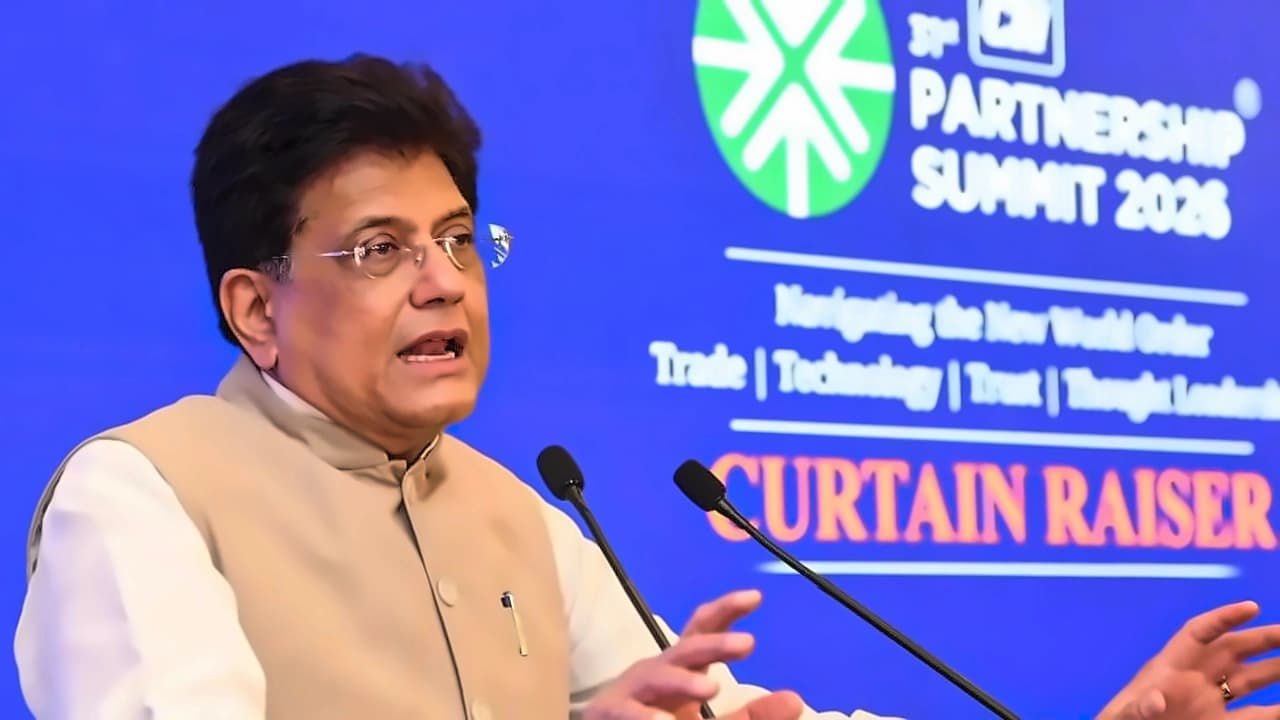
Commerce Minister Piyush Goyal held a series of meetings with top US firms in New York, inviting them to explore investment opportunities in India. According to Business Standard, Goyal met with Jonathan Gray, President & COO of Blackstone, Prakash Melwani, Chairman of Blackstone's International Private Equity business, and George Walker, Chairman and CEO of Neuberger Berman. The minister emphasized that India offers unmatched scale and long-term value creation for global institutional investors with resilient macroeconomic fundamentals and deepening capital markets. Goyal stated that 'held a productive meeting with Mr. Jonathan Gray, President & COO of @Blackstone along with Mr. Prakash Melwani, Chairman of Blackstone's International Private Equity business' and 'discussed opportunities to deepen Blackstone's investment and partnership in India and explored avenues across key sectors'. He also highlighted discussions with Neuberger Berman on 'opportunities to deepen investment linkages with India and strengthen partnerships across financial and wealth management'. According to Business Standard, the meetings provided an opportunity to discuss India's growth prospects and investment opportunities across financial services, manufacturing, energy, technology, AI and other sectors, and ways to further strengthen India-US economic and commercial ties.
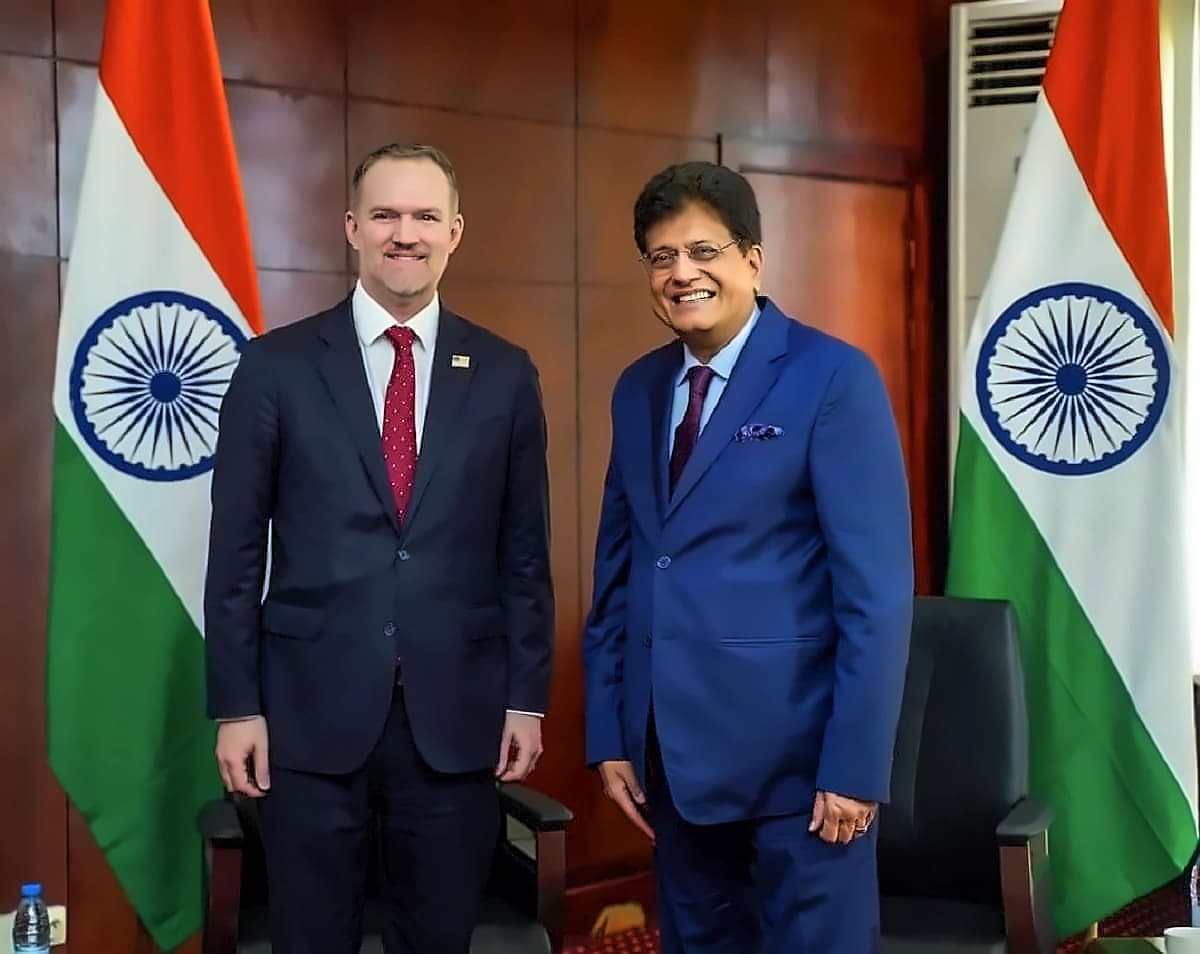
Finance Minister Nirmala Sitharaman announced that a new template for bilateral investment treaties is ready and expected to get Cabinet approval soon in a bid to make it more investor-friendly. Speaking at the Munich Security Conference, Sitharaman revealed that the new template, being prepared over the last one-and-a-half years, seeks to address shortcomings in the model approved in 2016 and provide sharper protection to investors from both sides. According to Business Standard, she stated that 'we have a new template which will be approved shortly. But in the meanwhile, we've not halted the process. We are negotiating with countries with a lot more of those elements which are in the new template'. The minister noted that India has concluded similar agreements with the UAE, Oman and some Central Asian countries, with negotiations also underway with Canada and Russia on bilateral investment protection agreements. India is likely to conclude BIT negotiations with Canada and two more partners by December or early 2027, as per the latest reports.
Goyal's investment outreach extended beyond traditional partners to include Chairman and CEO of IBM Arvind Krishna, where discussions focused on further strengthening IBM's engagement in India and expanding collaboration in AI, cloud infrastructure, quantum computing and other emerging technologies. According to Business Standard, he also met William E Ford, Chairman and CEO of General Atlantic, discussing opportunities to further deepen the company's investment and business engagement with India. Additionally, Goyal held a meeting with Mark Tucker, Non-Executive Chairman of AIA Group, discussing opportunities in the insurance and financial services sectors. The minister also met Stephane de La Faverie, President & CEO of The Estee Lauder Companies in New York, where they 'discussed opportunities for the company to further strengthen its presence in India through greater manufacturing, sourcing from India & leveraging the country's growing beauty & personal care market'. Goyal was in the US to participate in the G20 Trade Ministers' Meeting and also met US business leaders in Chicago and addressed the Indian diaspora.
Finance Minister Nirmala Sitharaman on Monday revealed that India-US trade negotiations have reached a plateau where further concessions would be very difficult. Speaking at the Munich Security Conference, Sitharaman described the agreement as having been 'hard and very rigorously negotiated' but acknowledged the current limitations. According to The Times of India, she stated that 'the negotiations are still ongoing, although we'd like to believe both sides have reached a plateau beyond which giving or taking might be very, very difficult. But maybe if there are rooms to operate from, both sides would do it'. Sitharaman added that 'maybe if there are rooms to operate from, both sides would do it' while acknowledging the challenging nature of the ongoing discussions. She also remarked that trade deals are moving away from the spirit of negotiation and questioned the extent to which countries can go beyond negotiations if they see narrowing of the trade imbalance as the only criteria to strike a deal.
Sitharaman revealed that addressing the US' trade deficit with India was a 'predominant' feature of the trade deal and Washington wanted to 'get as much as they can' from the agreement to compensate for what they see as previous losses. According to Business Standard, she noted that 'trade imbalance can be addressed through negotiations, but now the imbalance is being sought to be addressed by other means' and 'tariff was an instrument of negotiations'. The minister highlighted that from passing a law authorising US President Donald Trump to impose a tariff of up to 100 per cent on India for its energy purchases from Russia to initiating two investigations under Section 301 of the US Trade Act of 1974, the US has put into play several mechanisms to impose tariffs on India and gain leverage in trade talks. The Office of the US Trade Representative (USTR) has already imposed a 10 per cent extra duty on Indian goods after concluding one of the Section 301 investigations alleging the presence of forced labour in the supply chain, with the other probe alleging excess structural capacity remaining underway. As per Business Standard, India had a trade surplus of about $34 billion in 2025-26, making it a difficult negotiating position given India's current-account deficit and the need to shift imports from other countries to the US.
Sitharaman addressed questions about maintaining strategic autonomy while negotiating bilateral trade agreements, particularly regarding India's approach to procuring Russian oil. According to The Times of India, she stated that 'there is no Lindsay Graham Bill in Europe...' and emphasized that countries are increasingly choosing bilateral partnerships where they see greater benefit. She noted that 'countries choose where multilateralism would benefit them, and there are some unique bilaterals which countries choose to have. The balance is somewhat tilted in favour of the bilateral rather than the multilateral'. The minister also highlighted that in the current geopolitical environment of tariff uncertainties, bilateralism has become more relevant than multilateralism, especially considering how trade rules under the World Trade Organization (WTO) have weakened. She added that 'in the current reality, you are tailoring the agreements to (not just) keep national interests alive but also survive in a very challenging global environment where no WTO laws are left to be respected'. Business Standard notes that the US Congress has empowered Mr Trump to impose additional tariffs on countries importing Russian energy, adding complexity to India's relations with the US, while emphasizing that India's relations with the US go much beyond trade, which the current transactional administration in Washington is unwilling to appreciate.