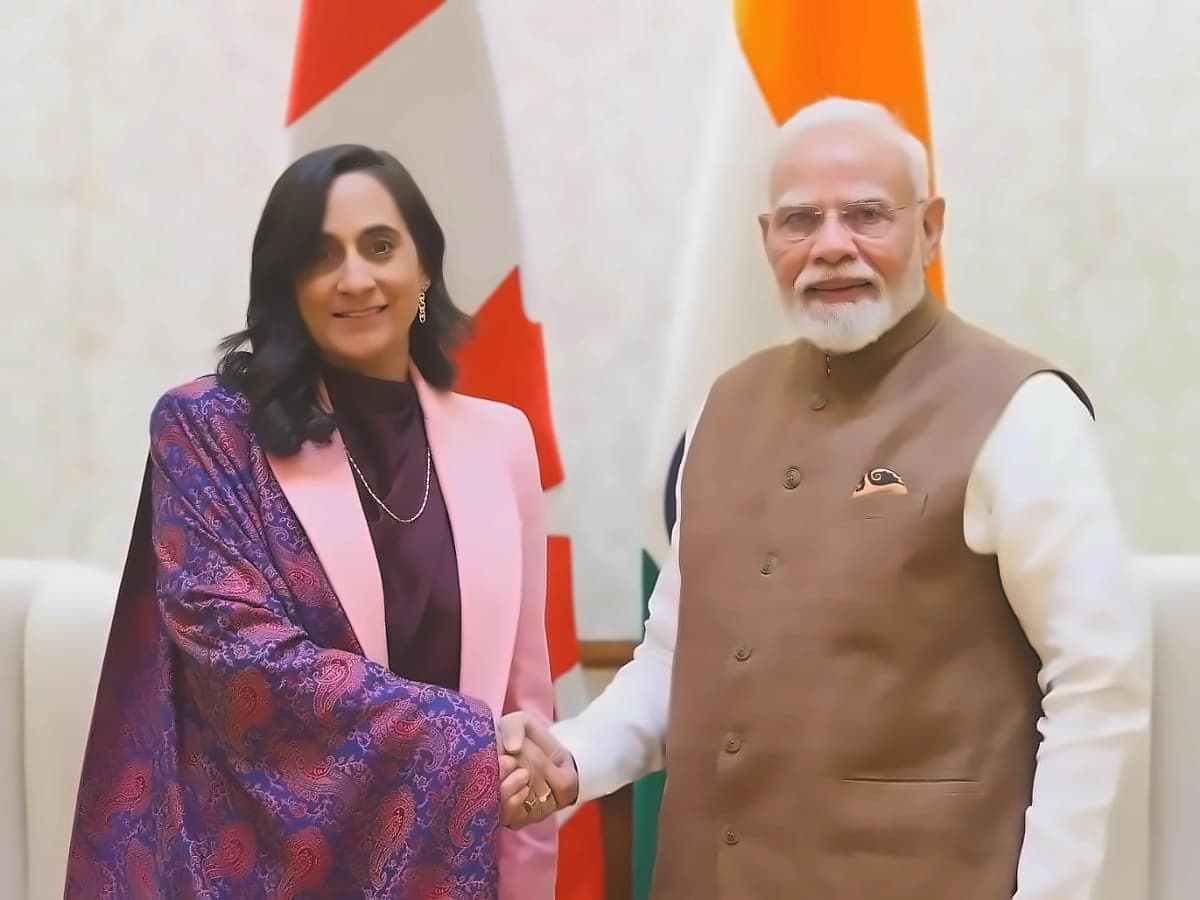
India and Canada have committed to concluding negotiations on a Comprehensive Economic Partnership Agreement by the end of 2026, as reported by Business Standard. Finance Minister Nirmala Sitharaman and Canada's Finance Minister Francois-Philippe Champagne made this announcement during the inaugural Economic and Financial Dialogue held in Toronto on Thursday. The ministers also agreed to initiate talks on a Bilateral Investment Treaty at the earliest, demonstrating their commitment to deepening bilateral economic cooperation. As per the joint statement, India expressed its readiness to initiate negotiations on a Bilateral Investment Treaty at the earliest, confirming the strategic approach to unlocking investment flows between the two nations.
The two countries have agreed to explore wider UPI use in Canada through partnerships with payment service providers, according to the joint statement. As reported by Business Standard, this initiative recognizes that expanding UPI adoption could contribute to faster, more efficient and cost-effective payments and support bilateral trade, tourism, education, and growth of small and medium-sized enterprises in both countries. The strategic exchange builds on commitments established in New Delhi in March 2026 by Canadian Prime Minister Mark Carney and Indian Prime Minister Narendra Modi. A key element under exploration involves integrating India's Unified Payments Interface (UPI) with Canadian payment service providers to enable faster, more efficient and cost-effective payments, benefiting trade, tourism, international students, and small and medium-sized enterprises. Finance Minister Sitharaman emphasized that closer integration between the two financial systems could facilitate greater flows of trade, investment and remittances, with particular relevance for the 400,000 Indian students in Canada who face challenges with current payment systems. Canadian Finance Minister Champagne noted that both governments are looking at ways to facilitate payments for students, stating "We're looking to facilitate payments, for example, for students." He specifically highlighted the remittance challenges, noting that easier remittances would provide "peace of mind" to parents in India whose children are studying in Canada, with remittances potentially reaching 45,000 Canadian dollars per student.
The dialogue builds on the commitment made by Prime Minister Narendra Modi and Canadian Prime Minister Mark Carney during their meeting in New Delhi in March 2026, as reported by Business Standard. The ministers discussed ways to strengthen economic and investment ties and support financial and commercial linkages between the two countries. Discussions are aimed at supporting bilateral trade to CAD 70 billion, or around ₹4.65 lakh crore, by 2030. The economic framework is bolstered by a parallel target under CEPA to expand merchandise trade to $50 billion by 2030, building on the $8 billion recorded in 2025-26, comprising $4.67 billion in Indian exports and $3.28 billion in imports. The joint statement noted the substantial presence of Canadian pension funds and other institutional investors in India, while the ministers discussed ways to encourage greater participation by financial institutions and investors from both countries. They also examined the role of domestic tax rules in providing greater certainty to investors and discussed commercially viable opportunities in sectors of mutual interest.
During the dialogue, the ministers explored opportunities for cooperation in payments modernisation, financial stability, fintech innovation, capital markets development and efforts to address financial crime, according to Business Standard. Financial technology and payments were another major focus of the dialogue, with the two countries agreeing to encourage engagement on cross-border remittances and merchant payments. Finance Minister Sitharaman said the two sides were examining how digital technologies could make payments between the countries easier, telling reporters in Toronto that "our teams are going to be talking further, and adopting everything which helps in easier payment, cross-border remittances, and also within the country, multiple choices for digital payments so that citizens can benefit from it." She also shared India's experience with direct benefit transfers during the COVID-19 pandemic. The ministers subsequently held discussions with representatives from Canada's financial services, fintech, technology, artificial intelligence, infrastructure and energy and natural resources sectors. The Canadian minister described financial services as one of the areas offering the strongest potential for growth in the bilateral relationship. The engagement formed part of Sitharaman's official mission across Canada and the United States running through September 2.
The economic dialogue also expanded into areas linked to supply-chain security, with India and Canada agreeing to explore cooperation in critical minerals, recognizing the importance of resilient and diversified supply chains for economic security and sustainable growth. Energy security was also identified as an area where the two countries could deepen engagement. The ministers reaffirmed their commitment to regular economic and financial dialogue and advancing concrete cooperation in areas of mutual interest, as reported by Business Standard. Sitharaman also held interactions with leading Business Chambers and Professional Alumni Associations in the India-Canada corridor to explore new avenues. The next India-Canada Economic and Financial Dialogue will be held in 2027, demonstrating the commitment to sustained bilateral engagement. To strengthen economic security against global supply chain vulnerabilities, the dialogue focused on strategic collaboration, specifically targeting critical minerals essential for clean energy transitions, artificial intelligence, and advanced technology.