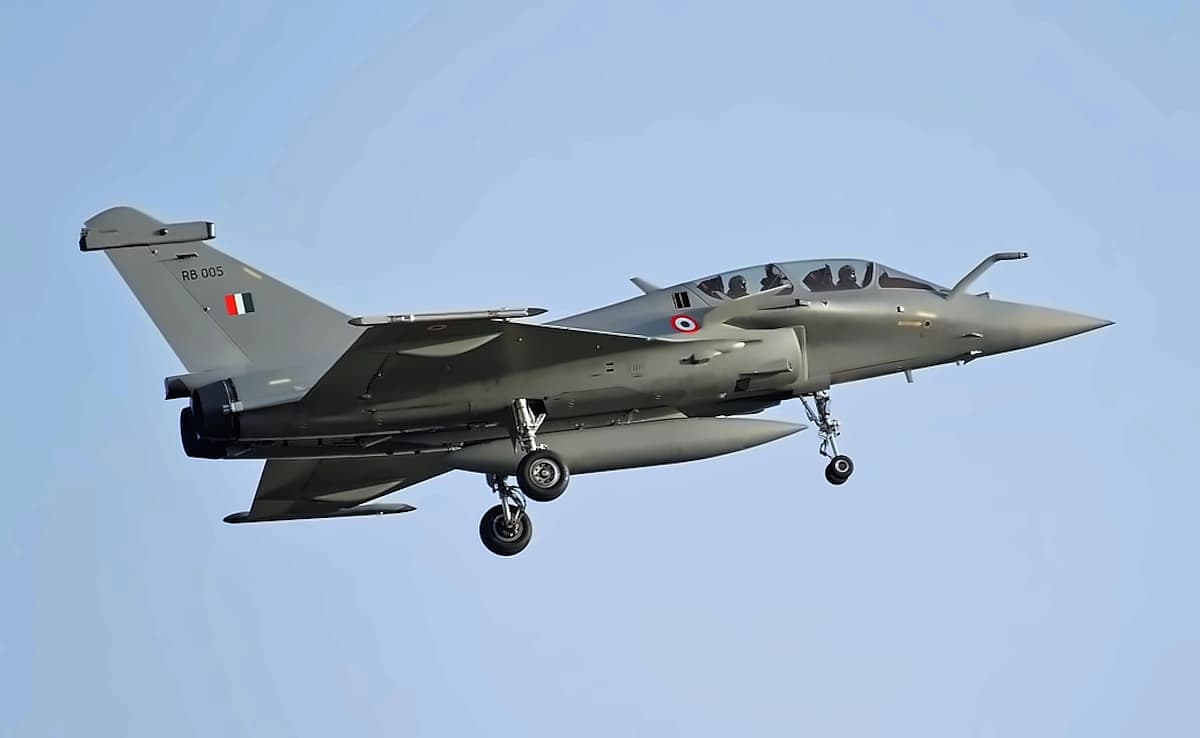
India has finalised a Letter of Request (LoR) for the proposed acquisition of 114 Rafale fighter aircraft for the Indian Air Force, marking what is expected to become India's largest-ever combat aircraft deal. The proposed acquisition, estimated at roughly $35-40 billion, is being pursued through a government-to-government framework with France under the long-pending Multi-Role Fighter Aircraft (MRFA) programme, as reported by The Indian Express. The Centre is aiming to conclude negotiations and sign the final contract by the end of the year, subject to approval from the Cabinet Committee on Security (CCS). The LoR is expected to be sent to France within the next few weeks, marking a major step in India's long-pending plan to strengthen the Air Force fleet and address the shortage in fighter squadrons.
Of the 114 jets, approximately 90 are to be manufactured domestically through a collaboration between French aerospace giant Dassault Aviation and an Indian partner company, while the remaining aircraft will be delivered in fly-away condition. The indigenous component in the jets is expected to be close to 50%. The LoR is a formal government-to-government document used to begin procurement under the Foreign Military Sales or Intergovernmental Agreement route, outlining the required capabilities, quantities and technical specifications. Once France responds with pricing, availability and logistical support details, India will formally issue a Request for Proposal (RFP) and begin commercial negotiations. The Defence Acquisition Council had cleared the Rafale proposal three months ago, after which the LoR was prepared.
The LoR comes three months after the Defence Acquisition Council cleared the long-pending proposal for the Rafale acquisition under an intergovernmental agreement route. IAF Chief Air Chief Marshal A.P. Singh is scheduled to visit France early next month, ahead of Prime Minister Narendra Modi's visit later in June. The government is aiming to complete the contract by the end of this year, as reported by The Indian Express. The development also comes ahead of the planned visit by the IAF chief to France next month and Prime Minister Modi's expected trip later in June. After negotiations between the two countries, the Cabinet Committee on Security will need to approve the final deal before the contract is signed.
India has been negotiating access to Interface Control Documents (ICDs) — technical blueprints that would allow the integration of indigenous weapons, including the Astra missile and BrahMos-NG, onto the Rafale platform. The IAF currently operates 36 Rafale fighter jets inducted under an earlier deal with France, and the Indian Navy is preparing to induct 26 Rafale-M aircraft for carrier-based operations over the next few years. Because India already operates Rafales, expanding the fleet would reduce pilot conversion time, infrastructure costs and logistical challenges. The expanded fleet is expected to help reduce logistical, training and maintenance costs because India already has infrastructure and operational systems in place for the aircraft. The Rafales have been highlighted by military officials for their role during Operation Sindoor, where they carried out deep-strike missions while bypassing Pakistan's Chinese-supplied air defence systems.
The Rafales are intended to bridge the capability gap until India's indigenous fighter programmes, including the HAL Tejas Mk1A, LCA Mk2 and the fifth-generation Advanced Medium Combat Aircraft (AMCA), reach operational maturity. The AMCA fifth-generation fighter programme is expected to enter service only after 2035. In the interim, India is also considering procuring another fifth-generation fighter aircraft, with Russia having already shared details of its Su-57 fighter jet with India, although no decision has yet been taken. The Rafale is seen as India's quickest route towards strengthening near-term air power capabilities, combining rapid induction, combat versatility and strong interoperability. The acquisition is expected to play a major role in addressing the Indian Air Force's declining squadron strength, as the Air Force currently operates 29 fighter squadrons against a sanctioned strength of 42.