Mauritius has signed comprehensive long-term petroleum supply agreements with India and Indian Oil Corporation, marking a significant milestone in energy cooperation between the two nations. According to reports from Reuters, the agreements include a direct sales and purchase arrangement with the state-owned Indian Oil Corporation, as well as a government-to-government memorandum of understanding for broader cooperation in the oil and gas sector. India's Minister of Petroleum and Natural Gas, Hardeep Singh Puri, visited Mauritius to finalise these agreements, with Puri noting that Mauritius was the first country outside South Asia to enter into such a comprehensive fuel supply arrangement with an Indian public-sector oil company. The formal signing ceremony took place at the National Assembly on Thursday, 20 August, during Puri's official visit to strengthen energy cooperation between the two countries.
Under the latest agreement, Indian Oil Corporation will supply the entire import requirement of Mauritius for motor spirit (petrol), high speed diesel (diesel), and aviation turbine fuel (ATF), providing the island nation with assured supplies and reducing exposure to price volatility. As reported by Business Standard, this represents the first long-term supply agreement concluded by an Indian public-sector oil marketing company outside South Asia in recent years. The five-year agreement between IOC and Mauritius' State Trading Corporation is specifically designed to provide Mauritius with assured supplies and reduce its vulnerability to global energy price fluctuations and supply chain disruptions. The commercial arrangement encompasses Mogas (petrol), Gas Oil (diesel), Jet A1 aviation fuel, and Marine Gas Oil under a business-to-business arrangement between Indian Oil Corporation Limited (IOCL) and the State Trading Corporation (STC).
The energy agreements come amid the West Asia conflict and disruptions around the Strait of Hormuz, a crucial route for global oil shipments, which have affected energy supplies and pushed up crude prices. According to The Hindu, External Affairs Minister S. Jaishankar said the West Asia crisis had underscored the importance of strategic partnerships, particularly in the energy sector. The deal establishes a more sustainable, structured framework to safeguard energy supplies for Mauritius, which remains entirely dependent on imported petroleum products for transport, aviation, broader economic activity, and essential services. The agreements further strengthen India's role as an energy supplier in the Indian Ocean region and expand bilateral cooperation with Mauritius, a key maritime partner for New Delhi. The government-to-government memorandum also provides a broader framework for future cooperation in the oil and gas sector, enhancing the strategic energy partnership between the two nations.
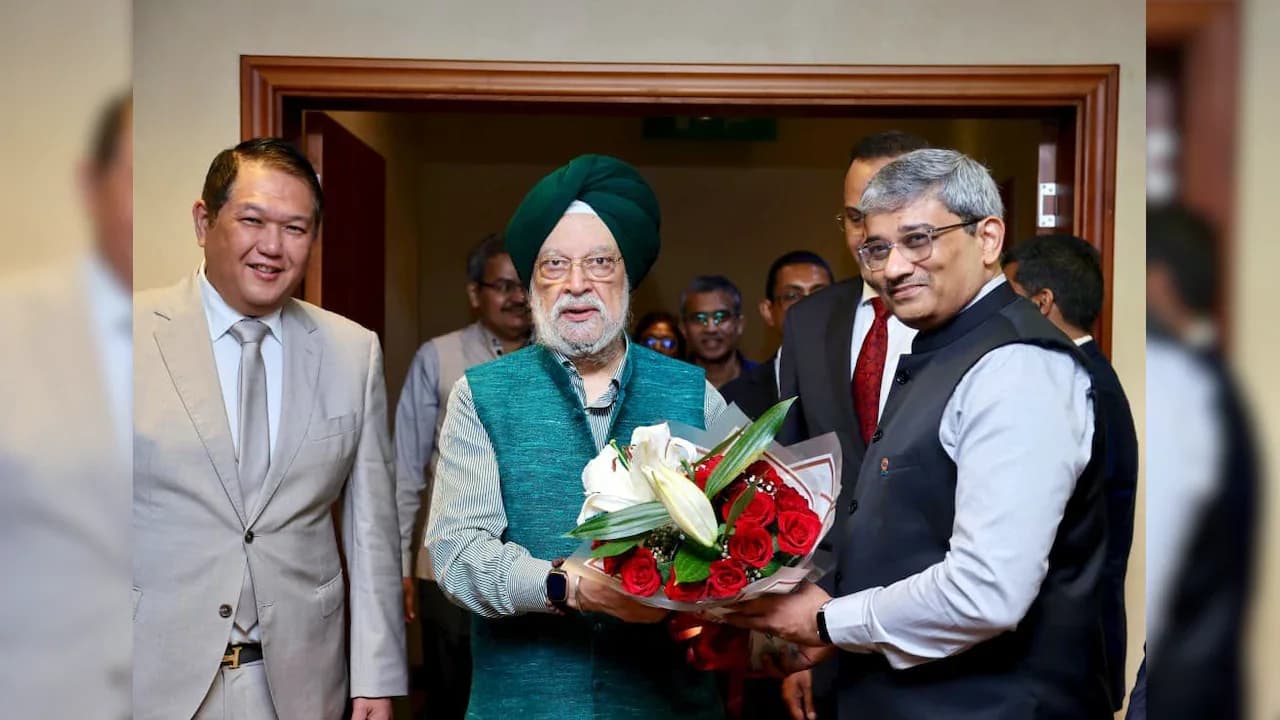
During Puri's visit, significant infrastructure developments were announced, including the groundbreaking ceremony for India Oil (Mauritius) Ltd's 27,500-tonne marine bunker fuel storage facility at Mer Rouge in Port Louis. This facility is expected to strengthen Mauritius' marine fuel infrastructure and further expand India's presence in the island nation's energy supply chain. Puri also held bilateral meetings with key Mauritian officials including Patrick Gervais Assirvaden, Minister of Energy and Public Utilities; John Michaël Tzoun Sao Yeung Sik Yuen, Minister of Commerce and Consumer Protection; and Dhananjay Ramful, Minister of Foreign Affairs, Regional Integration and International Trade. The oil and gas MoU also provides for cooperation in biofuels through exchanges of knowledge, research and training. Mauritius is a founding member of the Global Biofuels Alliance (GBA), an initiative piloted by India and launched during New Delhi's G20 presidency.
India's position as a reliable energy supplier in the region was reinforced during the visit, with the ministry confirming that India continued to meet its supply commitments to Nepal and Bhutan even during the ongoing West Asia crisis, underscoring its role as a reliable supplier to the region. India, which has emerged as a major refining hub, produces about 267 million tonnes of refined petroleum products annually from 23 refineries and is a net exporter of refined fuels. The agreements broaden India's role in Mauritius beyond individual fuel shipments to a longer-term partnership covering supply security, infrastructure, capacity building and alternative fuels, as New Delhi seeks to expand its energy and economic engagement across the Indian Ocean region.