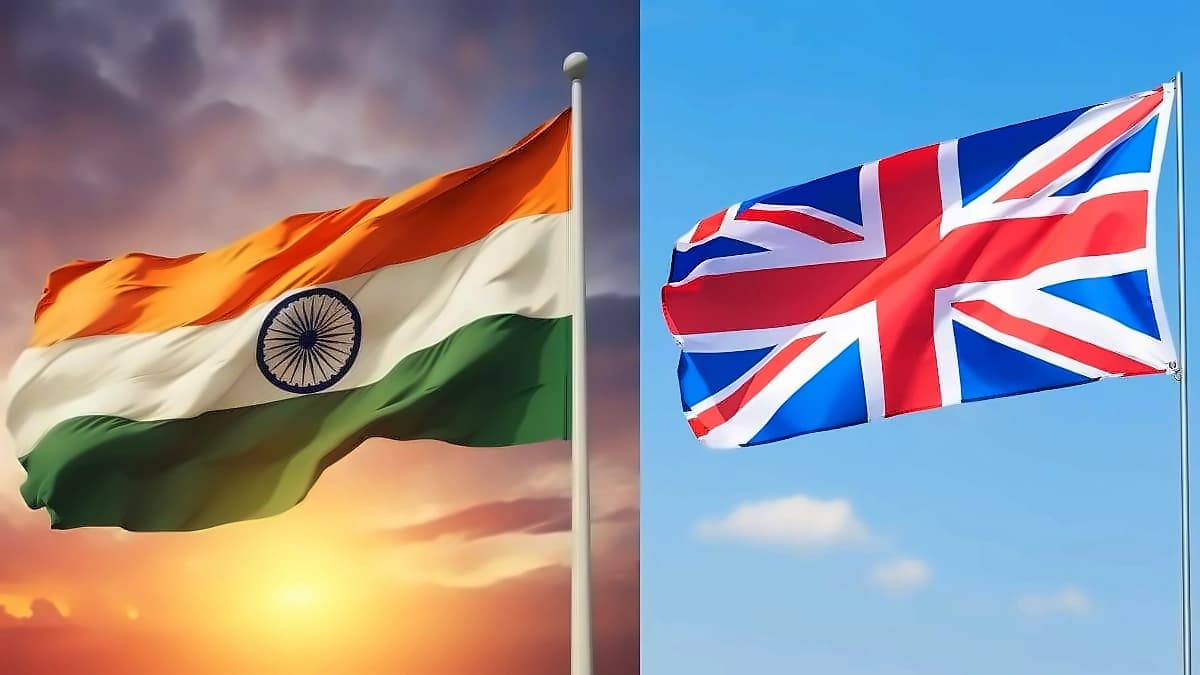
The India-UK free trade agreement implementation has been delayed due to the UK's recent steel import curbs, according to latest trade officials. Commerce Secretary Rajesh Agrawal confirmed that the UK's decision to slash tariff-free steel import quota volumes by 60% to safeguard domestic industry from dumping has emerged as a key hurdle. As reported by Business Standard, Agrawal stated that both sides are working together to find a solution for the trade measures so that they can operationalise the India-UK CETA. The UK government announced in March that steel shipments over and above the quota limit will attract a 50% duty starting July, creating uncertainty for businesses preparing for the agreement's rollout. From July 1, 2026, the UK will limit tariff-free steel imports, reducing overall quota volumes by 60% compared to previous safeguard measures.
India has achieved its $1 trillion exports target for fiscal year 2026, with total exports reaching ₹863.11 billion according to Commerce and Industry Minister Piyush Goyal. As reported by The Times of India, this represents a 4.6% year-on-year increase despite global economic uncertainties including high US tariffs, the ongoing Russia-Ukraine war and the West Asia crisis. Services shipments surged to an all-time high of ₹421.32 billion in 2025-26, compared to ₹387.55 billion in 2024-25, recording a growth of 8.71%. Goyal emphasized that taking from ₹863 billion to ₹1 trillion requires ₹137 billion growth, which translates to a 16-17% increase, stating "This year, let's aspire for a $1 trillion exports target. It's possible."
While India's bilateral trade with BRICS countries has grown significantly, the trade deficit has become a major concern. According to a report by Rubix Data Sciences, India's bilateral trade with BRICS countries touched $416 billion in CY2025, growing at nearly 10% every year between CY2021 and CY2025. However, India's goods trade deficit with the bloc has nearly doubled in the same period, rising from $117 billion to $224 billion. This deficit increase is primarily driven by a sharp jump in imports, with India's imports from BRICS nations standing at $320 billion in CY2025, growing at a 12% CAGR over five years. BRICS' share in India's total imports has consequently increased from 36% in CY2021 to 43% in CY2025. Within BRICS, Russia became one of India's fastest-growing import partners with imports rising at a 61% CAGR, mainly due to crude oil purchases, while the UAE and Brazil also remained major trade partners, each recording 12% CAGR growth.
The India-Oman Comprehensive Economic Partnership Agreement (CEPA) is set to come into force from June 1, 2026, marking a major milestone in India's Gulf trade diplomacy. As reported by NDTV Profit, the pact was signed in December 2025 and represents a significant advancement in India's trade relations with the region. The agreement covers not only trade in goods but also intellectual property and regulatory cooperation, making it a comprehensive economic integration tool. Key Indian sectors expected to benefit include textiles and garments, leather and footwear, gems and jewellery, pharmaceuticals, agriculture and processed food, engineering goods, medical devices, chemicals and plastics, automobiles and auto components, and labour-intensive sectors.
Despite the steel quota crisis, both India and the UK remain committed to operationalizing their comprehensive trade agreement. The India-UK FTA is expected to significantly expand market access across goods and services, while also deepening cooperation in areas such as mobility, technology, investment and clean energy. India has finalized nine FTAs since 2021 with Mauritius, UAE, Australia, Oman, New Zealand, EU, UK and EFTA bloc, with a framework for an interim trade agreement with the US also finalized. According to The Times of India, four of these FTAs are already operational and another five will be operational in the next 12 months. India is negotiating FTAs with Chile and Maldives, with both agreements expected to be completed before the end of this year. The two countries signed the pact on July 24, 2025, under which 99% of Indian exports would enter the UK duty-free, while India will reduce tariffs on British products such as cars and whisky.