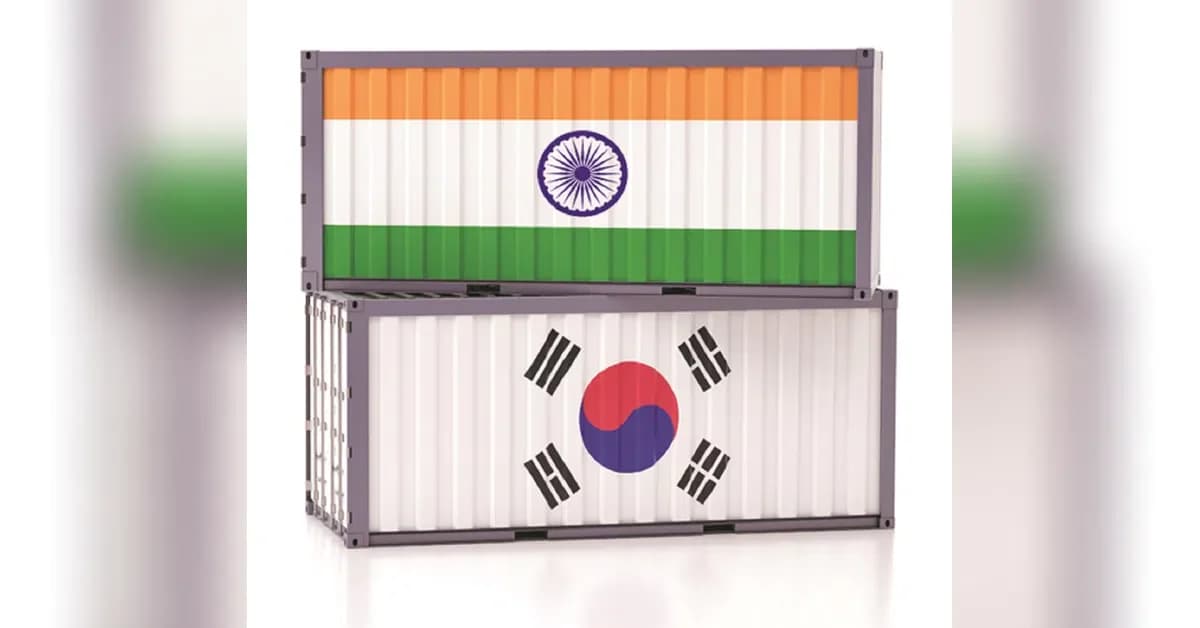
India and South Korea are scheduled to hold negotiations on May 25 to review their Comprehensive Economic Partnership Agreement (CEPA). According to reports from PTI and BNP, an official confirmed that the two countries' officials will meet on this date for the FTA review. The CEPA between the two nations came into force in January 2010 and has been operational for over a decade. The discussions will focus on revisiting the existing trade agreement with an aim to strengthen economic engagement between the two nations.
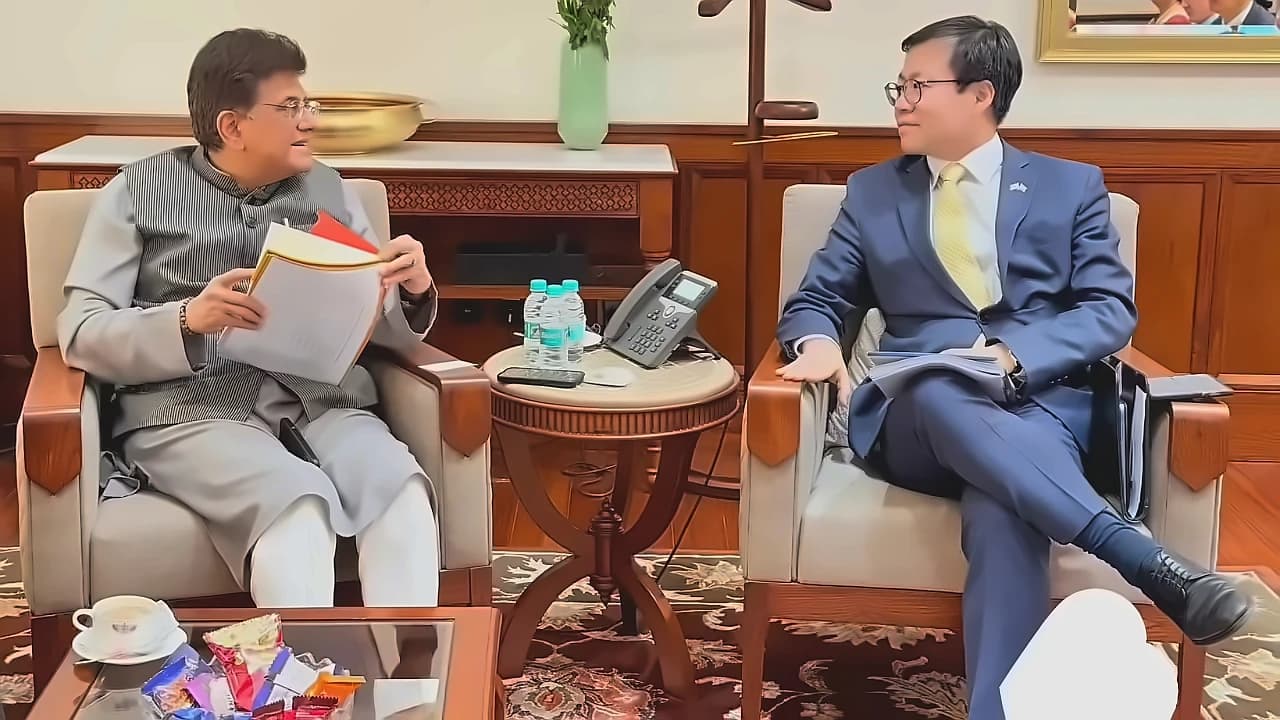
The review meeting assumes significant importance as India has proposed negotiating a fresh bilateral trade agreement to modernise the existing pact and make trade relations more balanced. As reported by PTI, Commerce and Industry Minister Piyush Goyal raised these concerns during a bilateral meeting last month with his South Korean counterpart Yeo Han-koo. Goyal has repeatedly flagged concerns over the growing trade imbalance between the two countries. India is likely to push for updates to make the pact more relevant to current global trade dynamics and tackle issues such as the trade imbalance. The initiative comes amid falling trade figures, with India's exports to Korea declining 9.3% in 2024-25 while imports saw only a slight dip.
According to PTI reports, India's exports to South Korea declined 9.3 per cent to $5.81 billion in 2024-25 from $6.41 billion in 2023-24. In contrast, imports from Korea dipped marginally by 0.34 per cent to $21 billion during the same period. The trade deficit has widened significantly to $15.19 billion in 2024-25 from around $8 billion in 2020-21, highlighting the growing imbalance in bilateral trade. These figures underscore the urgency behind the upcoming negotiations as both countries seek to address the persistent trade deficit issue.
Despite current challenges, India and South Korea have set an ambitious target to double bilateral trade to $54 billion by 2030 from the current level of around $27 billion, as reported by PTI. The review could pave the way for a more modern and effective trade framework, helping deepen economic engagement between the two nations. Both countries are seeking a more balanced trade relationship through the upcoming negotiations and potential modernisation of the existing CEPA framework, with a particular focus on achieving a more equitable trade balance between the two economies.