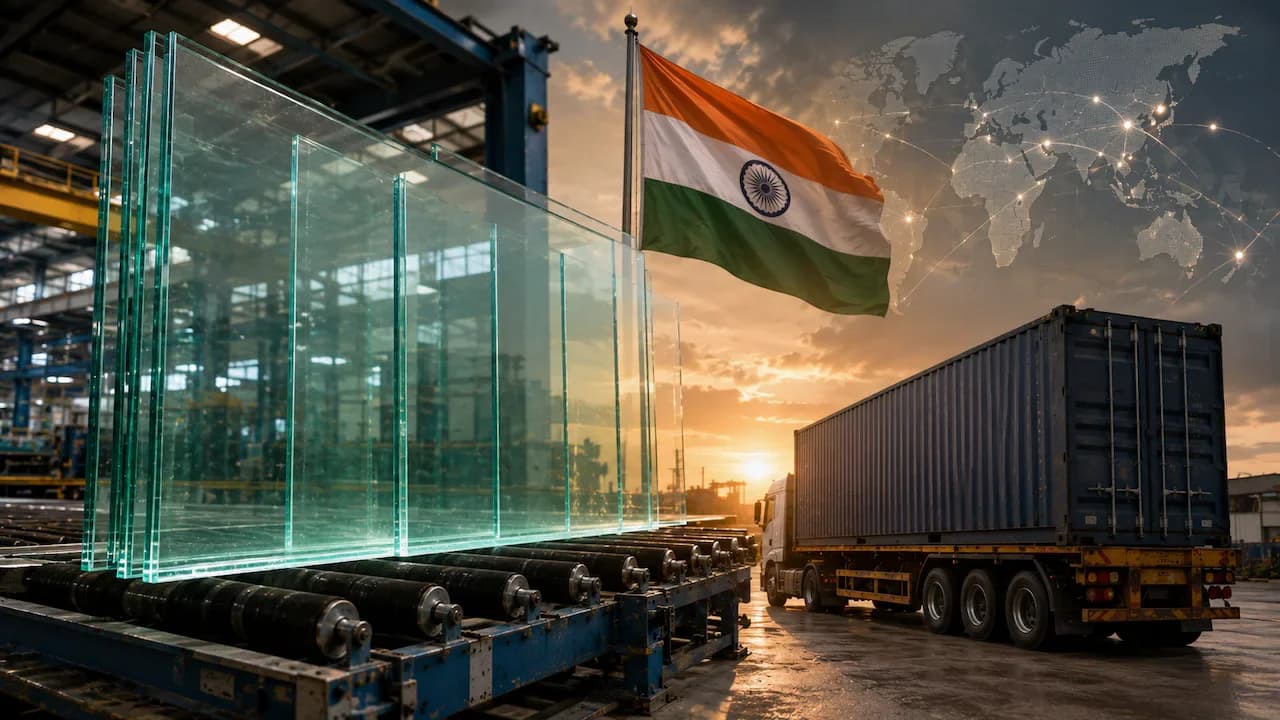
India has imposed a minimum import price of ₹34,000 per tonne on clear float glass for one year, restricting shipments priced below this threshold. According to a government notification issued by the Directorate General of Foreign Trade on August 18, the import policy for clear float glass with thickness ranging from 4 mm to 12 mm has been changed from "Free" to "Restricted" under ITC (HS) codes 70051090 and 70052990. Imports priced at or above ₹34,000 per tonne on a CIF basis will continue to be allowed, while shipments below the prescribed threshold will face new restrictions. The Union commerce ministry has notified this minimum import price, which will remain effective for one year starting August 18th. The policy change takes effect under DGFT Notification No. 29/2026-27 dated August 18, 2026.
The move is expected to benefit domestic glass manufacturers, including Saint-Gobain India, Asahi India Glass, and Gold Plus Glass, by reducing pricing pressure from low-cost overseas suppliers. As reported by the Directorate General of Foreign Trade, the government has stopped short of imposing an outright import ban, with the Minimum Import Price (MIP) effectively creating a price floor that makes imports below ₹34,000 per tonne subject to restrictions. The MIP will remain effective for one year from the date of publication of the notification. According to industry estimates, the Indian flat glass market is estimated at around 2.75 million tonnes in 2026, with demand projected to expand to nearly 3.8 million tonnes. The new import price could narrow the price gap faced by local manufacturers, as raw and clear float glass currently attracts a 10% standard basic customs duty.
Domestic glass manufacturers have been facing significant challenges from cheap imports, with float glass from China, Malaysia, and Vietnam priced at approximately ₹25,000 per tonne - significantly below the new minimum threshold. Industry sources report that float glass production in major hubs like Firozabad has dropped by over 30 percent due to increased production costs. Natural gas disruptions linked to the West Asia conflict have pushed up production costs and made it harder for Indian manufacturers to compete with imported glass. Domestic players have been raising concerns about facing a "double squeeze" - high energy costs that have added to manufacturing costs and cheaper glass imports from East Asian economies. The shortage of glass impacts across industries from pharmaceutical bottles to beverage storage to the automotive industry.
Certain imports have been exempted from the measure, including shipments by Advance Authorisation holders, Export Oriented Units and units in Special Economic Zones, provided the imported glass is not subsequently sold in the Domestic Tariff Area. The restriction applies specifically to clear float glass with thickness ranging from 4 mm to 12 mm, covering products under the specified ITC codes. According to the notification, the price restriction does not apply to imports made by Advance Authorisation holders, Export Oriented Units and Special Economic Zones with the condition that these goods must not be sold into the domestic market. India imports $2.1 billion worth of glass and glassware and is heavily reliant on countries like China, Malaysia, Vietnam, Thailand and Indonesia. Float glass is used in construction, green building glazing, automotive components, lightweight windows and solar PV panels.