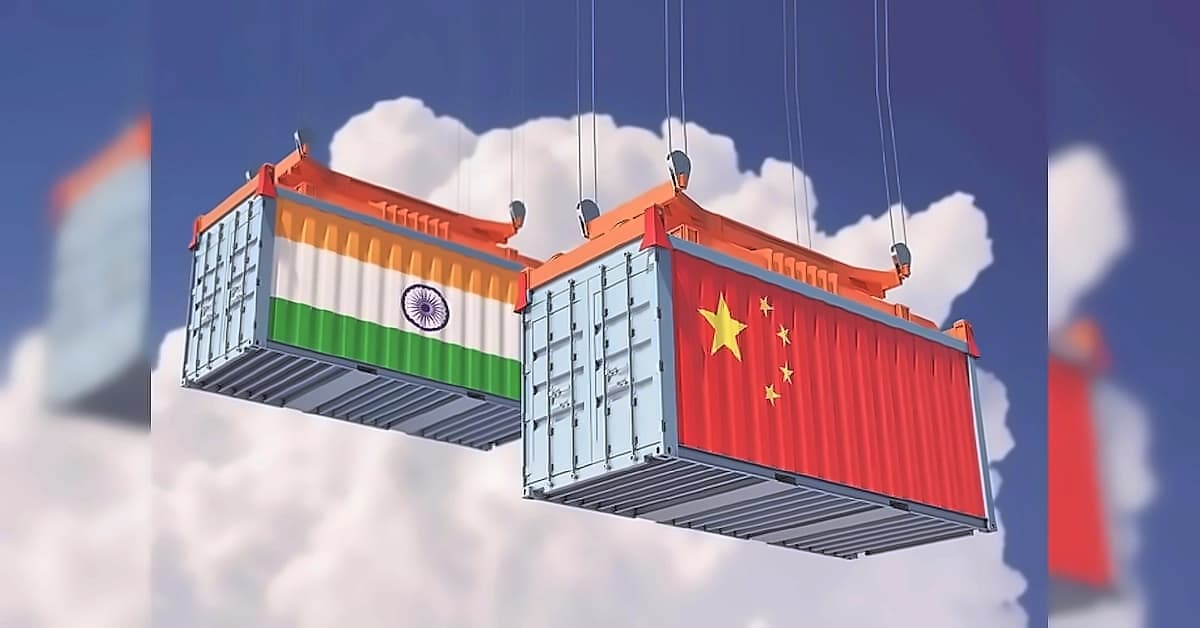
India's utilization of free trade agreement benefits remains critically low at just 20-30% of eligible exports, compared with 60-70% by FTA partners, according to the Global Trade Research Initiative (GTRI). As reported by Business Standard, high compliance costs and already low tariffs in partner countries discourage Indian exporters from using FTA preferences. Most small firms prefer to avoid the compliance burden for modest tariff savings, with many FTA partners being already open economies with low tariffs. Average MFN tariffs are close to zero in Singapore and below 4% in Japan, Australia, Malaysia and the UAE, while India's trade-weighted MFN tariff is about 12.6%, ranging from zero to 150%.
FTAs have made the inverted duty structure issue harder to fix because many finished goods now enter India at low or zero duty from partners such as ASEAN, Japan, South Korea, UAE and Australia. As per GTRI, steel and aluminium attract MFN duties of 7.5-10%, but machinery, industrial equipment and engineering products made from these materials can enter India duty-free under several FTAs. Indian manufacturers face higher input costs when competing with tariff-free imported machinery produced with globally priced inputs. Over the past three years, India's average annual trade deficit with ASEAN, Japan and South Korea has reached about USD 62 billion. GTRI Founder Ajay Srivastava noted that when India cuts tariffs under an FTA, exporters from partner countries gain significant price advantages in the Indian market.
India and the Eurasian Economic Union (EAEU) have established the framework for negotiating a comprehensive free trade agreement, with the terms of reference signed on August 20, 2024. According to reports from NDTV Profit, the first round of negotiations was conducted in November 2025, with the second round scheduled for later this month in Moscow. The agreement encompasses approximately 15 chapters covering goods and customs facilitation, though it does not include a dedicated services chapter.
The EAEU consists of five member countries: Russia, Armenia, Belarus, Kazakhstan, and Kyrgyzstan. According to NDTV Profit reports, Russia is India's top trading partner within the bloc, with bilateral trade reaching ₹5,76,120 crore ($68.72 billion) in 2024-25, comprising exports of ₹3,970 crore ($4.88 billion) and imports of ₹5,72,150 crore ($63.84 billion). The high import figures are primarily attributed to increased crude oil purchases from Russia.
Bilateral trade with other EAEU members shows varying levels of engagement, with Armenia recording ₹2,620 crore ($315.18 million), Belarus at ₹8,900 crore ($106.69 million), Kazakhstan at ₹3,490 crore ($349.48 million), and Kyrgyzstan at ₹570 crore ($56.78 million) in the last fiscal year. As reported by NDTV Profit, the agreement will address SPS rules designed to protect human, plant and animal health, including limits on pesticide residues, restrictions on contaminated seafood, and testing requirements for antibiotic residues in seafood. To address current FTA challenges, GTRI suggests tariff schedule revision, addressing inverted duty structure, strengthening domestic manufacturing ecosystems, setting up an FTA Impact Monitoring Authority, and prioritizing mutual recognition of standards to reduce non-tariff barriers faced by Indian exporters.