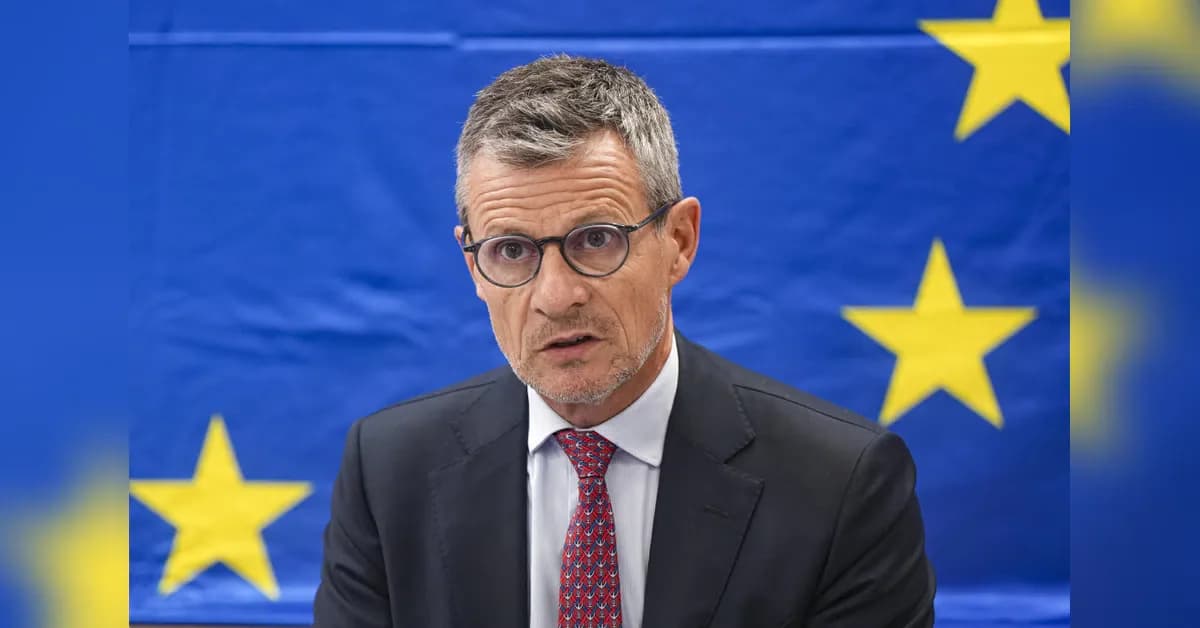
EU Ambassador Hervé Delphin confirmed that the India-EU free trade agreement could be signed by the end of 2026 and enter into force within months, with implementation possible in early 2027. Speaking to media in New Delhi on Monday, Delphin stated there is common commitment from the top to have the FTA signed as soon as possible, with both sides working hard to complete legal vetting of the text. The ambassador emphasized that both sides have worked very hard to complete the process of the so-called legal vetting of the text, creating a possibility for signing by the end of the year. As per ANI, Delphin described the timeline as by any measure a record for an EU trade agreement and reflects the political energy behind the negotiations on both sides.
Commerce and Industry Minister Piyush Goyal had earlier stated that India and the EU were working towards signing the FTA by December 2026 and making it operational by March 2027. According to ANI, responding to specific implementation queries, Delphin said I think it's good to be really optimistic in looking at the first quarter of 2027 and I think everyone, it's for me the reflection of the optimism that is behind this timeline and also the commitment of both sides to have it signed and in place as early as possible. He noted that when it is signed on the EU side, there is an extra step where the European Parliament has to give its consent, and when this consent is registered, the FTA will enter into force. The ambassador emphasized that every FTA that the EU has signed with key partners has shown that after a few years, the trade volume has doubled, the value of trade has doubled, creating significant excitement in business communities on both sides.
India and the EU launched negotiations for the free trade agreement in 2022, restarting talks after an earlier effort stalled in 2013. According to ANI, the negotiations concluded in 2026 after multiple rounds of discussions covering trade in goods and services, investment and other areas, paving the way for legal review of the text before signing. The current agreement represents a significant milestone in bilateral trade relations after nearly two decades of on-off negotiations. Delphin described the India-EU FTA as one of the most consequential trade agreements under negotiation, with the potential to significantly boost business and economic ties between the two partners.
Delphin highlighted that sectors such as artificial intelligence, energy, green transition, urban development, healthcare and other emerging sectors would increasingly be part of EU-India economic cooperation. As reported by ANI, he emphasized that the two sides could combine India's scale with European expertise, particularly in areas linked to the green transition and technology. On energy cooperation, Delphin noted that India had made significant progress in renewable energy but faced challenges in building the supporting ecosystem, including electricity grids and storage capacity, where the EU could contribute expertise in smart grids integration. The ambassador also highlighted urban development as a potential area of EU-India cooperation, noting that India's urbanisation over the next 25 years would present a major planning challenge, where the EU could support India by drawing on its experience in urban planning and smart-city development including urban mobility, waste management and renewable energy.
Delphin pointed to artificial intelligence as another area of convergence between India and the EU, stating that both sides shared a broadly similar approach centred on human-centric AI. According to ANI, he noted that if you look where different actors globally position themselves in terms of AI, I think the EU and India are probably the closest of all in terms of approach, with a human-centric view on AI. He also highlighted urban development as a potential area of EU-India cooperation, noting that India's urbanisation over the next 25 years would present a major planning challenge, where the EU could support India by drawing on its experience in urban planning and smart-city development including urban mobility, waste management and renewable energy.
On mobility, Delphin said the FTA would further strengthen the movement of businesspersons and workers between India and Europe. According to ANI, he also referred to the Schengen Visa Cascade arrangement, under which eligible travellers with an established travel record can obtain longer-term visas. The ambassador added that the approval rate for Schengen visas for Indian applicants was more than 85 per cent, according to 2025 figures, and expressed confidence that mobility links between the two sides would continue to expand. Responding to concerns over the European Union's Carbon Border Adjustment Mechanism (CBAM), Delphin said the issue was distinct from the legal vetting of the FTA and reiterated that any simplifications or measures adopted under the CBAM framework would also be applied in the context of India.