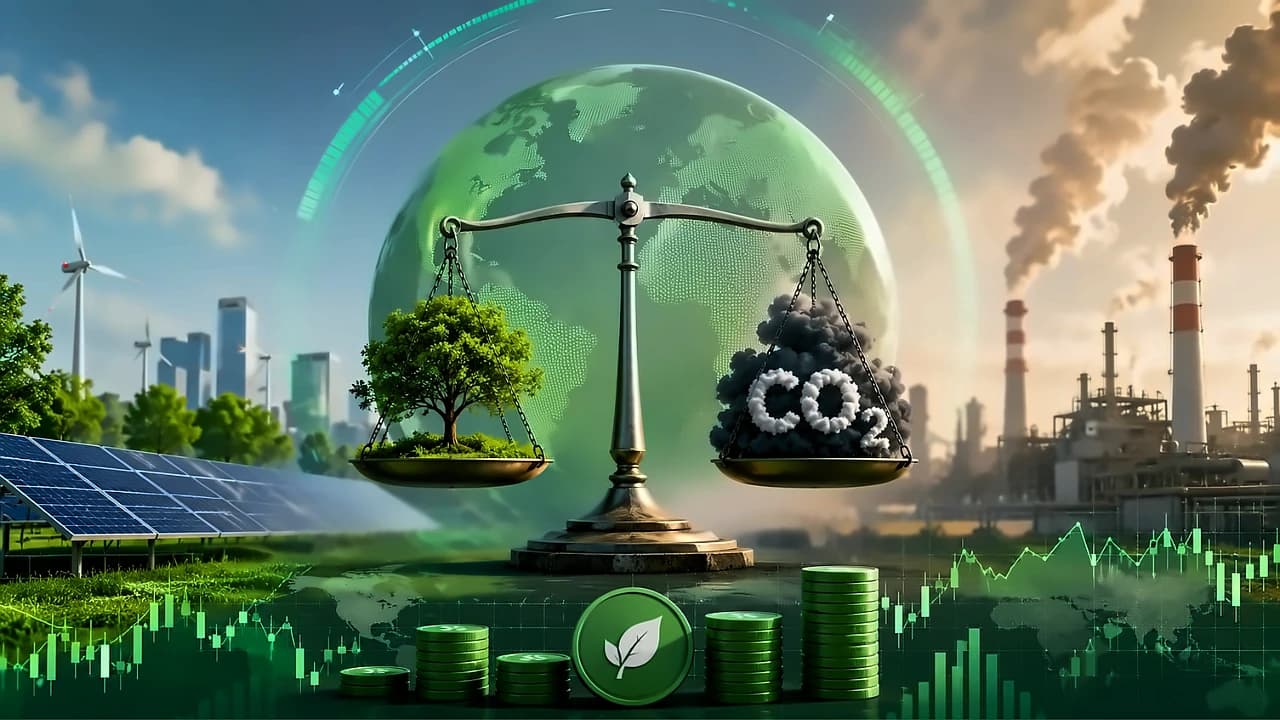
The India-EU free trade agreement, concluded in January and moving through ratification, presents a strategic opportunity for India to transform from a clean energy consumer to a trusted export hub. According to recent analysis, Europe's search for supply chain diversification creates a critical window for India to establish itself as a reliable supplier of clean energy technologies. The India-UK trade agreement, which came into force in July, provides additional institutional framework for this transition, with the India-EU Trade and Technology Council and UK-India Technology Security Initiative established to facilitate technology transfer and joint ventures beyond simple assembly operations.
The UK Carbon Border Adjustment Mechanism (CBAM) will enter operational phase from January 1, 2027, covering five sectors: aluminum, cement, fertilizer, hydrogen, and iron and steel. Unlike the EU, which provided a year-long transition period with only reporting obligations, the UK CBAM will impose immediate carbon-tax liability on importers above certain value-based thresholds. According to reports from Business Standard, the UK has already accepted India's Carbon Credit Trading System (CCTS) under its CBAM regulations 2026, making Indian exporters eligible for carbon-price offsets through price negotiation with UK importers.

Many Indian micro, small, and medium enterprises (MSMEs) lack the necessary ability or resources to monitor and record embodied emissions and satisfy the hard evidence requirements demanded by UK authorities. As reported by Business Standard, India's CCTS remains nascent and will require time to develop, potentially limiting the current benefits for Indian exporters. The accuracy and authenticity of monitoring and measurement of embodied emissions, reporting, verification, and actual costs incurred by producers/exporters are crucial for availing CCTS benefits in the UK market. However, recent analysis suggests that meeting Europe's carbon and traceability rules, from CBAM to the battery passport, represents less a compliance cost than a passport into premium markets.
The EU CBAM currently covers six sectors including electricity, with plans to expand scope to over 180 downstream aluminum- and steel-intensive products. According to Business Standard, while the UK uses emission intensity as the tax parameter, the EU CBAM is based on actual emissions data at highly granular supply chain levels. The EU has postponed indirect emissions reporting to 2029 at the earliest, requiring detailed mapping of production value chains and corresponding emissions data. This creates a strategic opportunity for Indian exporters to establish compliance capabilities before broader implementation.
Indian exporters, particularly small and medium-sized enterprises, require government support to maximize benefits from FTAs with the UK and EU. As reported by Business Standard, necessary measures include product code matching exercises with UK and EU CBAM product lists, detailed carbon emissions mapping along entire production value chains, and budgetary support for CBAM infrastructure schemes. The Securities and Exchange Board of India's expansion of Scope 3 reporting requirements to top 1,000 listed companies from FY 2026-27 provides a foundation, though it remains voluntary for MSMEs. Recent analysis emphasizes the importance of securing real technology transfer and joint ventures rather than simple assembly operations, with the India-Middle East-Europe Economic Corridor and bilateral critical-minerals partnership providing additional institutional framework.
The year 2027 represents a critical period for CBAM implementation, with the EU CBAM Registry accepting verified emissions reports from January 1, 2027, and certificate purchases beginning in February 2027. According to Business Standard, the first annual CBAM declaration and certificate surrender must be completed by September 2027. The CBAM tariff offset calculation will depend on accurate and valid carbon reduction certificates from exporters' home countries, making compliance readiness an immediate necessity for Indian exporters. Recent analysis warns that Vietnam, Malaysia, Indonesia and South Korea are courting the same space, and European partnerships and capital will move to whoever is ready first, making the next few months critical for how the EU decides to diversify its supply chains.