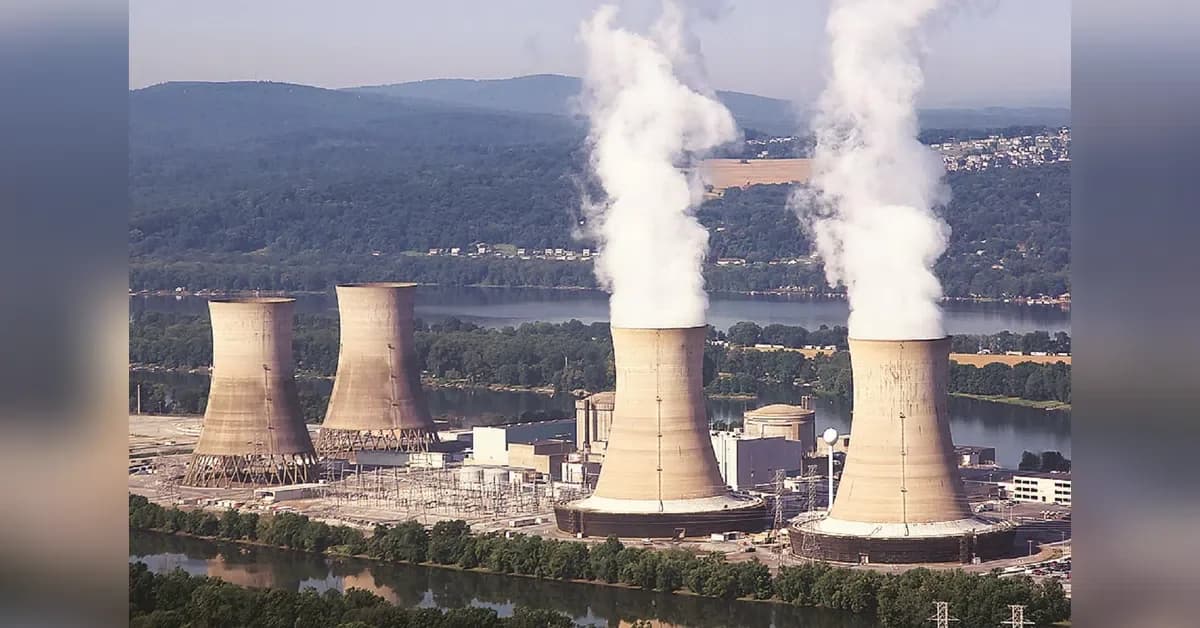
State-owned Nuclear Power Corporation of India Ltd (NPCIL) has approached the Central Electricity Regulatory Commission (CERC) seeking another year-long extension of existing permission to draw start-up power for pre-commissioning activities from the grid for its second 700 Megawatt (MW) Rajasthan Atomic Power Project (RAPP)-8 unit. According to reports from Business Standard, the unit missed its June 30, 2026 deadline due to vendor availability issues and Covid-19 pandemic-induced financial stress affecting qualified vendors in India for nuclear grade reactor equipment and components.
The RAPP-8 unit is based on Pressurised Heavy Water Reactor (PHWR) technology that was initially brought from Canada in the 1960s but has since been fully indigenised over the last five decades. As reported by Business Standard, NPCIL attributed the delay to RAPP-8 using a first-of-a-kind technology, while the degraded financial condition of vendors, including EPC Contractors, led to delays in procuring raw materials for manufacture and consequential non-realisation of revised target commissioning dates.
According to Deloitte India partner Anujesh Dwivedi, while India has developed a robust domestic ecosystem for large PHWR reactors, there are still some specialised components that need to be imported. As reported by Business Standard, he emphasised that India will need to focus on scaling up nuclear power equipment manufacturing as the country ramps up annual pace of capacity addition to achieve the vision of 100 GW nuclear power capacity by 2027. Dwivedi noted that investor interest is likely to gather momentum as the market opens up and equipment manufacturers start getting certainty of order inflow.
The Sustainable Harnessing and Advancement of Nuclear Energy for Transforming India (SHANTI) Act, 2025 overhauls India's nuclear sector by ending the government's monopoly on power generation, allowing private companies and joint ventures to build, own, and operate nuclear plants. As reported by Business Standard, the legislation aims to mobilise capital and reach 100 Gigawatt (GW) of capacity by 2047. The Central Electricity Authority organised a workshop in April with key stakeholders to deliberate upon the operationalisation of the SHANTI Act, establishing localisation of the nuclear supply chain as a necessary condition for achieving target capital costs.
A delegation of about 20 top US nuclear energy executives visited India in May, meeting Indian ministers, officials, and executives from nuclear energy companies to explore partnerships. According to Business Standard, Maria Korsnick, president and CEO of Washington-based Nuclear Energy Institute, noted that the SHANTI Act had changed the conversation and that US firms are willing to support India across the full nuclear life cycle, including various types of reactors and advanced fuel technologies. India currently has 18 PHWRs in operation, including three of 700 MW capacity - two in Gujarat and Unit-7 of RAPS in Chittorgarh district in Rajasthan.