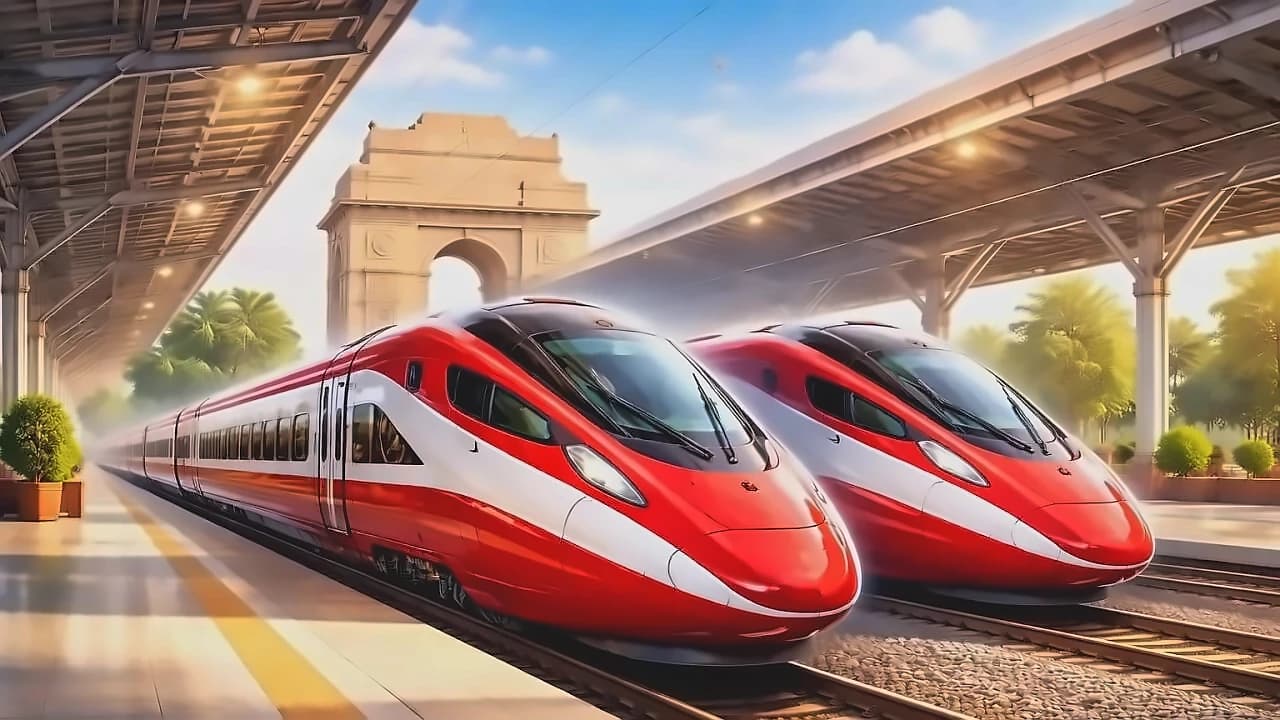
Indian Railways has awarded a contract for manufacturing 260 Vande Bharat sleeper trains to multiple consortiums, marking a significant expansion of India's overnight semi-high-speed rail network. The first prototype of the Vande Bharat sleeper train is now targeted for March 31, 2027, after the earlier June 2026 deadline was revised. The first pair of Vande Bharat sleeper trains entered passenger service earlier this year on the Guwahati-Howrah route, with a second pair currently undergoing trials. As reported by Mint, the expansion will not happen all at once, with new sleeper services depending on prototype development, testing, certification and readiness of individual routes.
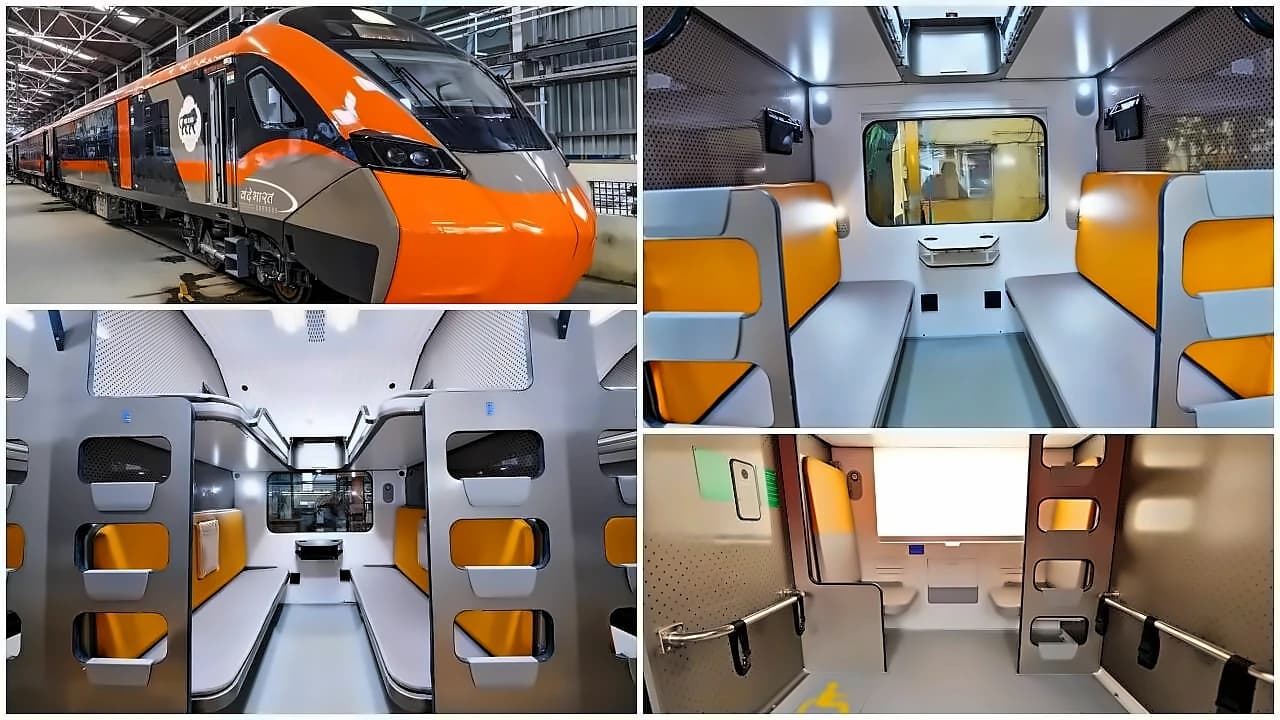
The manufacturing pipeline covers 260 Vande Bharat sleeper trainsets across multiple manufacturers. The first 10 Vande Bharat sleeper trainsets are being manufactured by BEML as 16-car rakes, with each train comprising 11 AC 3-tier coaches, four AC 2-tier coaches and one AC First Class coach. The Integral Coach Factory (ICF) Chennai will manufacture another 50 trains, featuring 24 coaches and a pantry car to enable much longer overnight journeys. RVNL has established Kinet Railway Solutions Ltd as an Indo-Russian joint venture with Russian firm Transmashholding (TMH) to manufacture 120 Vande Bharat sleeper trainsets at the upgraded Marathwada Rail Coach Factory in Latur, Maharashtra. The Titagarh-BHEL JV will produce 80 rakes, with manufacturing work underway at the upgraded Marathwada Rail Coach Factory in Latur.
The new train has a design speed of 180 kmph and operational speed of 160 kmph, subject to route permissions and railway infrastructure. Unlike conventional trains that rely on separate locomotives, Vande Bharat sleeper trains use distributed power across the trainset, enabling faster acceleration and braking. This distributed power arrangement allows for quicker acceleration and braking, which can raise average speeds and significantly cut travel time. The current 16-coach configuration includes 11 AC 3-tier coaches, four AC 2-tier coaches and one AC First Class coach, with each trainset consisting of 16 coaches. The prototype has undergone testing at 180 kmph and is designed to operate at speeds of up to 160 kmph.
The Vande Bharat sleeper trains offer superior comfort features designed specifically for overnight travel. The coaches feature cushioned berths, reading lights, charging points, passenger information displays and integrated announcement systems. The trains will have sealed gangways and automatic interconnecting doors to help maintain the onboard environment. AC First Class coaches offer shower facilities and hot water, while the train is equipped with indigenous KAVACH anti-collision safety technology and regenerative braking system for improved energy efficiency. The train doors are designed to open automatically at designated stations, and an emergency communication system connects passengers with the driver. The trains will also use aircraft-style bio-vacuum toilets, designed to improve hygiene and reduce water usage, with separate washroom facilities available for passengers with disabilities.
The Vande Bharat sleeper trains are positioned to replicate the success of the original Vande Bharat Express launched in 2019, which became the face of modern train travel in India. The trains aim to be a game-changer for overnight travel on the Indian Railways network, featuring better-than-Rajdhani Express comfort and semi-high-speed sleeper train capabilities drawing inspiration from contemporary European rail systems. While reports have suggested Bengaluru-Mumbai as a possible route, Indian Railways has not officially confirmed the deployment. As production expands across BEML, ICF, Kinet and Titagarh-BHEL, Indian Railways plans to gradually introduce more Vande Bharat sleeper services on long-distance routes, with the actual number of trains entering passenger service depending on completion of required testing and approvals.