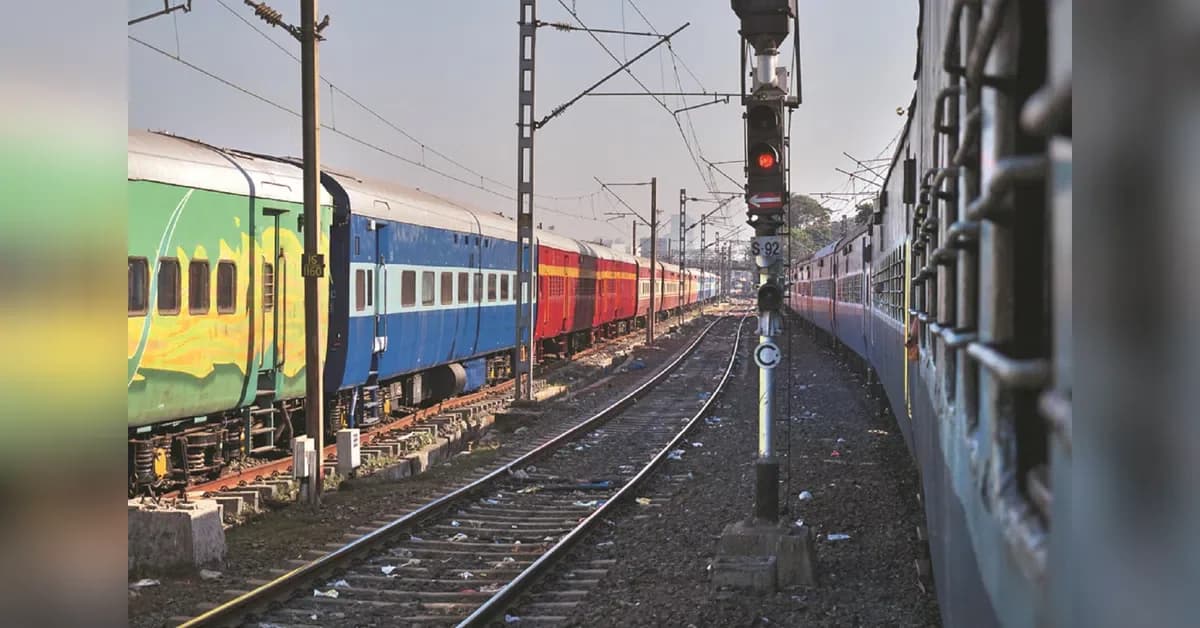
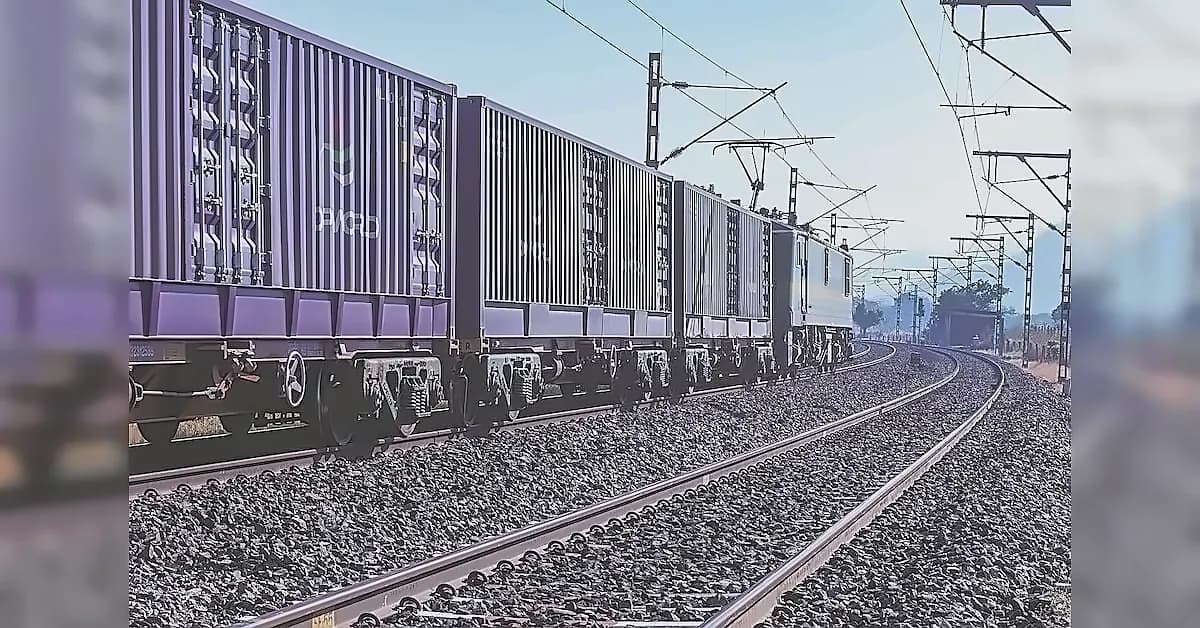
The Railways Ministry announced that only two consequential train accidents were recorded in the current financial year (2026-27) till June, marking a significant improvement in railway safety. According to Railway Minister Ashwini Vaishnaw's written reply to the Lok Sabha, this decline is attributed to higher safety spending, Kavach rollout, and infrastructure upgrades. The ministry emphasized that safety remains the highest priority on Indian Railways, with various safety measures implemented over the years resulting in a steep decline in accident numbers.
The ministry shared comprehensive data showing the dramatic improvement in railway safety over the past decade. As reported by the ministry, the number of consequential train accidents decreased from 135 in 2014-15 to 31 in 2024-25, then further to 16 in 2025-26, and now only two till June in 2026-27. This represents a substantial reduction in railway accidents, which includes both collisions and train derailments. The causes of accidents broadly include track defects, locomotive or coach defects, equipment failures, and human errors, which have now been strengthened through modern technology, infrastructure and enhanced maintenance.
The ministry highlighted significant increases in safety-related expenditure over the years, with spending rising from ₹39,200 crore in 2013-14 to ₹1,20,389 crore in 2026-27, representing a more than three-fold increase. According to the ministry, an estimated ₹1,20,389 crore is planned for the current financial year. The ministry detailed that electrical and electronic interlocking systems with complete track circuiting have been provided at 6,671 stations up to June 30, 2026, while interlocking has been provided at 10,395 level-crossing gates for enhanced safety. Complete track circuiting of these railway stations has been undertaken to enhance safety by verification of track occupancy by electrical means.
The ministry announced that after extensive trials, Kavach Version 4.0 had been successfully commissioned on 2,490 route kilometres as of July 13, 2026, covering high-density routes including Delhi-Mumbai and Delhi-Howrah. As reported by the ministry, Kavach is an indigenously developed Automatic Train Protection system that aids loco pilots in operating trains within specified speed limits by automatically applying brakes if the loco pilot fails to do so. The system also helps trains run safely during inclement weather conditions. Kavach implementation work is under progress on 21,937 route kilometres, with installation being taken up on 7,435 locomotives and 1,200 EMU/MEMU trains. The amount utilised for Kavach works up to June 2026 is ₹3,874.9 crore, with allocation of ₹2,066.24 crore during 2026-27.
Indian Railway Finance Corporation (IRFC) is scheduled to review its first-quarter results on July 30, 2026, following a strong FY26 performance where annual dividends reached ₹2.1 per share. The company's trading window has been closed since July 1, 2026, and will remain closed until 48 hours after results are approved. IRFC recorded a net profit of ₹17 billion (₹1,700 crore) for Q4 FY26, up from ₹16.8 billion (₹1,680 crore) in the corresponding period of the previous fiscal year.
In response to another parliamentary query, Union Minister Vaishnaw reported significant progress in railway recruitment and modernisation. At present, recruitment against 1,61,889 vacancies of non-gazetted personnel has been taken up on Indian Railways as per the annual calendar 2024, 2025 and 2026. During January to December 2024, ten Centralised Employment Notifications for 92,116 vacancies were notified for various posts including Assistant Loco Pilots, technicians, Sub-Inspectors, Constables in Railway Protection Force, Junior Engineers, and other categories. During 2026-2027 up to June 30, 2026, panels for more than 3,300 candidates for various posts including Technicians, Junior Engineers, Paramedical Categories, Ministerial and Isolated categories and Assistant Loco Pilots have been finalised, with the majority in safety categories.