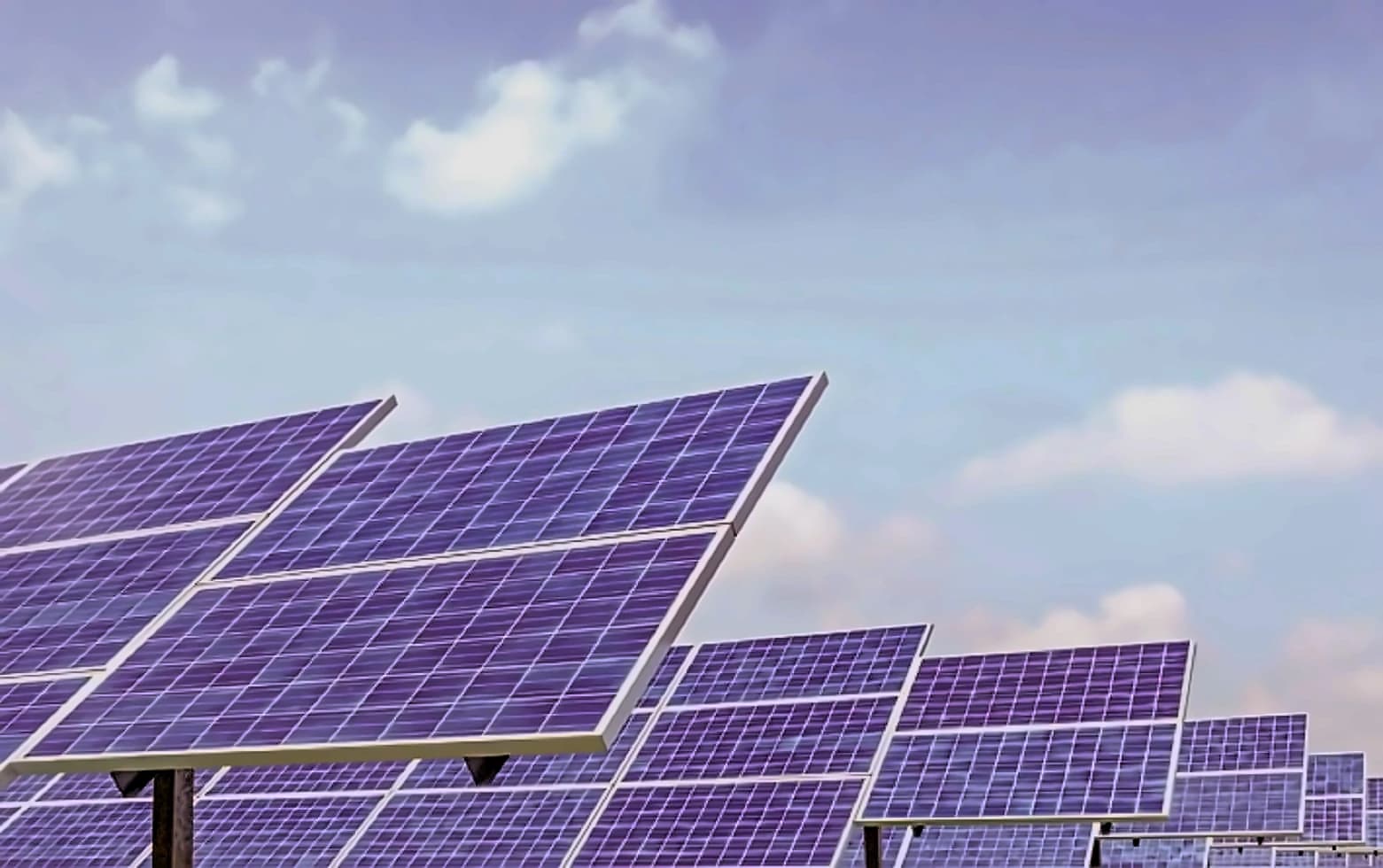
Insufficient transmission lines have emerged as a major obstacle to India's renewable energy expansion, with many solar projects being curtailed during daylight hours, according to a rating agency assessment released on 19 August 2026. The constraint has shifted the binding limit on India's energy transition from how fast capacity can be built to how much of it the grid can actually carry. India's renewable programme has moved past the point where generation capacity is the constraint, with the evidence being a 150 GW construction pipeline coexisting with up to 50% daytime curtailment on capacity that is already running. The market has responded not by building more but by bidding less, with awards falling from 40.6 GW in 2024-25 to 4.7 GW through August 2026, showing developers withdrawing rather than bidding lower.
India requires approximately ₹57 trillion of private capital over the next five years, translating to ₹11.4 trillion annually. According to reports from Business Standard, assuming a four-year implementation cycle for infrastructure projects, the country needs a ₹45.6 trillion 'shovel-ready' infrastructure pipeline to meet these requirements. However, there are not enough 'shovel-ready' projects currently in the pipeline to meet the estimated demand, creating a critical gap for private investment. The current infrastructure pipeline falls significantly short of requirements, with one of three institutions - the Ministry of Finance, NITI Aayog, or the Ministry of Statistics and Programme Implementation - suggested to monitor and publish this figure on a half-yearly basis to address transparency gaps.

The infrastructure sector's unique characteristics create challenges for private sector participation. According to the analysis in Business Standard, infrastructure is composed of long-term, regulated asset-heavy public utilities that are often geographic monopolies, making it impossible and inappropriate for the private sector to create such projects independently. The private sector typically gets involved only after winning bids crafted by the state, highlighting the need for a clear institutional framework for project development. These structural issues are particularly relevant as whether renewable energy reaches more than 35% of generation by 2029-30 now depends on the execution of intra-State and inter-State transmission lines and on storage capacity, not on the pace of solar commissioning.
Several key regulatory reforms remain unimplemented despite their importance to private investment. As reported by Business Standard, the NITI Aayog was tasked with a Regulatory Reforms Bill after the 2015 Budget, which still remains unenacted. Roads and railways alone account for 40% of the infrastructure pipeline, yet neither these nor other major infrastructure sectors like water have independent regulators. The article emphasizes that this reform has been the longest-awaited and received the least attention from policymakers. These regulatory gaps become particularly critical as grid stability with more than 35% renewable generation requires inertia, frequency response and balancing reserves that thermal plants currently supply, meaning that must run thermal capacity has to be retained and paid for even as it operates at low plant load factors.
The analysis suggests seven potential remedial measures to address current challenges. According to Business Standard, these include establishing a dedicated institution like '3P India' with ₹500 crore budgetary allocation to ensure PPP project development, enabling renegotiation procedures for long-term PPP tenures, and legislating independent sector regulators. The article references the Vijay Kelkar Committee's 2015 report ' and highlights the need for comprehensive reforms to address the current transmission constraints that are limiting India's renewable energy expansion potential.