Prime Minister Narendra Modi inaugurated and laid foundation stones for multiple development projects worth ₹35,000 crore in Gujarat today. Speaking on the occasion, Modi said facilities and infrastructure in the national capital are being steadily strengthened and expanded. The projects launched today will strengthen infrastructure, improve connectivity and enhance ease of living for people in the city. Modi highlighted that India is scripting a new chapter in women empowerment and women are playing an important role in the country's development. He said India's women's power is moving ahead with renewed energy in every sector and making a significant contribution to nation-building.
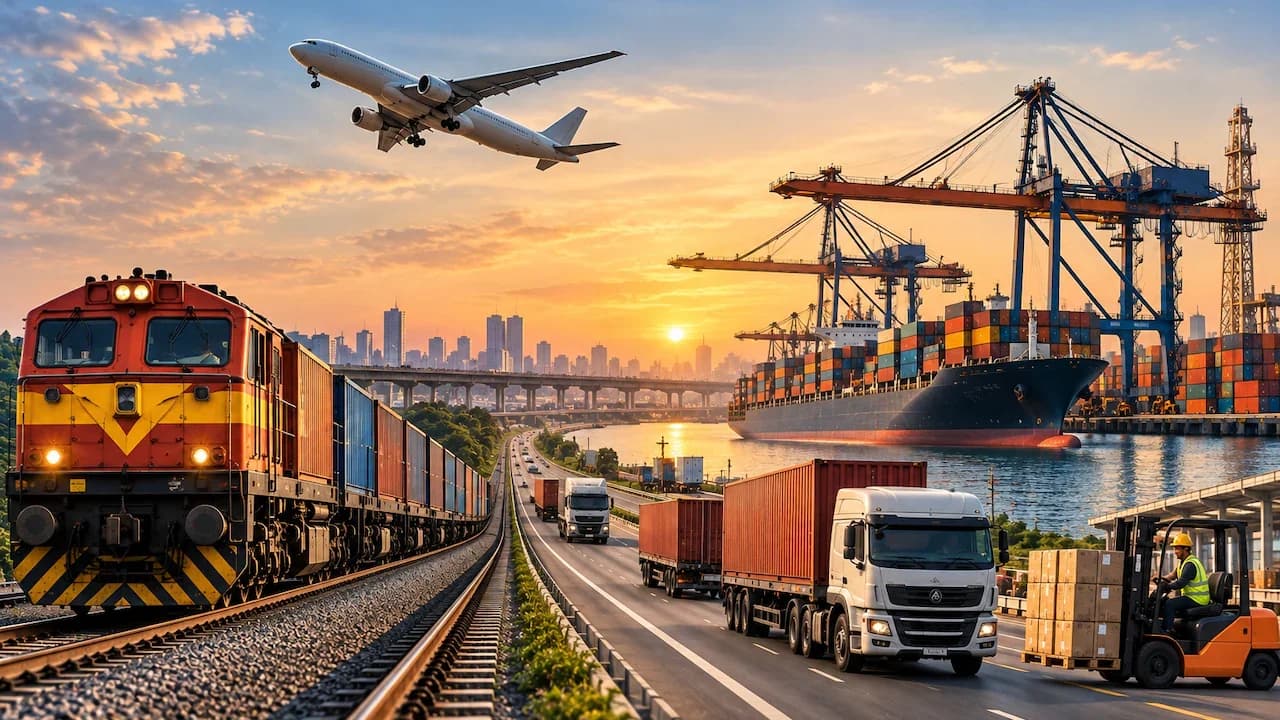
Modi dedicated to the nation three important sections of the Western Dedicated Freight Corridor (WDFC), covering 326 route kilometres and developed at a cost of more than ₹20,700 crore. These include the New Sanand (N)-New Makarpura, New Umbergaon-New Saphale and New Saphale-New JNPT sections. With these sections commissioned, the entire Dedicated Freight Corridor (DFC) network has become operational across its full length. The direct connectivity of Jawaharlal Nehru Port Authority (JNPA) will facilitate faster movement of EXIM cargo, strengthen connectivity between industrial centres and ports, reduce logistics costs and help decongest Mumbai's railway network. The Ministry of Railways undertook the construction of two Dedicated Freight Corridors - the Eastern Dedicated Freight Corridor (EDFC) runs from Ludhiana to Sonnagar and covers 1,337 km, while the Western Dedicated Freight Corridor (WDFC) connects Dadri with Jawaharlal Nehru Port Terminal (JNPT) over 1,506 km. The Western DFC connects Dadri in Uttar Pradesh with JNPA, one of India's major maritime gateways for export-import cargo, and is expected to cut by about 60 per cent the time a freight train takes to cover the route on mixed-use Indian Railways tracks.
The Western DFC is described as India's industrial freight corridor, linking northern and northwestern industrial centres with major ports including Mundra, Kandla, Pipavav and JNPA. Unlike conventional railway lines, the DFC is reserved for freight trains and permits speeds of up to 100 kilometres per hour (kmph). According to officials, the average time taken to cover 100 km on the Western DFC is about two-and-a-half hours, compared with nearly six hours on an average railway track. For a truck journey that takes 30 hours, the DFC will take 10-12 hours. However, container train operators estimate the optimum potential for cost savings in container cargo at about 25 per cent, while the benefit currently accruing to container train operators is roughly 6-7 per cent. The final link also gives state-owned JNPA the capability to handle double-stacked containers directly from the freight corridor, unlike competing private ports Mundra and Pipavav. Trial runs on the completed stretch began June 30, and the route has been operational for more than a month.
Modi flagged off freight train services from New Sanand (North), New Makarpura, New Umbergaon and New JNPT, Mumbai, and inaugurated a new passenger train service between Tanda Road and Vadodara (Pratapnagar). He also dedicated to the nation the Jobat–Tanda Road new rail line, developed as part of the Chhota Udepur–Dhar project, which will connect remote and tribal areas of Alirajpur with the national rail network. The new rail line will benefit the people of Vadodara, Chhota Udepur and Alirajpur districts. Modi laid the foundation stone for three railway projects spanning 329 kilometres and costing more than ₹9,700 crore. These include the Vadodara-Ratlam third and fourth lines, Miyagam Karjan-Choranda–Malsar gauge conversion and the Vishwamitri-Dabhoi doubling project. The projects will enhance passenger and freight capacity, ease congestion and strengthen connectivity between Gujarat and Madhya Pradesh.
Modi laid the foundation stone for three National Highway projects costing around ₹1,780 crore. These include the six-laning of the Kamrej-Chalthan section of NH-48; construction of additional structures, including major bridges over the Tapi and Narmada, on the Vadodara-Surat section of NH-48; and grade-separated structures at Abhava, Mindhola and Khajod junctions on NH-53. Additionally, he inaugurated and laid foundation stones for GPRA redevelopment projects worth ₹15,200 crore, spread across key locations including Sarojini Nagar, Netaji Nagar, Kasturba Nagar and Sriniwaspuri. These projects are part of the Government's ambitious programme to modernize GPRA colonies and create world-class infrastructure for Government employees and administrative offices, providing more than 9,350 modern flats for government employees along with the creation of approximately 48 lakh square feet of office space.
Apart from Gujarat infrastructure, Modi will launch and inaugurate various projects of the Government of Gujarat with an estimated value of around ₹2,600 crore. Among the projects for which foundation stones will be laid are Phase II of the Vadodara Urban Development Authority Ring Road, a 110 MW floating solar project at Kadana Dam, and construction of a new office building for the Vadodara Municipal Corporation. The Prime Minister will also inaugurate housing projects under the Pradhan Mantri Awas Yojana (PMAY) and a water-supply project covering 11 villages in eastern Vadodara, among other initiatives. Together, these projects are expected to strengthen urban infrastructure, renewable energy capacity, housing and basic public services in Gujarat.