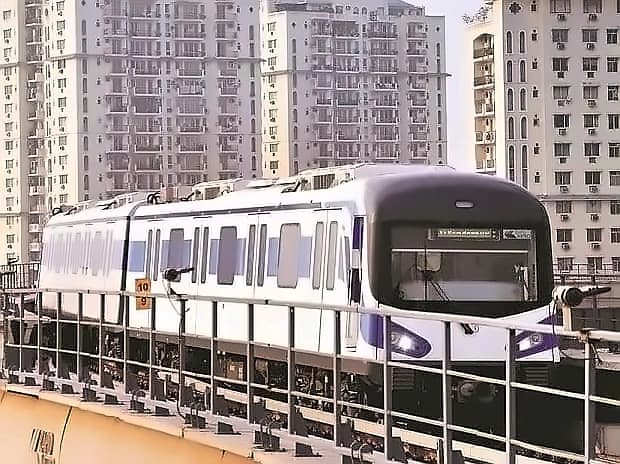
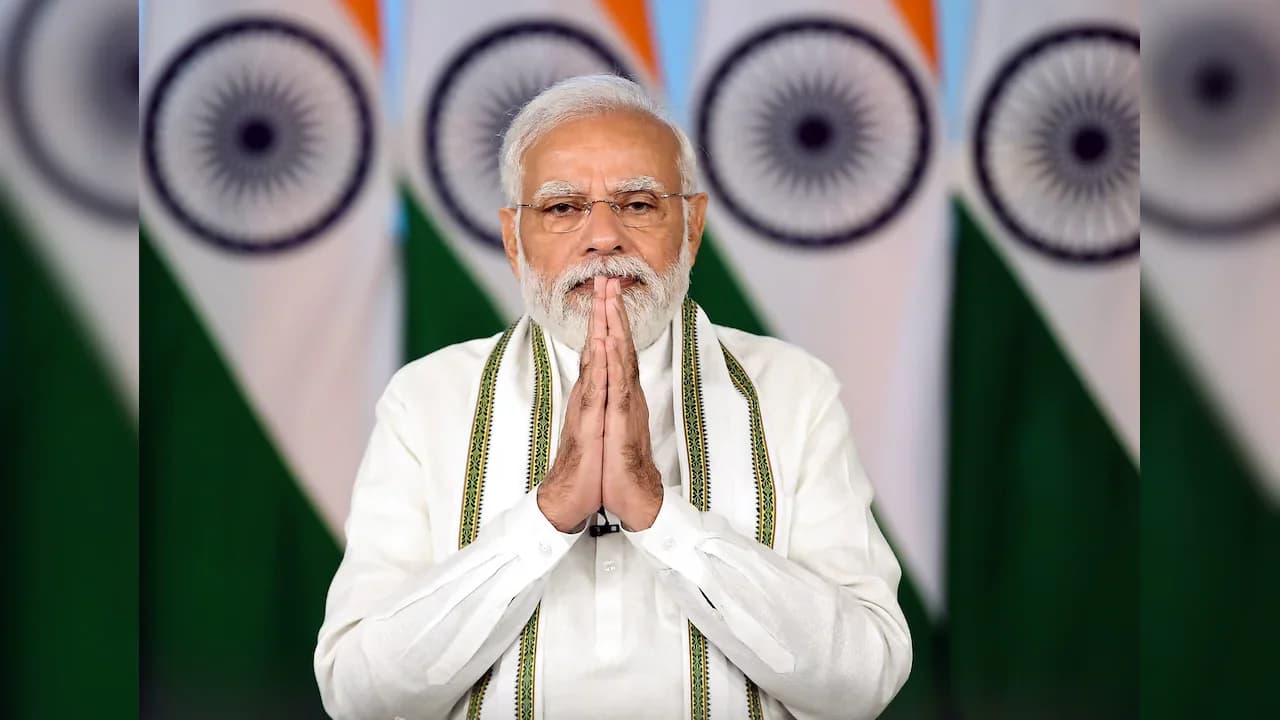
Prime Minister Narendra Modi on Friday flagged off India's first hydrogen-powered train from Jind railway station to Sonipat, marking a historic technological milestone in the country's railway history. The 10-coach train is powered by a 3,200 HP hydrogen fuel cell propulsion system and produces only water vapour as emissions, making it one of the most powerful and cleanest trainsets globally. As per Business Standard, the train can accommodate around 2,600 passengers and operates without overhead electrification, significantly reducing both noise and dependence on fossil fuels. Railway Minister Ashwini Vaishnaw described the launch as a "historic technological milestone," noting that India now possesses the complete technology required to develop hydrogen-powered trains, placing the country among a select group of nations operating such services. Modi emphasized that "India has successfully demonstrated its prowess by running a hydrogen train with ten full coaches straightaway," highlighting the nation's bold operational dominance on its very first attempt. Speaking at the event, Modi said "Today, Jind and Haryana have permanently etched their names in the pages of history. From here today, the nation has been gifted its first Hydrogen Train."
Addressing the gathering in Jind, Modi highlighted how railway electrification helped India withstand disruptions to global energy supply routes amid the ongoing geopolitical turmoil in West Asia. As per Business Standard, he said the "indispensable" maritime routes for the supply of petroleum, diesel, LPG and fertilisers have been continuously affected by severe disruptions for months. Modi explained that if such a global fuel crisis had occurred before 2014, the Indian Railways' previous heavy reliance on diesel would have inevitably and completely paralysed the national railway network, as only 30 per cent of the network had been electrified between 1925 and 2014. He credited the government's push with helping electrify nearly 99 per cent of the railway network and 100 per cent of Haryana's railway tracks. "Because of complete electrification, our trains continued to run completely uninterrupted despite the severe global oil crisis," Modi said, noting that improved road and rail connectivity would accelerate economic development alongside improving public convenience.
Prime Minister Narendra Modi on Friday dedicated to the nation and laid the foundation stone of development projects worth ₹14,700 crore, significantly boosting road connectivity and medical facilities in Haryana. The visit was headlined by the launch of India's first hydrogen-powered train and the inauguration of key sections of the Delhi-Amritsar-Katra Expressway, new train services, redeveloped railway stations under the Amrit Bharat Station Scheme, and major investments in healthcare, education and road infrastructure. Modi positioned the region as a shining reflection of the good governance model, noting that "the entire state has firmly embarked on a new trajectory of progress over the past years," with the day's events actively infusing this mission with powerful fresh momentum. The prime minister described the state as racing along a rapid path of development powered equally by the dual economic wheels of agriculture and industry, expressing absolute confidence in the region's vital contribution to the national journey.
The prime minister inaugurated the 157.92 km long four-lane, fully access-controlled Delhi-Amritsar-Katra Expressway which has been developed at a cost of around ₹9,680 crore. As reported by Business Standard, the Greenfield corridor forms part of the 667 km Delhi-Amritsar-Katra Expressway which will reduce travel time between Delhi and Katra from about 14 hours to nearly 6 hours, while cutting the Delhi-Amritsar journey from about 8 hours to 4 hours. The project is expected to significantly decongest NH-44 (GT Road), boost pilgrim and tourist traffic to Shri Mata Vaishno Devi, and catalyse industrial and logistics development along the corridor. Modi also inaugurated the 33.81 km four-lane, partially access-controlled Ambala-Kala Amb Highway on NH-7 and NH-344, which will strengthen connectivity between the Ambala urban agglomeration and the Kala Amb industrial belt, improve road links between Haryana and Himachal Pradesh, facilitate tourist movement to the hill regions and reduce logistics costs for industries in the Kala Amb area. Additionally, he inaugurated the 40.60 km Jind-Gohana Greenfield Highway on NH-352A, which will reduce travel time between Jind and Gohana from about two hours to just 40 minutes, benefiting commuters, freight transport and the agriculturally significant Jind-Gohana region while improving connectivity to Rohtak, Panipat and Delhi-NCR. Modi noted that "Jind is now connected through five national highways, which would improve market access for farmers and livestock breeders while boosting industry and tourism."
Giving a boost to medical facilities in the region, Modi dedicated major medical institutes including the Pandit Neki Ram Sharma Government Medical College, Bhiwani, Maharishi Chyawan Medical College and Rao Tula Ram Hospital, Koriawas, Narnaul to the nation. As reported by Business Standard, these institutions will expand access to quality medical education in Haryana, increase the number of MBBS seats, improve the availability of specialist healthcare professionals and enable people to access better medical services closer to their homes. Modi announced that "these new institutions will make the healthcare services of Haryana even more empowered and highly accessible," noting that the healthcare expansion will create pristine new avenues for aspiring medical professionals. The prime minister also laid the foundation stone of a Sikh Museum at Kurukshetra that will showcase the history of Sikhism, the teachings of Sikh Gurus, their courage, sacrifices and the invaluable contribution of the Sikh community to India's civilisation, officially announcing that "this new museum will successfully and proudly transmit the great Guru tradition of India to our upcoming generations."
Prime Minister Narendra Modi on Friday inaugurated and laid the foundation stone for development projects worth over ₹4,700 crore in Chandigarh, covering healthcare, education and road infrastructure. Describing Chandigarh as a benchmark for planned urban development, he said the city's progress benefits not only the Union Territory but also neighbouring Punjab, Haryana, Himachal Pradesh and Jammu and Kashmir. Addressing a public gathering, the Prime Minister said, "Chandigarh is not just a city; it has been a model of development for India. Chandigarh is known for its organized development, a better lifestyle and ease of living. It is recognized for its superior medical facilities, and along with all this, Chandigarh is blessed by Maa Chandi. Therefore, the development of Chandigarh has always been a priority for the NDA government." Highlighting reforms undertaken during the NDA government's tenure, the PM recalled that Chandigarh became the first place where the Bharatiya Nyaya Sanhita was implemented after replacing the colonial-era penal laws. "We replaced the Penal Code with the Bharatiya Nyaya Sanhita. This means moving from a punishment-based legal system to a justice-based legal system. The implementation of the Bharatiya Nyaya Sanhita commenced right here from Chandigarh," PM Modi said. He said Chandigarh has undergone a major transformation under the Smart City Mission through projects such as the Integrated Command and Control Centre, smart traffic management, smart parking and digital governance. "More than ₹2,500 crore has been spent on this mission. Today, several development works related to health, education and infrastructure are also kicking off here," the Prime Minister said.
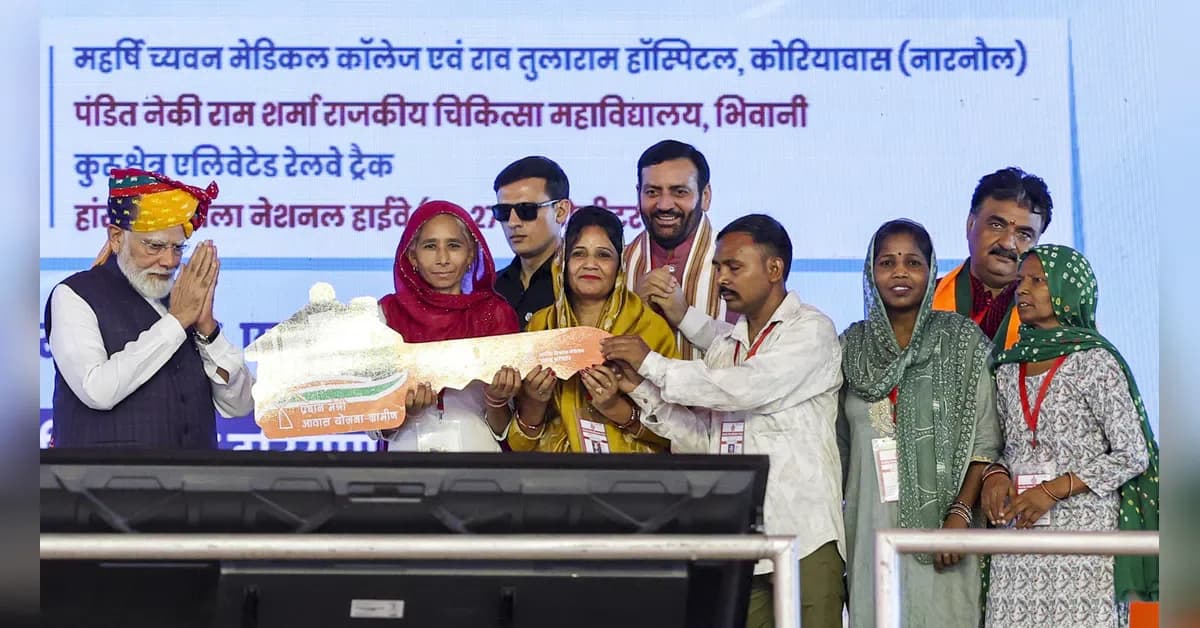
Addressing the gathering, PM Modi highlighted India's commitment to expanding international sports cooperation and strengthening the sports industry. "There is one specific subject heavily linked to the youth of Haryana that has not been discussed as much, and that is sports," he said, noting that his recent visits to Indonesia, Australia and New Zealand included discussions on expanding international cooperation in sports. The Prime Minister said India would collaborate with several countries to strengthen the sports industry and athlete training, with "By working together with these nations, we are going to accomplish significant work in the sports industry in the coming times." He reiterated India's preparations to host the 2030 Commonwealth Games, its bid for the 2036 Olympic Games, and the World Police and Fire Games in Ahmedabad, telling young athletes "I assure you that the government will completely provide you with every necessary facility for your rigorous preparation." Modi praised Haryana's governance model, highlighting the state government's emphasis on transparent recruitment and inclusive development, and underlined financial assistance provided to farmers through the PM-Kisan Samman Nidhi. "Over 600 crore rupees have already been directly transferred to our hardworking farmers here in Jind alone," the Prime Minister said, adding that farmers across Haryana had received nearly ₹8,000 crore under the scheme. Modi also underlined Haryana's rich cultural and spiritual heritage, referring to the legacy of Maharaja Ranjit Singh, the Pandavas, and other historic sites, noting that "This is the exact glorious heritage of faith and spirituality that modern India actively preserves today."