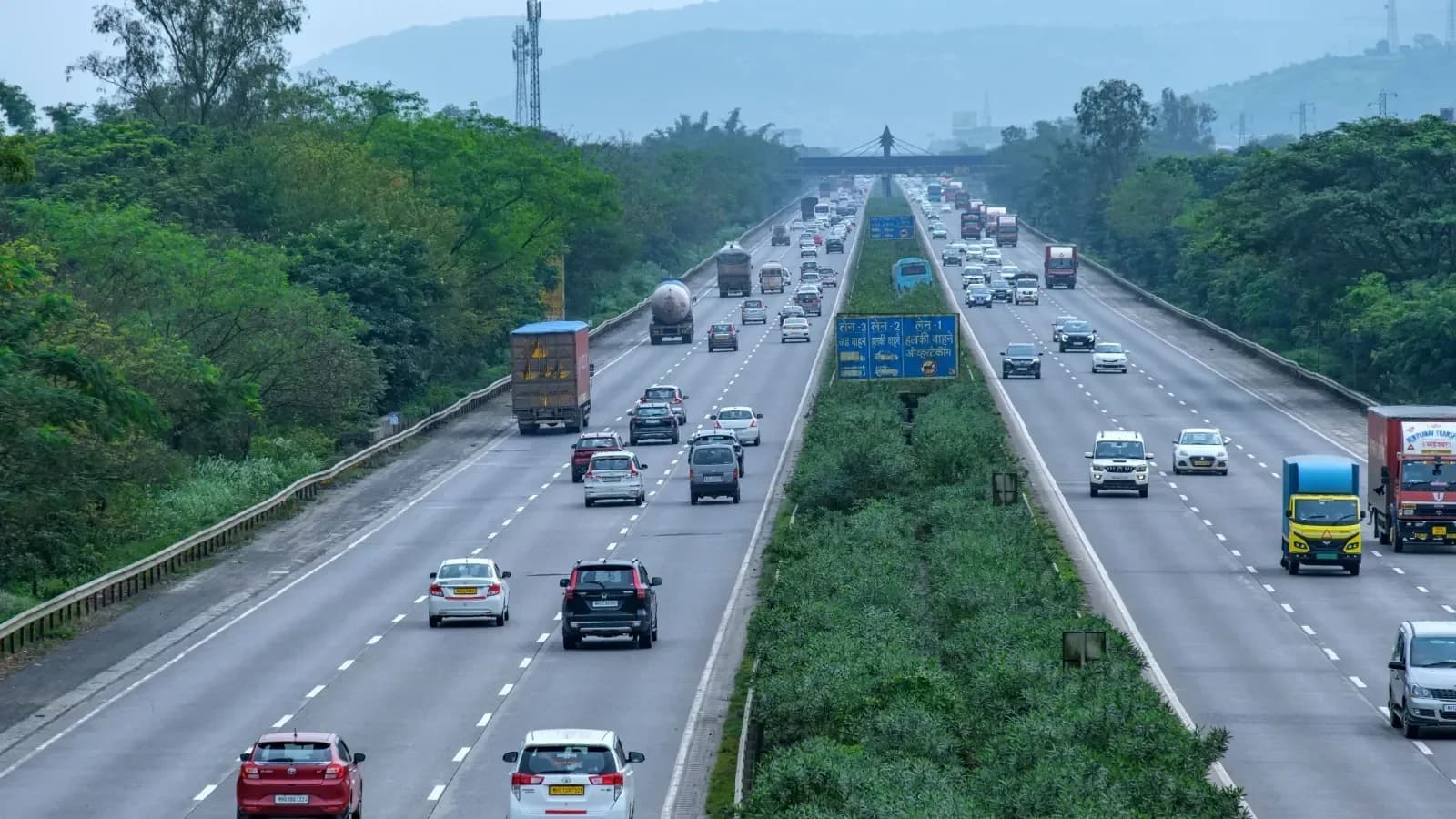
The National Highways Authority of India (NHAI) announced plans to deploy and upgrade Advanced Traffic Management Systems (ATMS) across 1,205 km of national highways in the Delhi-NCR region. According to NHAI's statement dated June 24, the initiative aims to create a smart highway ecosystem capable of real-time traffic monitoring, faster incident response, improved enforcement, seamless dissemination of information and data-driven decision-making. The system will leverage cameras, sensors, communication networks and artificial intelligence (AI) to monitor traffic conditions, detect incidents, enforce rules and provide real-time information to road users. The upgraded framework incorporates several advanced features, including AI-enabled enforcement systems, automated video-based incident detection, centralised monitoring infrastructure and integration with digital enforcement platforms.
The ATMS ecosystem will include Traffic Monitoring Camera Systems (TMCS) for round-the-clock surveillance, Video Incident Detection and Enforcement Systems (VIDES) for identifying road incidents and traffic violations, Vehicle Actuated Speed Displays (VASD) for real-time driver alerts, and Variable Message Signboards (VMS) to communicate traffic and safety information. As reported by Press Trust of India, the network will be supported by a high-speed optical fibre cable (OFC)-based communication backbone, and the system will be integrated with the e-Challan platform for digital enforcement of traffic violations. The ATMS infrastructure will be integrated with key digital platforms, including the NHAI Data Lake, Rajmargyatra Mobile App and National Highway Helpline 1033, enabling enhanced incident management and commuter services.
In the first phase, NHAI will deploy and upgrade ATMS infrastructure across 1,205 km of national highways in Delhi-NCR and adjoining regions. According to the agency, about 408 km of highway stretches will receive full-scale deployment of all ATMS components, while another 797 km of existing ATMS-enabled corridors will be upgraded with Video Incident Detection and Enforcement Systems to strengthen monitoring and enforcement capabilities. The project covers key corridors including the Delhi-Gurgaon-Kotputli section of NH-48, Delhi-Meerut Expressway (NE-3), Delhi-Saharanpur NH-709B, and western Uttar Pradesh corridors such as Meerut-Muzaffarnagar NH-58. Haryana/Rewari coverage includes NH-248A, NH-11, NH-148B, Dharuhera–Bhiwadi Link Road, and Delhi–Faridabad–KMP through NH-148NA/DND–KMP corridor.
NHAI's upgraded ATMS framework will leverage AI, advanced analytics and integrated command-and-control centres to improve efficiency and increase road safety. The project features a multi-tier Command and Control Centre (CCC) architecture comprising local, regional and national control centres. A Regional ATMS Command and Control Centre will be established at Sohna in Delhi-NCR to serve as the zonal hub for corridor-level monitoring, incident response coordination and centralised data aggregation. Local ATMS control centres will be set up at intervals of about 75-100 km to facilitate real-time monitoring and rapid operational response.
The expanded coverage includes key corridors across Delhi-NCR and adjoining regions, encompassing Rewari, Mathura, Ghaziabad, Meerut, Dwarka, Baghpat and Bhiwani. Key NCR corridors include Delhi-Gurgaon-Kotputli NH-48, Delhi-Meerut Motorway NE-3, and Delhi-Saharanpur NH-709B. Western UP corridors are covered by Meerut-Muzaffarnagar NH-58, Meerut–Bulandshahar NH-235, and Meerut–Najibabad NH-119. The project also includes Baghpat/Shamli Bypass NH-709B, HR/UP Border–Baghpat–Meerut, Meerut–Yamuna via Shamli NH-709A, Shamli–Saharanpur, Panipat–Shamli and Shamli–Muzaffarnagar corridors.