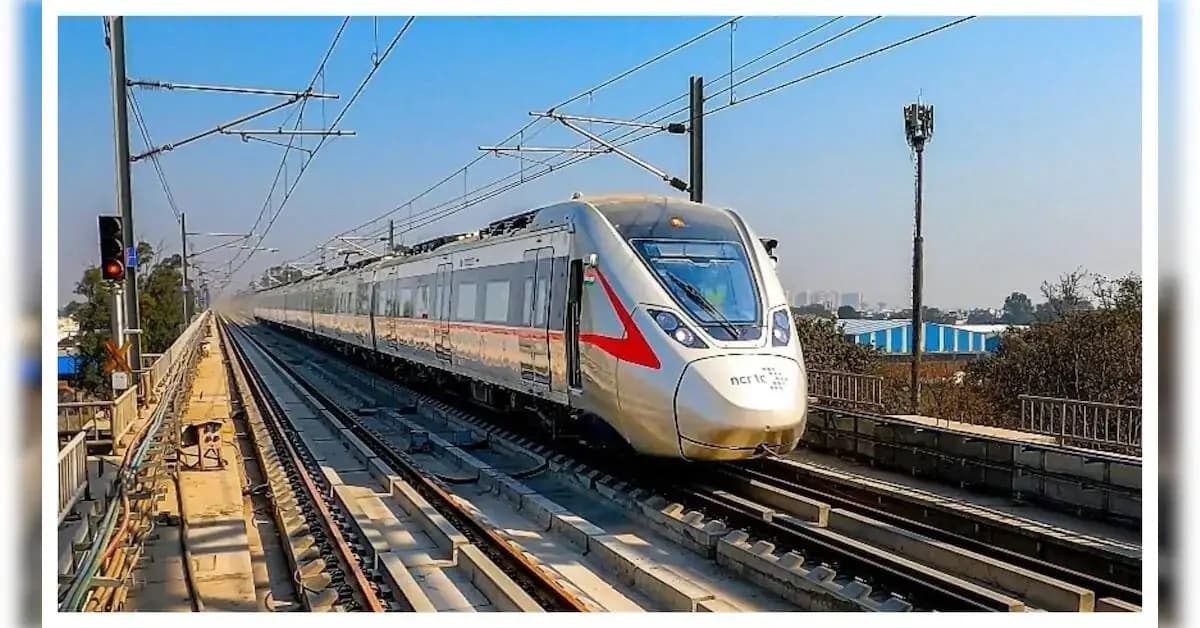
The National Capital Region Transport Corporation (NCRTC) has signed a power purchase agreement for a 110 MW solar power plant expected to meet nearly 60% of the electricity requirement for the Delhi-Meerut Namo Bharat corridor. According to reports from The Times of India, the solar plant is estimated to cost around ₹450 crore and will be developed in Jaulan, Uttar Pradesh. The plant is expected to be commissioned within the next 24 months and will supply power through the Uttar Pradesh state grid to NCRTC's substations in Uttar Pradesh and Delhi, distributing it across the entire Namo Bharat corridor. The agreement was signed between NCRTC and NIRL NCRTC Renewables Ltd (NNRL), a joint venture of NCRTC and NIRL, a wholly owned subsidiary of Neyveli Lignite Corporation. The project leverages the Uttar Pradesh Solar Energy Policy to promote renewable energy use.
Under the agreement, NCRTC will procure electricity from the plant at a fixed tariff for 25 years. As reported by The Times of India, the captive solar project is expected to reduce annual electricity expenditure by around 25%. Electricity accounts for around 30-35% of the operational cost of the Namo Bharat corridor, making this solar initiative a significant cost reduction measure for the transport infrastructure project. The arrangement aims to provide greater predictability in energy costs and reduce the corridor's dependence on conventionally generated power.
The solar project is estimated to reduce carbon dioxide emissions by about 1.8 lakh tonnes annually and lower emissions of pollutants such as nitrogen oxides and sulphur dioxide. According to NCRTC officials, the project is the first of its kind for the country's RRTS and Metro transit systems, establishing a new benchmark for incorporating renewable energy into mass urban transportation. The initiative is expected to contribute to cleaner air and support sustainable urban mobility in the region, with the project positioning as a renewable energy initiative for the country's regional rapid transit and metro systems.
The Delhi-Meerut Namo Bharat corridor has seen significant ridership growth since its entire commissioning in February this year. As reported by The Times of India, around one lakh passengers currently use the corridor every day, while cumulative ridership has crossed four crore passenger journeys. The corridor recorded its highest daily ridership of more than 1.68 lakh passengers on August 28, coinciding with Raksha Bandhan. Currently, NCRTC generates more than 11 MW of solar power across the Delhi-Ghaziabad-Meerut RRTS corridor, with solar panels installed at Namo Bharat stations, depots, RSS and other buildings. The corridor spans more than 80 kilometres and connects with key transport hubs including the Meerut Metro, Sarai Kale Khan ISBT and Indian Railways stations, bringing the Delhi-Meerut journey down to less than an hour with trains operating at speeds of up to 160 kmph.