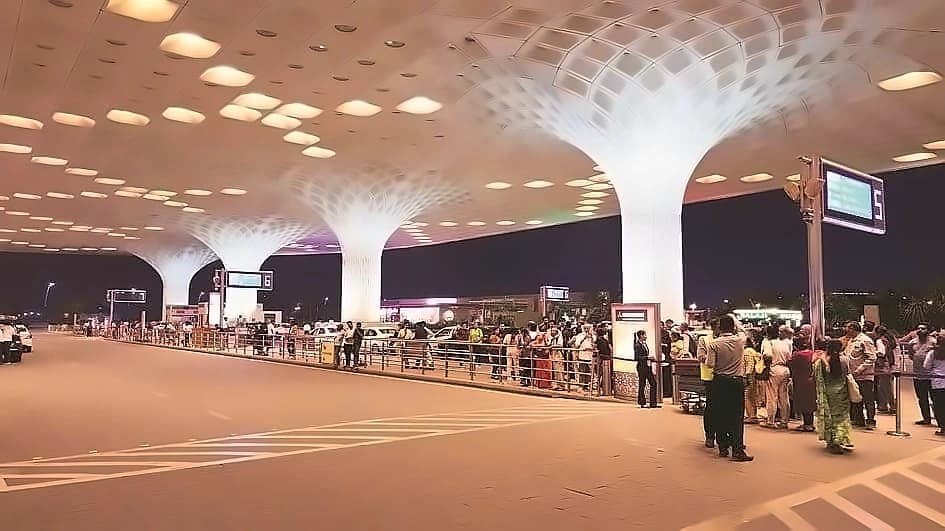
The standoff between Mumbai International Airport Ltd (MIAL) and airlines has intensified as carriers demand concrete evidence before accepting capacity reductions. According to Mint, airlines have asked Adani Group's MIAL to prove it must cut about 5 million passengers annually before moving some international flights to Navi Mumbai airport. The Airline Operators Committee-Mumbai (AOC-Mumbai) has adopted a firmer position, stating that any reduction or cancellation of slots must be supported by verifiable capacity assessments, operational data and a clear, evidence-based justification. The committee emphasized that slot reductions must comply with Indian and global allocation rules, which do not permit arbitrary cuts except in emergencies.
Adani Group-controlled Mumbai International Airport Ltd (MIAL) has reiterated that airlines must decide whether to shift their flights to Navi Mumbai airport, suspend operations temporarily at Mumbai airport, or pursue other alternatives from the summer 2027 schedule. According to reports from Business Standard, MIAL made this clear in its communication to the Airline Operators Committee (AOC) on Monday, emphasizing that Mumbai airport will handle around 5 million fewer passengers per annum from the summer 2027 schedule when its Terminal 1 shuts for redevelopment. The airport operator subsequently sent a reminder to airline partners that had not yet engaged with the operator, asking them to arrange discussions with their network planning and commercial teams to facilitate the finalisation of the transition plan.
The AOC, which represents airlines operating at Mumbai airport, rejected any unilateral reallocation of traffic, reduction of slots or relocation of international operations without due process. As reported by Business Standard, the AOC stated that airlines had not agreed to transfer international operations to Navi Mumbai or consented to any reduction or cancellation of their existing slots. In response, MIAL referred to the October 13 meeting with airlines and confirmed that individual carriers have complete freedom to decide their plans for the summer 2027 schedule. The dispute began in August when MIAL started discussions on moving international flights to Navi Mumbai as part of Terminal 1 redevelopment, with the Ministry of Civil Aviation intervening earlier this month following an October 6 meeting involving the ministry, MIAL, Navi Mumbai International Airport and airlines.
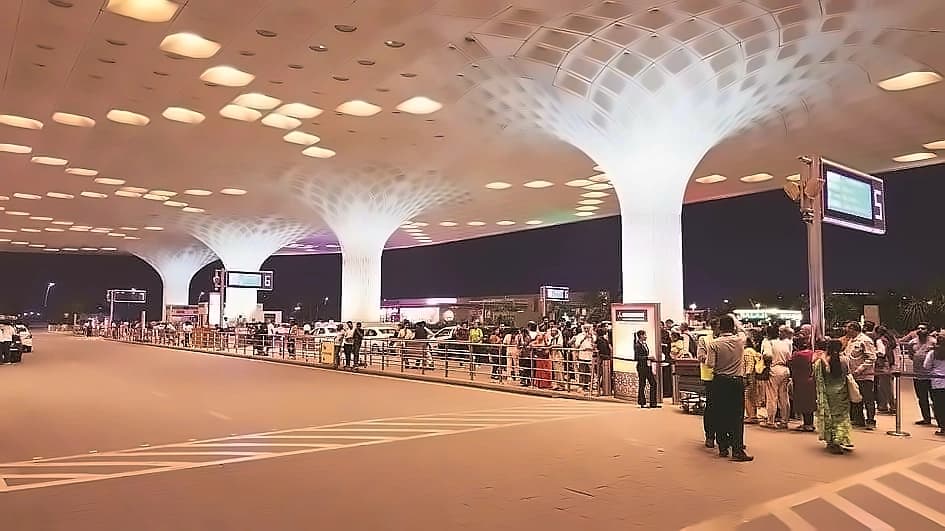
The airlines' argument centers on whether Mumbai airport needs to surrender capacity when additional handling capacity is expected to become available. According to Mint, T1 is currently handling fewer than 10 million passengers annually, while another 5 million passengers per annum of capacity is expected to be added at T2 by March 2027. The AOC stated that considering T1's current actual passenger-handling capacity of below 10 million passengers per annum, together with the expected additional capacity of 5 million passengers at T2 by March 2027, no substantiated justification has been provided for reducing or cancelling slots at CSMIA. The committee has asked MIAL to include five issues on the agenda for the October 28 meeting, including the scope, phasing and timeline of T1's refurbishment, actual capacity at both terminals, and the status of the proposed additional 5 million passengers at T2 by March 2027.
The dispute remains unresolved even after the civil aviation ministry put the proposed traffic redistribution on hold and urged both sides to continue discussions. As reported by Business Standard, the Ministry of Civil Aviation intervened earlier this month following an October 6 meeting involving the ministry, MIAL, Navi Mumbai International Airport and airlines. Following this intervention, MIAL was asked to engage with stakeholders on a mutually agreed transition plan rather than proceed with its existing proposal. At the October 13 meeting, MIAL assured airlines that historical slot allocations would not be disturbed during the winter 2026-27 schedule and that a joint working group would work on a plan for implementing Terminal 1 redevelopment. The redevelopment of T1 would affect about 5 million passengers out of Mumbai airport's annual traffic of around 55 million, leaving approximately 91% of passenger traffic unaffected, according to the airport operator.

According to Business Standard, MIAL outlined several options available to airlines for the summer 2027 schedule. Airlines can choose to relocate some or all of their operations to Navi Mumbai, temporarily suspend operations at Mumbai airport until Terminal 1 reopens, or pursue alternatives at other locations. The airport operator emphasized that participation in consultations with its Airport Operations Control Centre (AOCC) remains entirely at each airline's individual discretion, with the consultations intended to provide a collaborative platform rather than create unilateral decision-making perceptions. The redevelopment is necessary to address the ageing infrastructure at Terminal 1, with MIAL maintaining that the capacity reduction is essential for the airport's future operations and assuring that it would maintain and restore all historical slots at Mumbai airport once Terminal 1 is redeveloped and operational by 2030.