Adani Airport Holdings Ltd (AAHL) has assured airlines that it will not disturb existing flight slots during the winter aviation schedule and will respect historical slot allocations, following objections to its plan to shift part of Mumbai airport's international operations to Navi Mumbai International Airport (NMIA). According to Moneycontrol, Jeet Adani and Arun Bansal met representatives of the Airport Operators' Committee (AOC) of Mumbai airport on October 13, when the airport operator committed to minimising disruption to airlines and passengers amid the proposed redevelopment of Terminal 1 (T1). The commitment from airlines of supporting the redevelopment and traffic balancing to start from summer schedule was outlined by a MIAL spokesperson, with the summer schedule typically running from late March to late October. The joint working group will work over the next two weeks to draw up an implementation plan for the redevelopment of the ageing terminal, with both sides agreeing to meet again on October 28 and engage with individual airlines' network and slot teams until then.
Mumbai International Airport Ltd (MIAL), run by Adani Airport Holdings, plans to start rebuilding the north section of Terminal 1B in January 2027. According to reports from Reuters, the airport operator says the risks of keeping the 60-year-old building open became more pronounced after a fire at Terminal 1 in April. The rebuilt Terminal 1 will have capacity for 20 million passengers a year, up from 15 million, with airlines' historic slots to be restored. Adani Group's Mumbai airport handles approximately 55 million annual passengers, with about 5 million passengers expected to be temporarily affected during the rebuilding process. MIAL had proposed moving 265 of the 770 weekly international departure slots at Terminal 2 (T2) to NMIA, with the plan intended to free up capacity at Mumbai airport by shifting domestic traffic from T1 to T2, allowing redevelopment work at the ageing terminal to begin.
The Airline Operators Committee of Mumbai, representing carriers, said in an October 2 letter that the proposal was 'not accepted'. As reported by Reuters, the committee stated that winter schedules had been approved in June and there had been no meaningful consultation on the flight cuts. However, MIAL spokesperson confirmed that Jeet Adani, director, airports, at Adani Airport Holdings Ltd (AAHL), and Arun Bansal, chief executive, AAHL, had assured airlines that historical slot allocations would be respected and that 'no slots would be disturbed during the winter schedule'. According to sources, the airport operator has committed to not disturb any slots for the winter schedule and has agreed to hold a follow-up meeting on October 28 to engage with network and slot teams of individual airlines. The committee has also asked to review independent consultant reports on the terminal's structural safety, while MIAL said structural audit reports had been reviewed by regulators and extracts made public.
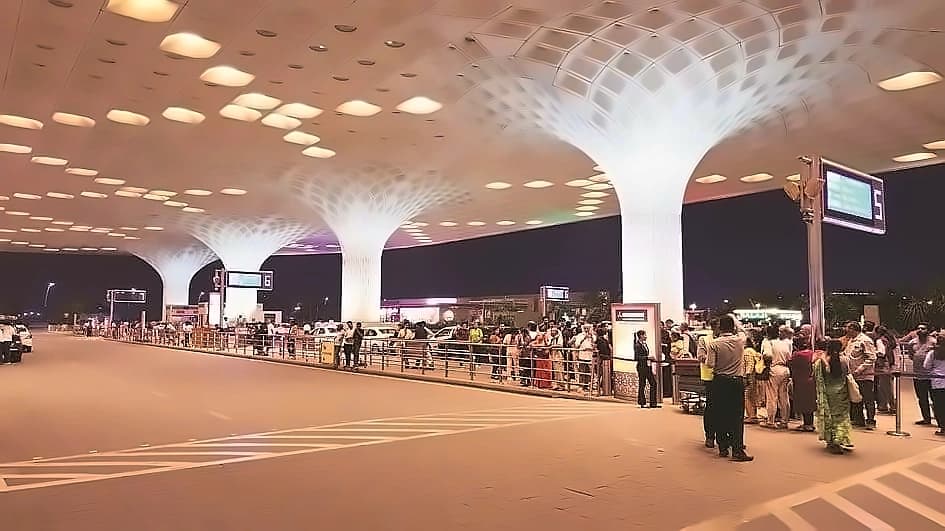
To absorb the affected passengers at Terminal 2, MIAL had proposed a 33% reduction in international departure slots, with the proposed shift from Chhatrapati Shivaji Maharaj International Airport (CSMIA) to Navi Mumbai International Airport (NMIA) affecting 46 airlines. According to emails reviewed by Reuters, the airport operator needs an equivalent temporary cut in traffic there to handle the displaced passengers. Airlines had already finalised their winter schedules, opened ticket sales and accepted passenger bookings months in advance, making late changes particularly disruptive. Airlines fully support the terminal's redevelopment but warn that cutting flights at short notice could significantly disrupt international schedules, passenger bookings and connectivity from Mumbai. MIAL had asked the 46 airlines to identify international departure slots they would be willing to temporarily discontinue, with the deadline set for 4 pm on 6 October. The Civil Aviation Ministry intervened, pausing the proposed reduction and directing the airport operator to work out a transition plan with all stakeholders.
Following the October 13 meeting, MIAL and the Airline Operators Committee have formed a joint working group that will prepare an implementation plan for the redevelopment of Terminal 1 over the next two weeks. As reported by Mint, the airport operator said both sides had agreed to hold a follow-up meeting on October 28 and engage with individual airlines' network and slot teams in the interim. The immediate priority is to finalize a transition plan acceptable to airlines and secure the necessary approvals before the relocation and redevelopment proceed. MIAL also offered full support to any airline seeking to shift operations to NMIA, including landing-fee waivers for new international flights and cash vouchers to offset the difference in user development fees between the two airports. The operator had maintained that the shift was temporary and necessary to facilitate the redevelopment, saying around 91% of passenger traffic would remain unaffected, while approximately 5 million passengers, or 9% of annual traffic, would be temporarily affected. NMIA has separately proposed reducing landing fees and covering the difference in user development fees between the two airports for affected passengers, seeking to ensure that the transition does not impose additional costs on travellers.
After an October 6 meeting chaired by the civil aviation secretary, MIAL deferred cuts planned from October 25 'by a few weeks'. According to Mint, the Ministry of Civil Aviation subsequently asked MIAL to defer the transition plan and work with airlines on a mutually agreed approach. The October 13 meeting appears to have deferred immediate disruption to the winter schedule, while leaving the details of the T1 redevelopment and associated traffic balancing to be worked out through consultations with airlines over the coming weeks. **The standoff represents an early test of Mumbai's two-airport system, with Adani Airport Holdings, a unit of flagship Adani Enterprises, running eight airports in India that handle more than 23% of the country's passenger traffic. The delay complicates the sequencing of the redevelopment, with the transition requiring airlines to adjust aircraft rotations, crew deployment, ground-handling arrangements and passenger connections. While airlines have supported the redevelopment of T1, they have maintained that this should not be treated as consent to reducing operations at T2.