Maharashtra has announced an ambitious plan to convert its entire State Transport Corporation bus fleet to electric vehicles by 2047, as announced by Chief Minister Devendra Fadnavis during a high-level review meeting at his official residence. The conversion will be implemented in phases with specific milestones set under the 'Viksit Maharashtra' vision. The MSRTC has established targets of 50% electric buses by 2029, 80% by 2035, and 100% by 2047. CM Fadnavis emphasized that this project will provide modern, comfortable, and pollution-free travel facilities to passengers in the state, with the initiative expected to serve as the lifeline of rural Maharashtra. The meeting, held under the chairmanship of Chief Minister Fadnavis, focused on accelerating the transition towards cleaner and more sustainable public transport while improving passenger comfort and reducing emissions across the state.
Fadnavis directed officials to expedite the establishment of charging stations required for large-scale deployment of e-buses across the state, as reported by NDTV. The chief minister emphasized that the charging network must expand in tandem with the growing electric fleet to ensure uninterrupted services. He stated that routes proposed for e-bus operations should be analyzed using artificial intelligence tools to improve planning and efficiency. He directed that AI algorithms will calculate grid availability, traffic patterns, terrain slopes (which drain batteries faster), and passenger loads to determine exactly where and when a bus should stop to fast-charge without disrupting the passenger timetable. He also ordered that upon receiving the buses from suppliers, their inspection must be completed within seven days of delivery and called for establishing an entire ecosystem supporting e-bus operations, including maintenance facilities and operational support systems.
Under Maharashtra's electric vehicle policy, incentives of 10% of the bus cost, subject to a maximum of ₹20 lakh per vehicle, are being provided for 1,500 electric buses, according to NDTV. MSRTC is currently implementing a project to induct 5,150 electric buses under the Gross Cost Contract (GCC) model. Transport Minister Pratap Sarnaik confirmed that MSRTC currently operates 22,000 buses in its fleet, as stated in the official meeting. However, transport department sources noted that e-buses cannot be swapped 1:1 with diesel buses because they require scheduled downtime for charging. This has led to severe delays from private manufacturers in delivering contracted buses, prompting MSRTC to move toward owning its own buses outright rather than relying solely on private operators.
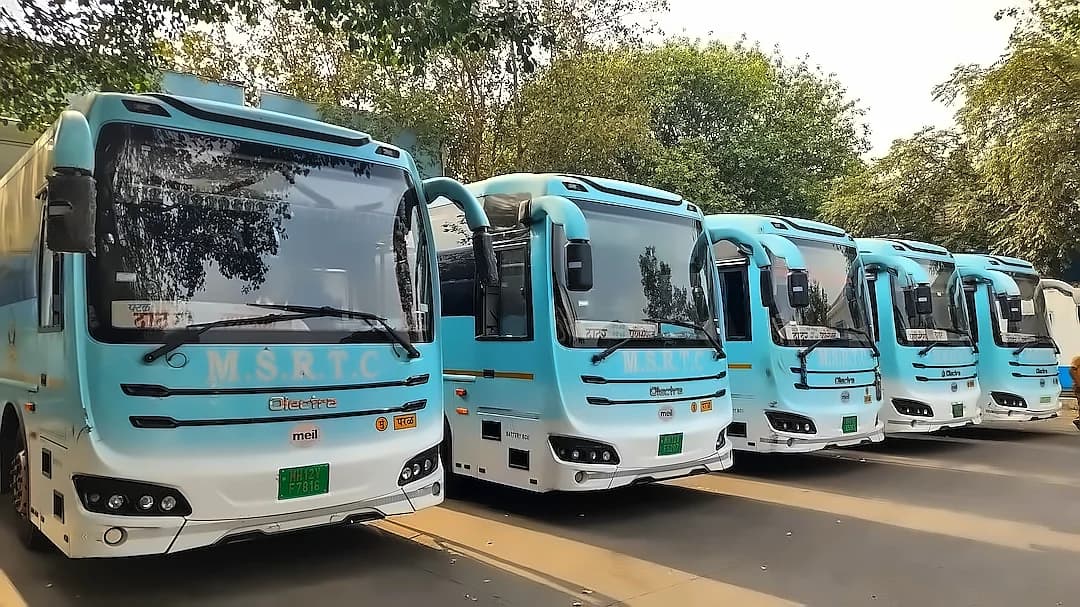
The chief minister asked officials to study routes currently served by private operators and prepare electric bus alternatives for such sectors, as reported by NDTV. He emphasized that this project will provide modern, comfortable, and pollution-free transport facilities while supporting the state's clean mobility goals. Under the GCC model, a private operator owns, maintains, and deploys the buses while MSRTC pays them a fixed rate per kilometre and collects ticket revenue. While the GCC model reduces upfront costs for the government, Maharashtra has faced supply-chain bottlenecks from private manufacturers, making the setup of its own independent charging infrastructure even more critical for the state's ambitious electric transport vision. Transport Minister Pratap Sarnaik and senior government officials were also present at the review meeting.