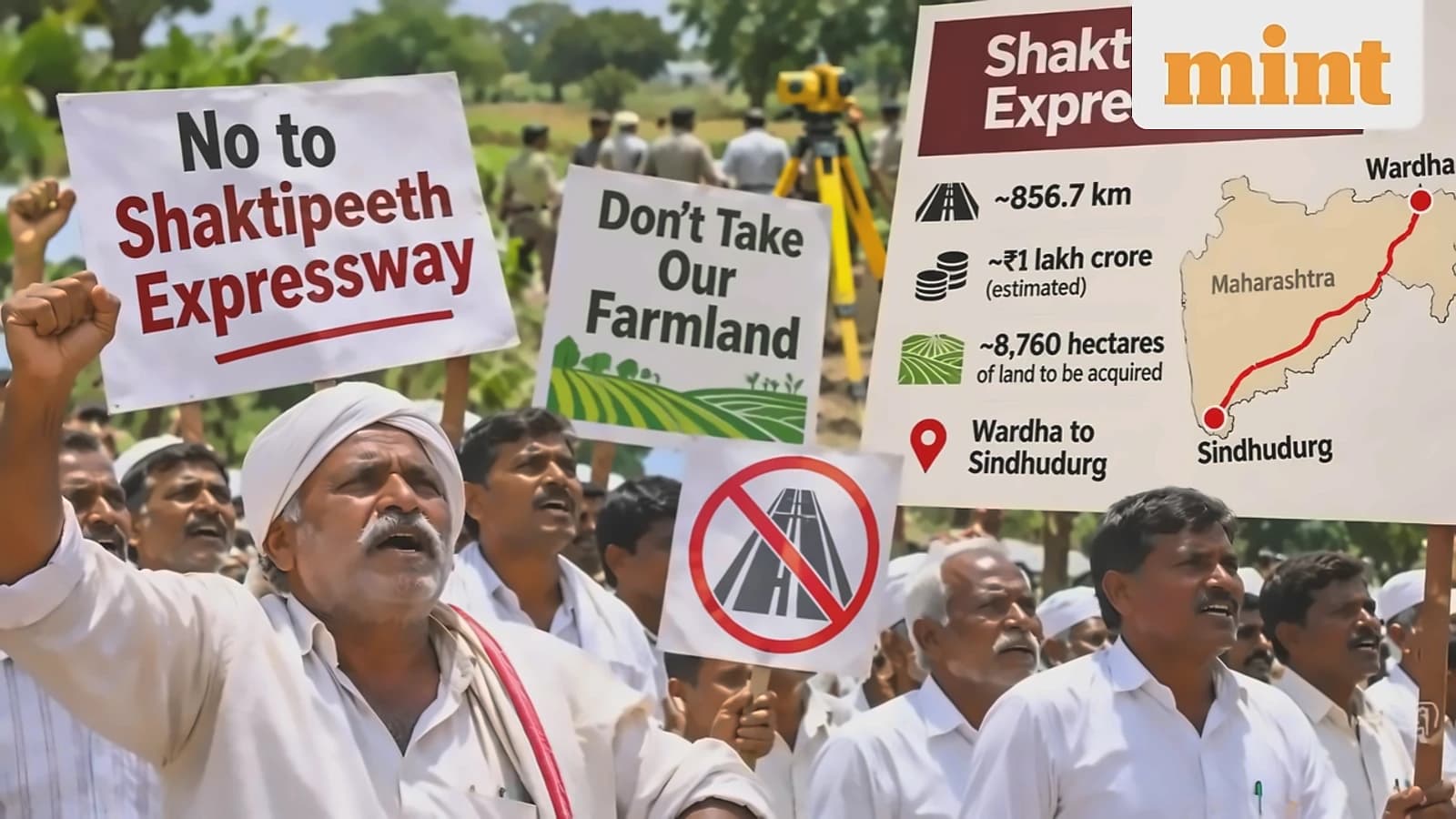
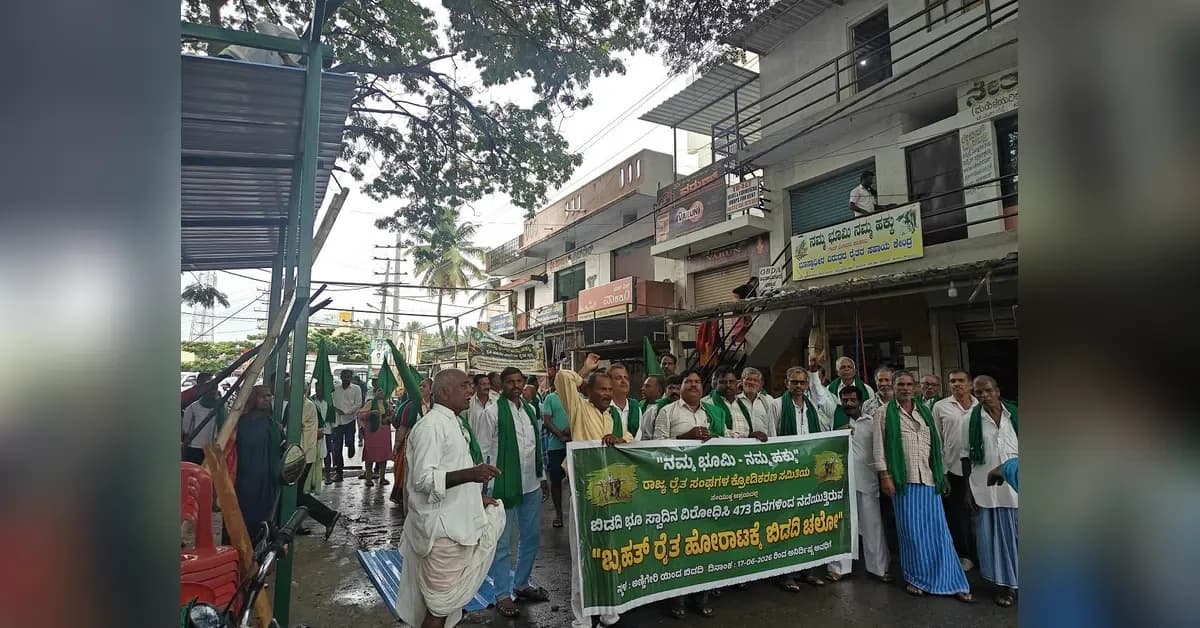
Farmers in Maharashtra's Sangli and Kolhapur districts have intensified their opposition to the Shaktipeeth Expressway, with protests escalating on Tuesday. According to The Indian Express, Swabhimani Shetkari Sanghatana president Raju Shetti led an eight-hour sit-in protest at Mahuli village in Sangli's Khanapur taluka, with police detaining several protesters as tensions mounted. The agitation has spread to Konavade village in Kolhapur's Bhudargad taluka, where farmers objected to early-morning land surveys conducted under police protection. During the confrontations, some demonstrators damaged surveying equipment and seized a survey tripod, setting it on fire. Farmers from Nagewadi, Mahuli and Bhagyanagar villages have opposed the proposed alignment, arguing that the project threatens fertile agricultural land on which their families have depended for generations.
Farmers from Mahuli, Nagewadi and Bhagyanagar villages have opposed the proposed alignment, arguing that the project threatens fertile agricultural land on which their families have depended for generations. As reported by The Indian Express, they have questioned the government's decision to pursue the project despite their opposition, stating they do not want the Shaktipeeth Expressway to pass through their village. The farmers have argued that acquiring agricultural land for the highway would threaten their livelihoods and disrupt farming activities in the region. "We have no interest in politics. All we want is our fertile agricultural land, which has been cultivated by generations of our families. If this land is taken away, what will we eat? We voted this government to power, but now we are the ones being targeted. We do not want this Shaktipeeth project," said farmers from Mahuli village. Shetti emphasized that farmers would unite to oppose any attempt by the administration to conduct surveys, stating "Farmers across the region are united in their opposition to this project. We will not give even an inch of our land for the Shaktipeeth Expressway."
The opposition has drawn political attention, with NCP (SP) MP Supriya Sule questioning the government's approach to the project. According to a PTI report, Sule urged the Maharashtra government to take farmers' concerns seriously, stating that her party was not opposed to development but argued that the state's financial position should be considered before taking up large projects. She clarified that the NCP (SP) is not opposed to development but emphasized that the state's present financial condition must be taken into consideration while pursuing development projects.
The Shaktipeeth Expressway is a proposed six-lane greenfield highway intended to connect Pavnar in Wardha district to Patradevi in Sindhudurg, near the Maharashtra-Goa border. As reported by The Indian Express, the project is expected to pass through 12 districts and link several important religious destinations, while improving road connectivity between eastern Maharashtra and the Konkan region. In July, the Maharashtra government approved a revised alignment that extended the proposed highway's length by 54 km to 856.7 km and increased the estimated project cost from around ₹80,000 crore to approximately ₹1 lakh crore. The project is expected to require the acquisition of approximately 8,760 hectares of land.
Once completed, the expressway is expected to reduce travel time between Nagpur and Goa from around 18 hours to eight hours. According to The Indian Express, the revised route includes a 40-km stretch through Satara district, covering Gondawale and Shikhar Shinganapur, with changes made to the alignment through Nanded, Hingoli, Parbhani, Solapur, Sangli and Kolhapur. The project has drawn significant political attention, with senior leaders including Jayant Patil, Raju Shetti and Satej Patil leading the protests against the proposed highway. However, its proposed route through fertile agricultural areas, particularly those used for sugarcane and other cash crops, has triggered opposition from farmers unwilling to part with their land.