Karnataka's ₹18,000-crore AI city near Bengaluru is facing growing resistance as farmers oppose land acquisition, citing threats to livelihoods, agriculture and green cover. According to reports from Business Standard, the government started issuing compensation after sending final notification for the acquisition of 500 acres from 3 villages, with the fastened execution intensifying protests that started 470 days ago. The plan involves land acquisition of two gram panchayats, which include 26 villages, with 9 revenue villages among them. As reported by The Hindu, the road leading to the village has pandals for farmers who have been traveling in trucks from farther villages to join the protest, with some farmers blocking the entire road to gather authorities' attention.
The government has offered compensation of up to ₹2 crore per acre or 50% of the developed residential land value. As reported by Business Standard, farmer V R Nagarjuna from Byramangala refutes government claims of the land being infertile and loss-making, stating there are over 3 lakh trees providing income for 5,000 farmer families. The government floated a ₹26 crore tender last week to hire a consultant for preparing the AI city masterplan, while the project commits to robotics and automation for logistics and AI-powered governance. According to The Hindu, the government claims only land will be acquired and no homes demolished, but land rights activist Byrappa G notes they can later claim authority over 17 non-revenue establishments.
According to an RTI reply from the Horticulture department, the acquisition will result in the loss of over lakhs of trees. The area contains 83,536 arecanut trees, 87,903 coconut trees, 12,550 mango trees, and 3,06,506 banana plants, in addition to 2,344 chikoo trees and about 2,500 rose plants. The biggest impact will be on ragi cultivation spread across 231 acres. According to mapping by the Indian Institute of Science, Bengaluru, the city has lost 93% of forest and lake cover since the 1970s. Environmentalist Vijay Nishant criticizes the planning approach, stating there's a huge mismatch between urban development at the cost of rural areas.
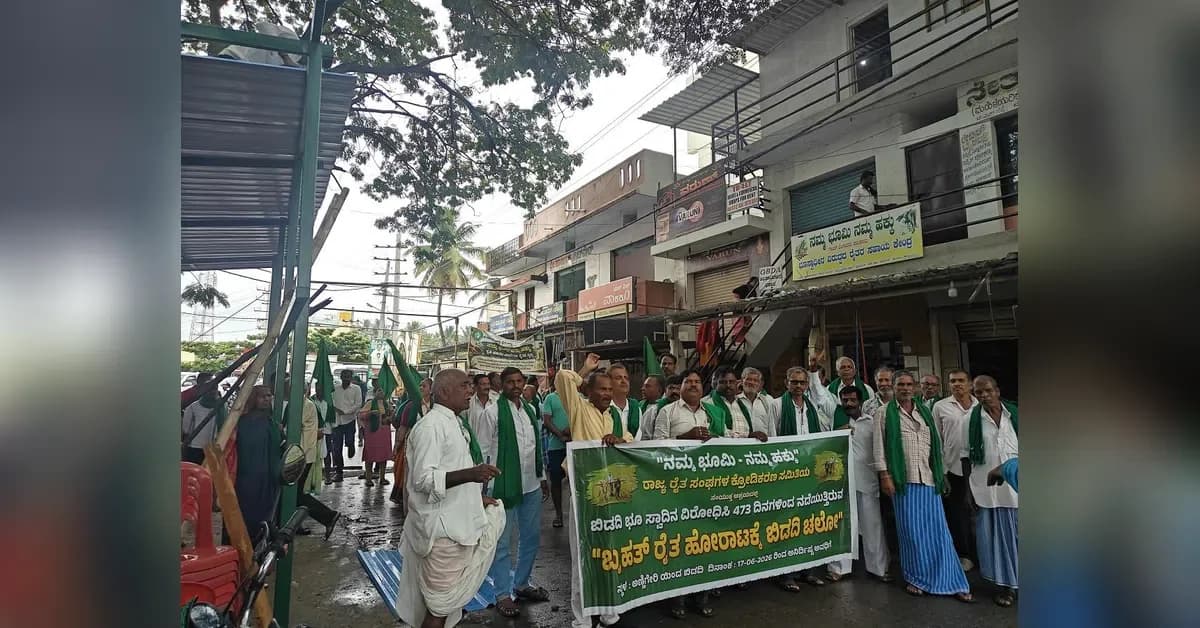
Farmers argue their fight is not for compensation but for land ownership, with most farmers in their 60s uncertain about starting new lives. As reported by Business Standard, farmer Bharath Kumar who owns 1.5 acres states that while some 20% of farmers have agreed to compensation, it does not reflect the larger view. Land rights activist Byrappa G notes that converts include some party supporters and those convinced with the offering, but most are farmers with larger land holdings. According to The Hindu, farmer Raja Prabhu explains that even though some farmers have agreed to compensation, most are in their 60s and would not know how to start a new life again. The villagers demand similar fertile land with similar water and soil composition, stating most fertile green land has already been taken over.
The AI city project will feature a central business district with future-ready infrastructure and walk-to-work ecosystem. According to project details, it commits to robotics and automation for logistics, AI-powered governance, and IoT sensor networks for real-time monitoring of water, energy and traffic. Environmentalist Vijay Nishant criticizes the planning approach, stating there's a huge mismatch between urban development at the cost of rural areas. He notes that nobody from the development authority came to discuss options with villagers or address their genuine land concerns.