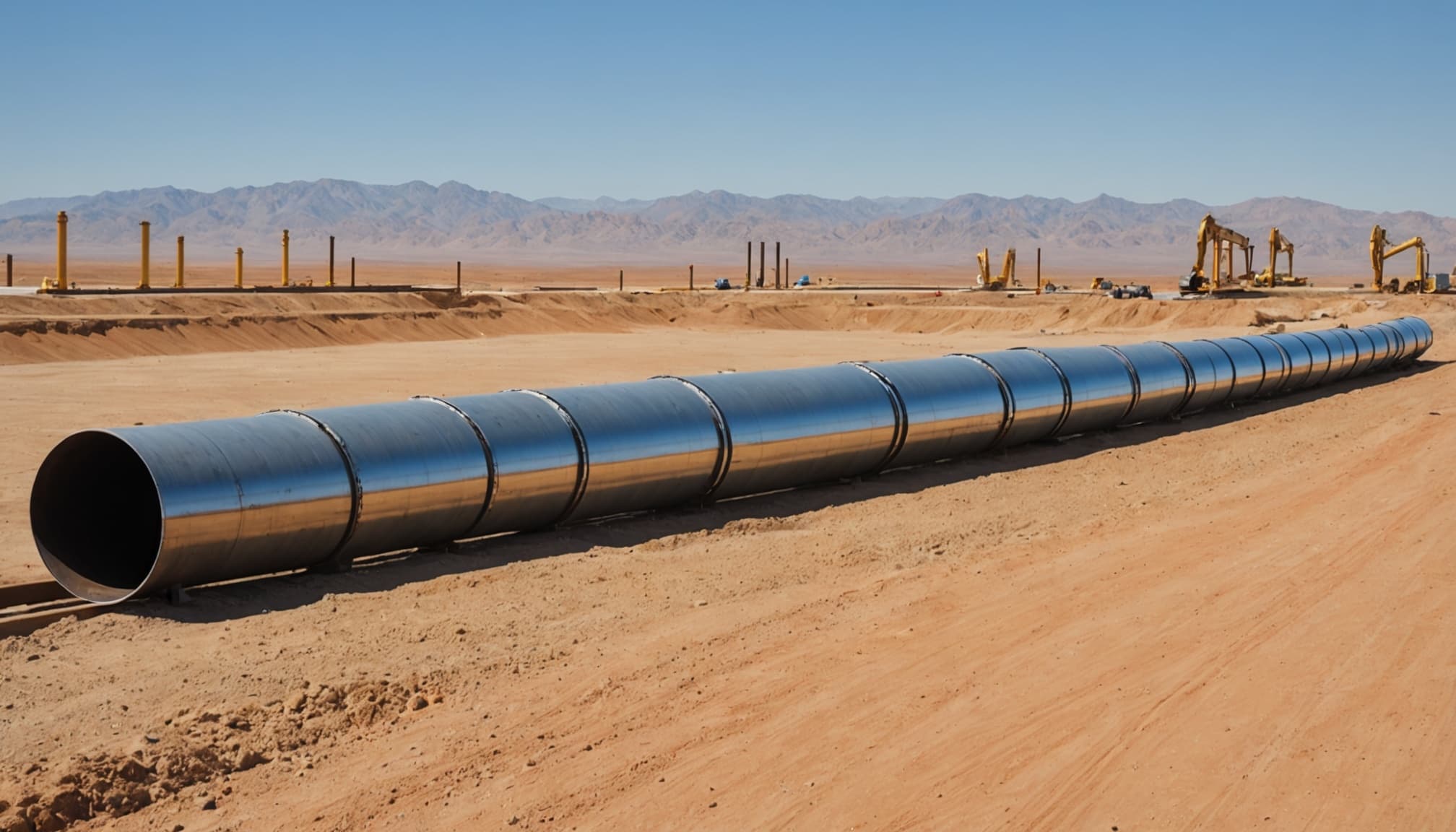
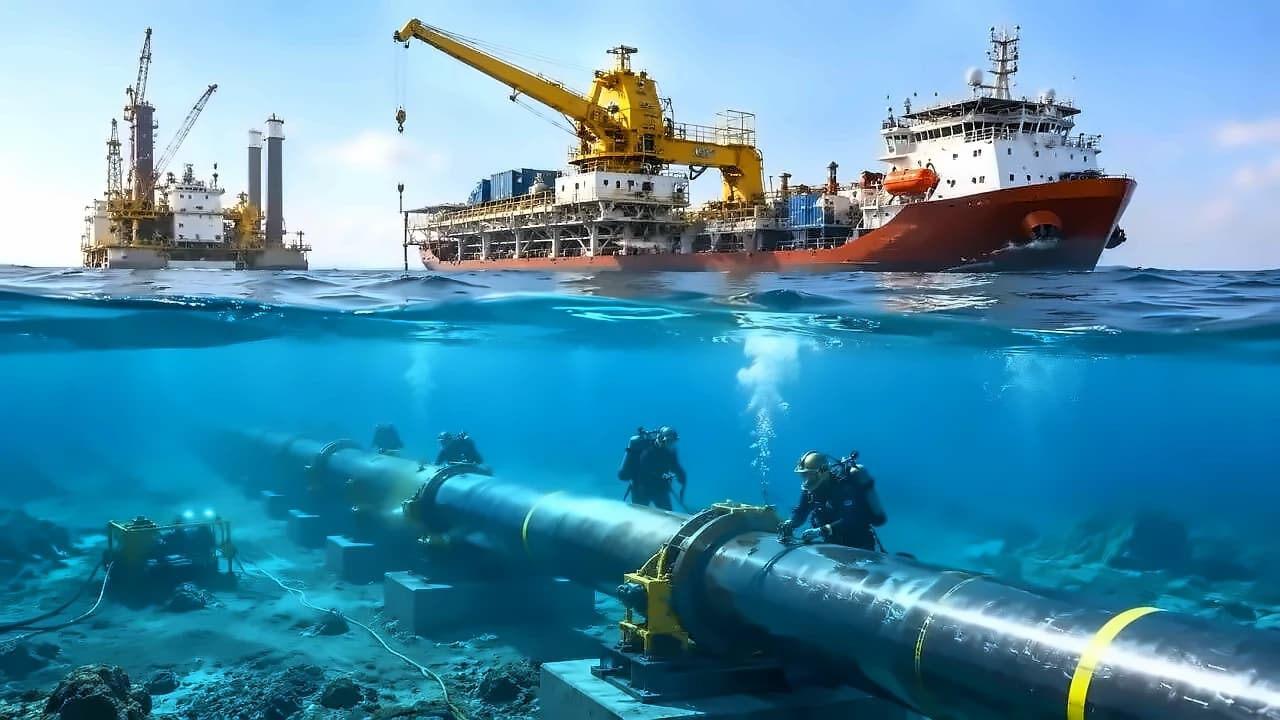
India is fast-tracking efforts to secure uninterrupted gas imports from the Gulf through a direct subsea pipeline as concerns surrounding the Strait of Hormuz intensify. The Middle East-India Deep-water Pipeline (MEIDP) is a proposed 2,000-kilometre undersea gas pipeline connecting Oman's coast to India's Gujarat seaboard, estimated to cost approximately ₹40,000 crore ($4.7 to $4.8 billion USD). The pipeline would deliver around 31 mmscmd of natural gas and is designed to operate at depths of up to 3,450 metres, positioning it among the most technically demanding undersea pipeline projects globally. The ministry of petroleum and natural gas has indicated a construction timeline of five to seven years from formal project approval, contingent on the completion of a detailed feasibility report currently being prepared by state-owned entities including GAIL, Engineers India, and Indian Oil Corporation. The project could become one of the deepest subsea pipelines globally with a depth of 3,450 metres, ranking among the most technically challenging pipeline projects worldwide.
The Strait of Hormuz disruption in late February 2025, triggered by conflict involving the United States, Israel, and Iran, transformed the pipeline from a long-standing proposal into an active national security priority. The crisis caused global LNG supply to fall by more than 20% and drove Asian spot gas prices from $10 to $12 per MMBtu to $24 to $25 per MMBtu within weeks. With nearly two-thirds of India's LNG imports transiting that same corridor, the episode elevated the pipeline from a routine infrastructure proposal to a matter of critical national security. The fertiliser sector alone consumes approximately 46 to 50 mmscmd of natural gas, highlighting the sector's acute vulnerability to supply disruptions. City gas distribution networks are expanding across Indian urban centres, adding further structural demand layers that face ongoing cost pressure from LNG price volatility that pipeline gas could substantially moderate.
The petroleum ministry plans to ask state-owned firms including GAIL, Engineers India and Indian Oil Corporation to prepare a comprehensive feasibility assessment for the project. Recent technical evaluations have reportedly established that the project is achievable due to advances in deep-sea pipeline installation and repair technologies. South Asia Gas Enterprise (SAGE), a private consortium headquartered in New Delhi, has already conducted early seabed testing by laying approximately 3,000 metres of test pipeline along the proposed route at a cost of nearly ₹25 crore to examine seabed conditions. The proposed route is designed to traverse the Arabian Sea via Oman and the UAE, deliberately bypassing geopolitically sensitive maritime corridors. The pipeline's strategic value extends well beyond its bilateral Oman-India framing, as the route would position India to access natural gas from Oman, the UAE, Saudi Arabia, Iran, Turkmenistan, and Qatar, a region collectively holding an estimated 2,500 trillion cubic feet of natural gas reserves. ICICI Direct research notes that offshore EPC players with subsea execution capabilities, such as Larsen & Toubro, are likely to be key beneficiaries across engineering, procurement and offshore construction activities.
India's natural gas demand has been climbing steadily as the country seeks to raise the share of gas in its overall energy basket. Present consumption is estimated at about 190-195 million standard cubic metres per day (mmscmd), while projections indicate demand could rise to nearly 290-300 mmscmd by 2030, representing roughly a 50% increase from current levels. LNG imports alone are expected to increase significantly, potentially touching 180-200 mmscmd before the decade ends. The contrast with China's position is stark - while India has remained almost entirely dependent on seaborne LNG, China has systematically constructed a network of overland and regional pipeline corridors that effectively insulated it from the Hormuz disruption entirely. China holds approximately 80 billion cubic metres of storage capacity by end-2026, representing roughly 20% of its annual needs, while India currently holds approximately 2 to 2.5 billion cubic metres across 22 to 24 LNG storage tanks, representing roughly 10 to 12 days of national consumption. The absence of strategic gas storage infrastructure represents perhaps the most acute parallel vulnerability, with India having no meaningful buffer against supply shocks.
The proposed pipeline represents India's most substantive attempt to rewrite its energy security architecture at a moment when the cost of complacency has become undeniable. The MEIDP would enable India to tap gas reserves from countries including Oman, the UAE, Saudi Arabia, Iran, Turkmenistan and Qatar - a region estimated to hold nearly 2,500 trillion cubic feet of gas reserves. The pipeline would reduce India's physical exposure to any single maritime chokepoint for gas supply and establish a direct and sovereign-adjacent energy corridor to one of the world's most gas-rich regions. The detailed feasibility report confirms technical viability but surfaces complexity in bilateral pricing negotiations, environmental permitting across the Arabian Sea corridor, or project financing architecture. A completed MEIDP would deliver 31 mmscmd of stable, cost-competitive gas directly to Gujarat within the projected construction window, with the fertiliser sector alone benefiting from predictable pricing that addresses a 46 to 50 mmscmd structural demand gap. The project represents a comprehensive energy security framework that includes developing a strategic gas reserve framework, accelerating domestic deepwater gas production, diversifying LNG import sources, and integrating renewable energy capacity scaling to reduce absolute gas demand over the medium term.