Traffic has plummeted by more than 95%, forcing Gulf oil producers to urgently develop alternative export routes. This geopolitical crisis has created a massive infrastructure development opportunity for engineering firms like Engineers India.
Gulf states are scrambling to reduce their dependence on this vulnerable chokepoint controlled by Iran. The urgency is clear: existing bypass infrastructure—Saudi Arabia's 1,200km East-West pipeline (7 million barrels per day) and the UAE's Habshan-Fujairah pipeline (1.7 million bpd)—can handle only a fraction of the roughly 20 million bpd that used to flow through Hormuz before the crisis.
How Strategic Plans Drive Demand
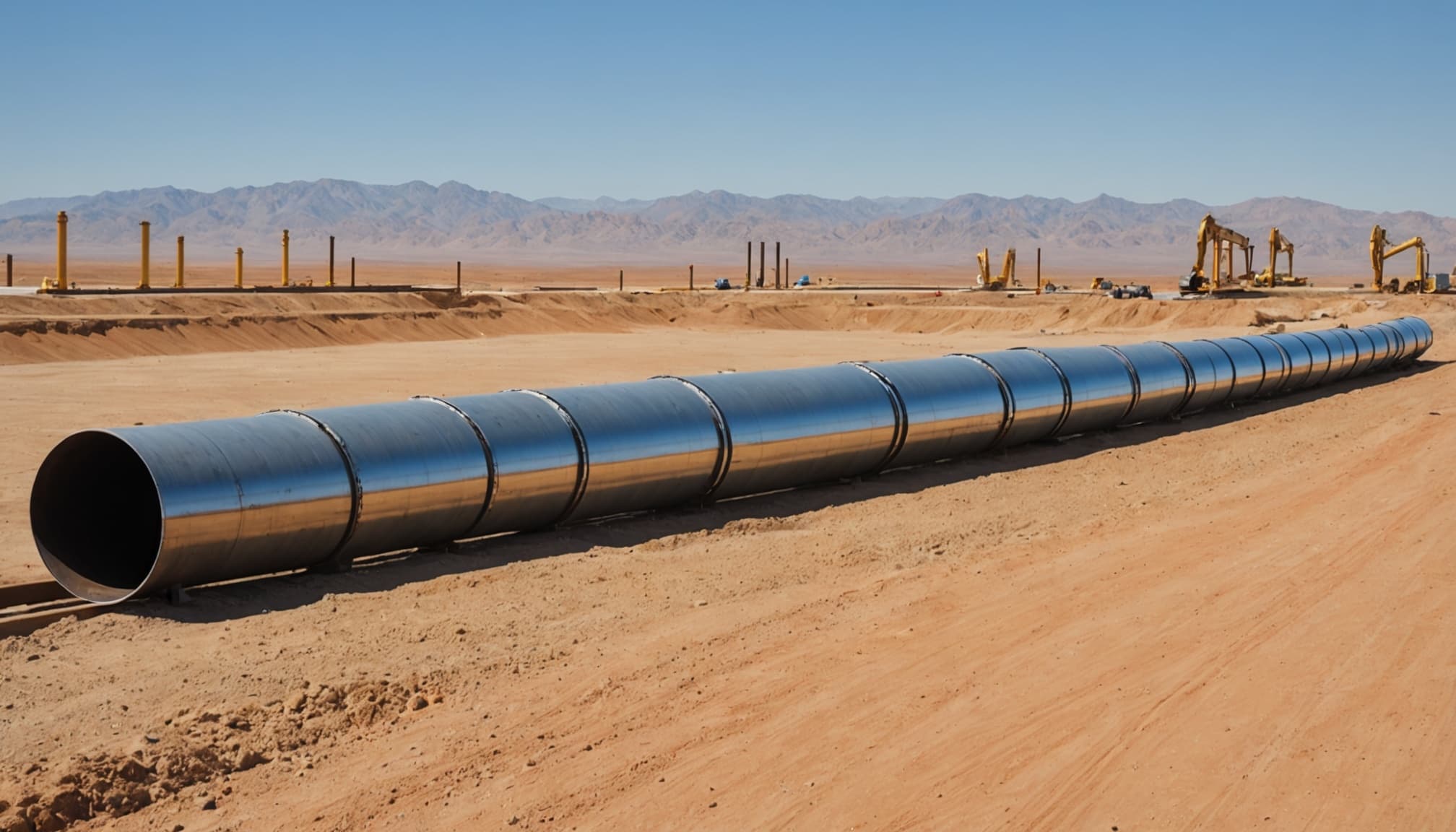
Middle East countries' bypass strategies directly translate into demand for EIL's services through several mechanisms. Pipeline infrastructure development requires comprehensive engineering services—from feasibility studies and detailed design to project management and construction supervision. The UAE's West-East Pipeline project alone represents a major engineering undertaking, with construction fast-tracked for 2027 completion.
Storage and terminal infrastructure development at alternative export points needs EIL's capabilities in coastal and offshore engineering. The UAE is planning underground oil storage facilities at Fujairah, requiring specialized engineering expertise for design and construction. Saudi Arabia's East-West pipeline expansion by 1-2 million bpd requires debottlenecking and enhancement work, involving complex engineering challenges including pipeline routing, pumping stations, and terminal upgrades.
EIL has strategically positioned itself to capture this opportunity. The company established offices in Abu Dhabi and Saudi Arabia (opened February 2026) with full-fledged teams. It has secured long-term agreements with ADNOC (UAE) and Saudi Aramco for both in-kingdom and out-of-kingdom services. The company has grown its Middle East business from INR 30 crores to INR 1,000 crores in Abu Dhabi over 3-4 years, demonstrating its ability to scale rapidly in the region. AnnualReports
Specific Projects in the Crosshairs
EIL is targeting several key pipeline and storage projects as part of the Hormuz bypass infrastructure development. In the UAE, the West-East Pipeline is 50% complete and targeting a 2027 startup, doubling Fujairah's export capacity. EIL is well-positioned for engineering design, project management, and construction supervision roles. The UAE is also planning underground oil storage facilities at Fujairah, where EIL's specialized storage engineering expertise provides a competitive advantage.
Saudi Arabia's East-West Pipeline expansion involves preliminary discussions about increasing capacity by 1-2 million bpd, with debottlenecking required at Yanbu terminals. EIL's refinery and terminal integration expertise makes it a strong candidate for capacity enhancement projects. The company is also eyeing longer-term cross-border pipeline proposals, including the Gulf Oil Bypass Pipeline from Qatar/UAE across Saudi Arabia to Jordan or the Mediterranean—a project estimated to cost tens of billions of dollars.
Revenue Potential and Margin Impact
For an estimated $1 billion in Gulf pipeline and storage projects, EIL could generate approximately $47-59 million (₹390-490 crore) in revenue, representing 13-16% of FY25 total revenue and a 105-132% increase in overseas revenue. The revenue mix significantly impacts profitability. Consultancy and engineering projects typically command 20-30% margins, while turnkey EPC projects generate only 5-8% margins. AnnualReports
This mix could generate weighted margins of 22-27%, compared to the current overall net margin of 9.0%. The company's latest quarterly mix shows Consultancy at 62% and Turnkey at 38%, suggesting room for optimization toward higher-margin consultancy work. AnnualReports
Storage projects offer particularly attractive margins. Underground storage requires specialized expertise commanding 30-35% margins, less competitive than pipeline projects, with longer-term maintenance and monitoring contracts providing recurring revenue. Prioritizing storage and underground facility projects while selectively pursuing high-value pipeline consultancy assignments represents the optimal margin enhancement strategy.
Order Book Diversification
The Middle East opportunities provide significant order book diversification benefits. EIL's current order book stands at ₹17,000 crore, with overseas revenue contributing only 12.2% of total revenue. The Middle East accounts for approximately 49% of overseas revenue (6% of total). Successful execution of Gulf projects could increase overseas revenue contribution to 18-20% and raise the Middle East share to 10-12% of total revenue. AnnualReports
This geographic diversification reduces dependence on domestic government spending cycles, provides exposure to different economic cycles across regions, and offers currency diversification reducing INR volatility impact. The business mix would also improve, with consultancy potentially increasing from 73% to 78-82% of the order book, enhancing overall margins. AnnualReports
Execution Risks in War-Impacted Environment
The war-impacted Gulf environment presents significant execution challenges. EIL reports that all existing Middle East projects are continuing normally with no cancellations, but new project awards are experiencing delays of "a couple of months" due to client decision-making delays as focus shifts to revamping damaged facilities. Security concerns require priority on protecting people and facilities before starting new projects. AnnualReports
The 2026 Iran war has caused significant damage to Gulf energy infrastructure, with damage estimated to cost $25 billion to repair. Qatar's Ras Laffan LNG complex suffered a 17% reduction in production capacity, with damages estimated to require 3-5 years to fully repair. This reconstruction creates both opportunity and challenge—massive infrastructure needs but complex security and access constraints.
EIL has implemented robust risk management practices. All contracts include provisions for potential delays and penalties, and in most cases, time extensions are granted by clients, allowing provisions to be reversed.
Cost escalations are borne by clients, protecting EIL's margins. AnnualReports
Competitive Advantages
EIL possesses several competitive advantages in securing Middle East pipeline and storage projects compared to global engineering firms.
This translates to overall project costs 25-35% lower than Western competitors. AnnualReports
As a Navratna CPSE under the Ministry of Petroleum and Natural Gas, EIL benefits from government backing providing client confidence in project completion, operational autonomy enabling faster decision-making, and strategic relationships facilitating international project access. The company's 60+ years of experience with 8,000+ assignments and 700+ major projects delivered provides unparalleled credibility. AnnualReports
EIL's integrated service delivery model offers end-to-end solutions from concept to commissioning, unlike competitors who specialize in specific segments. The company has developed 40+ in-house process technologies reducing dependence on expensive foreign licensors, with 47 live patents covering critical areas including hydroprocessing, sulphur recovery, and cryogenic recovery. AnnualReports
Strategic Alignment and Outlook
EIL's expertise aligns closely with Hormuz bypass project requirements. The company is executing over a dozen large-scale pipeline projects across India, including the 827 km Dobhi-Durgapur-Haldia Natural Gas Pipeline and Mumbai-Nagpur-Jharsuguda Natural Gas Pipeline Project. Its experience with the India-Bangladesh Friendship Pipeline provides cross-border pipeline expertise relevant to proposed Gulf bypass routes. AnnualReports
In storage infrastructure, EIL has provided PMC services for storage of 80,000 MT of LPG in underground caverns, successfully commissioned LNG storage tanks for Petronet LNG at Dahej, and developed expertise in cryogenic storage tanks for Ethane and Propane for international clients. The company has been directed by the Petroleum Ministry to prepare a detailed feasibility report for the proposed ₹40,000 crore undersea pipeline connecting Oman to Gujarat, positioning it at the forefront of technically complex marine infrastructure developments. AnnualReports
The geopolitical imperative to reduce dependence on the Strait of Hormuz represents a transformative opportunity for EIL. While near-term project announcements have slowed due to regional tensions, the long-term demand for alternative export routes remains robust. EIL's strategy of securing long-term agreements and expanding geographic coverage across Saudi Arabia, UAE, Kuwait, and Oman provides a strong foundation for sustained growth in this strategically important market. AnnualReports
The company's unique combination of cost competitiveness, technical excellence, government backing, and regional presence positions it strongly to secure and deliver pipeline and storage projects in the Middle East. With a record order book of ₹17,000 crore providing 3-4 year revenue visibility and strategic involvement in bypass infrastructure corridors, EIL stands at a pivotal juncture in its international expansion journey. AnnualReports