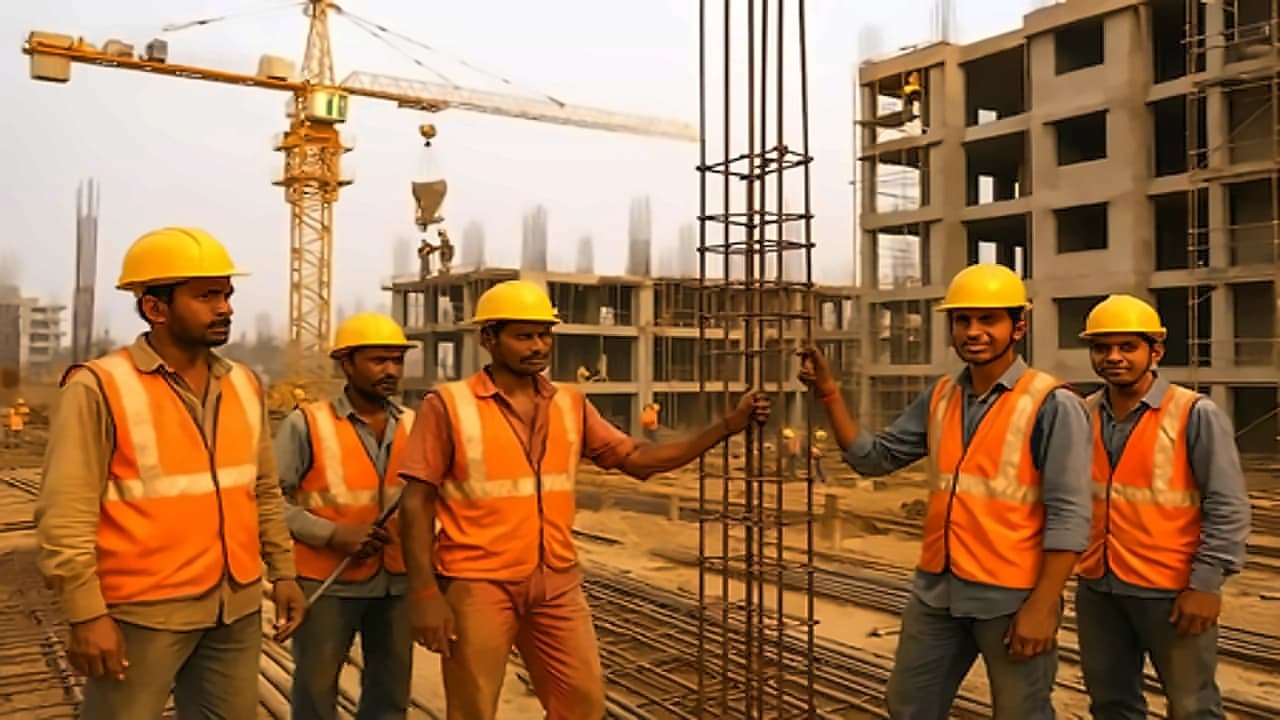
India has emerged as the second-largest single country contributor to global construction growth between 2020 and 2030, according to a new report released on Tuesday by Foundamental, a Berlin-based venture capital firm. The report reveals that India and China together account for nearly 40 per cent of global construction growth over the period, with China leading at 26.1 per cent and India following at 14.1 per cent. This positions India ahead of the United States, which accounts for 11.1 per cent of global construction growth during the same timeframe. As per Foundamental Co-Founder and General Partner Shubhankar Bhattacharya, India accounts for the second-largest share of global construction growth by volume between 2020 and 2030, behind only China at 26.1 per cent and ahead of the United States at 11.1 per cent.
Global construction spending reached USD 15.97 trillion in 2024 and is projected to grow to USD 19.86 trillion by 2028, representing a compound annual growth rate (CAGR) of 5.6 per cent. Within this total, infrastructure emerges as the fastest-growing major construction segment globally, expanding at a CAGR of 5.1 per cent between 2020 and 2025. According to Bhattacharya, global construction spending has already surpassed previous forecasts and is creating new opportunities across multiple sectors. The report notes that global capital expenditure is becoming increasingly concentrated in five countries: India, China, the United States, Germany and France, reflecting the growing importance of major economies in global capital expenditure and construction investment.
The report highlights India's exceptional growth trajectory in infrastructure development, with the country's infrastructure market forecast to grow at around 8 per cent annually through the end of the decade. This growth rate is significantly higher than the global average and demonstrates India's commitment to infrastructure expansion. The country is positioned to benefit from multiple long-term growth trends simultaneously, including infrastructure expansion, industrial development, the energy transition, digital transformation and urbanisation, as noted in the Foundamental report. Bhattacharya emphasizes that India's pace is markedly higher than the global rate, positioning the country advantageously in the global construction landscape.
The report forecasts the global data centre construction market will double by 2030 compared with 2018 levels, driven by artificial intelligence and cloud computing. Data centre construction is projected to add between 10 per cent and 15 per cent to the global construction market by 2030, making it one of the fastest-growing construction segments through 2030. This growth is attributed to the increasing demand for data centre infrastructure to support artificial intelligence and cloud computing applications globally. Bhattacharya notes that data centre construction could add between 10 per cent and 15 per cent to the global construction market by 2030, highlighting its significant impact on the overall construction sector.
The report notes that global gross fixed capital formation has grown roughly 30-fold since 1960, with that investment becoming increasingly concentrated among a handful of major economies. According to Bhattacharya, global construction spending has already surpassed previous forecasts and is creating new opportunities across infrastructure, industrial facilities, energy systems, transportation networks and digital infrastructure. This concentration trend reflects the growing importance of major economies in global capital expenditure and construction investment, with India, China, the United States, Germany and France emerging as the primary beneficiaries of this investment concentration.