The Centre has announced an ambitious plan to significantly expand the role of coastal shipping and inland waterways in India's freight transportation, targeting a doubling of their combined share from the current 6% to 12% by 2047. According to Union Minister for Ports, Shipping and Waterways Sarbananda Sonowal, this roadmap was announced at a consultative committee meeting in Puri on November 3, 2026. The proposed Coastal Cargo Promotion Scheme and Cruise Bharat Mission are expected to generate more than 5.6 lakh employment opportunities and help reduce carbon dioxide emissions by 16 million tonnes. As per Sonowal, under Prime Minister Narendra Modi's dynamic leadership, India's coastline and rivers are being turned into engines of growth, with the Coastal Cargo Promotion Scheme and Cruise Bharat Mission moving more cargo by sea and bringing more visitors to India's shores.
Sonowal announced that the Paradip Port Authority (PPA), in partnership with the state government, would develop an international cruise terminal at Puri with an estimated investment of ₹1,500 crore. The proposed project is expected to strengthen Odisha's maritime tourism infrastructure and position the state as an international ocean cruise hub. The ambitious Puri International Cruise Terminal project, developed jointly by PPA and the Government of Odisha, is designed to create 400,000 jobs in cruise tourism alone and attract one million sea cruise passengers annually by March 2029. The government plans to develop the country as a major cruise tourism destination with this transformative infrastructure development.
According to the minister, India's coastal cargo handling has increased from 74 million tonnes to 177 million tonnes over the past 12 years, registering growth of around 140%. With more than 11,000 km (6,800 miles) of coastline, the country has considerable potential to transport bulk commodities over long distances through coastal shipping, reducing logistics costs, congestion on roads and railways and the carbon footprint of freight transportation. The Coastal Cargo Promotion Scheme, announced in the 2026-27 budget, will offer incentives to cargo owners, coastal vessel operators and multimodal transport operators who move cargo by more than one means of transport, boosting eco-friendly supply chains across waterways and drastically reducing long-haul road and rail freight reliance.
India recorded 4,62,661 ocean cruise passengers and 212 vessel calls during 2025-26, reflecting a 5.5-fold increase in passenger traffic and an over two-fold rise in vessel calls compared with 2013-14. The Cruise Bharat Mission, launched in September 2024, aims to increase annual sea cruise passenger traffic to one million and generate four lakh employment opportunities by March 2029. Beyond ocean cruises, river cruising is expanding rapidly across India's interior, with the ministry advancing National Waterway No. 5 in Odisha. The government is also expanding river cruise tourism through the country's national waterways, with 20 river cruise circuits across 16 national waterways currently operational and another 51 circuits identified for phased development. A total of 143 river cruise terminals and landing points are currently operational.
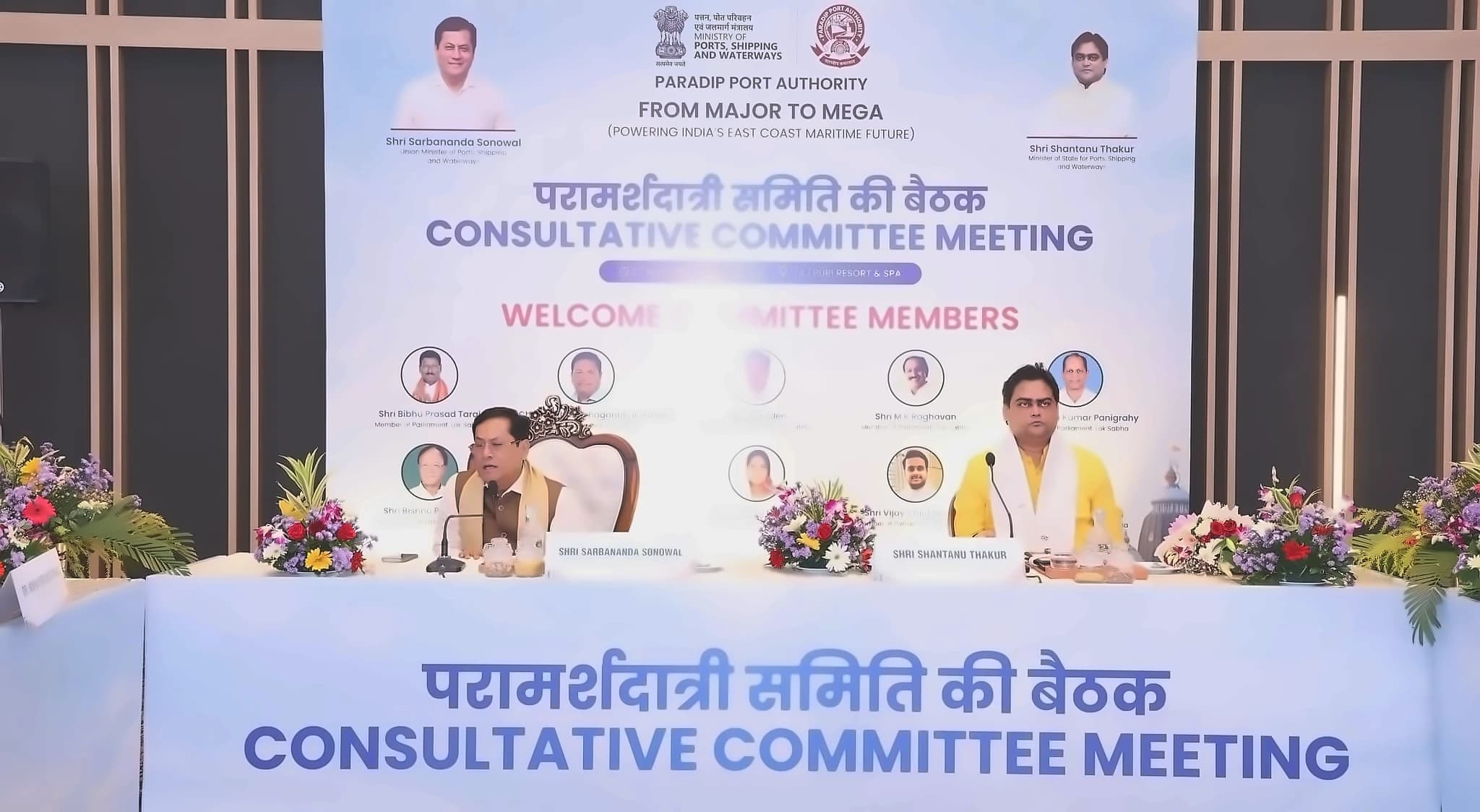
Sonowal highlighted that the development of National Waterway No. 5 is another important component of the Centre's maritime connectivity plans involving Odisha. Estimated to cost more than ₹13,000 crore, the project will connect the state's major industrial and mineral-producing centres, including Talcher and Kalinganagar, with ports along the eastern coast. The minister chaired the consultative committee meeting on strengthening coastal and cruise shipping, with Minister of State for Ports, Shipping and Waterways Shantanu Thakur and eight members of Parliament participating in the deliberations. Speaking at the meeting, Sonowal expressed gratitude to the participating MPs for their inputs, reiterating that the collective vision will propel India toward a sustainable, world-class maritime ecosystem under the Viksit Bharat agenda.