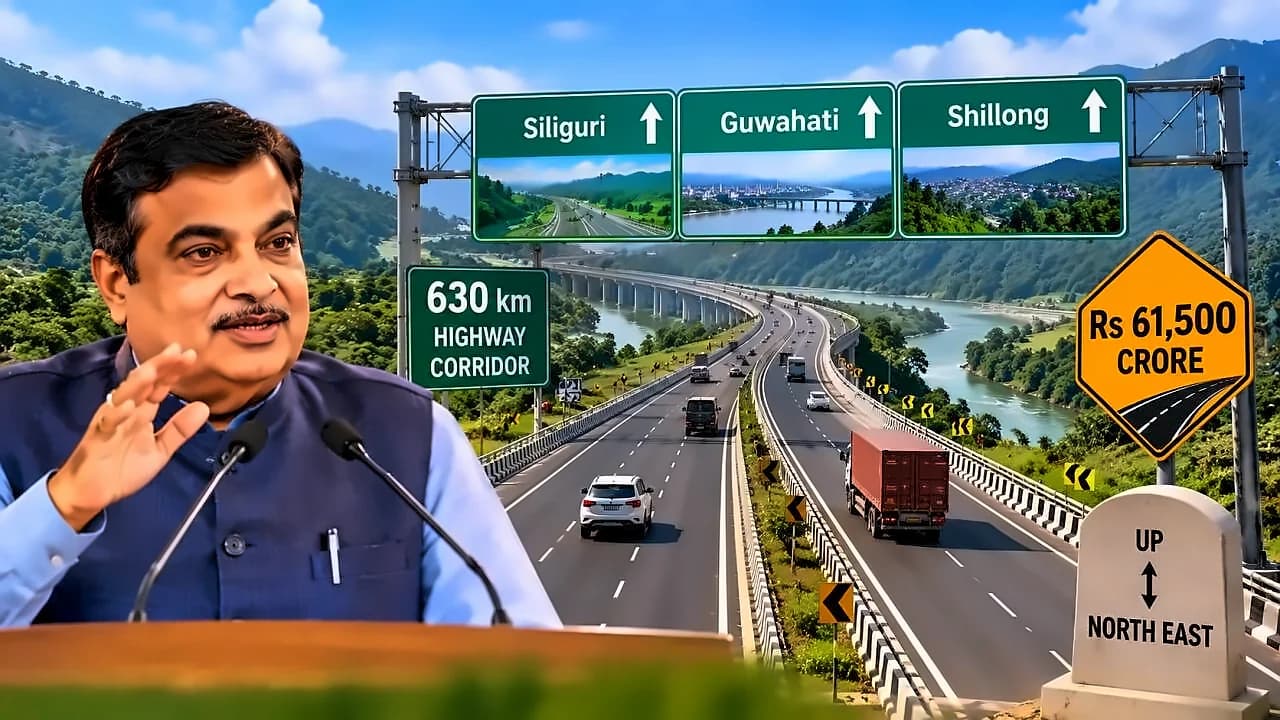
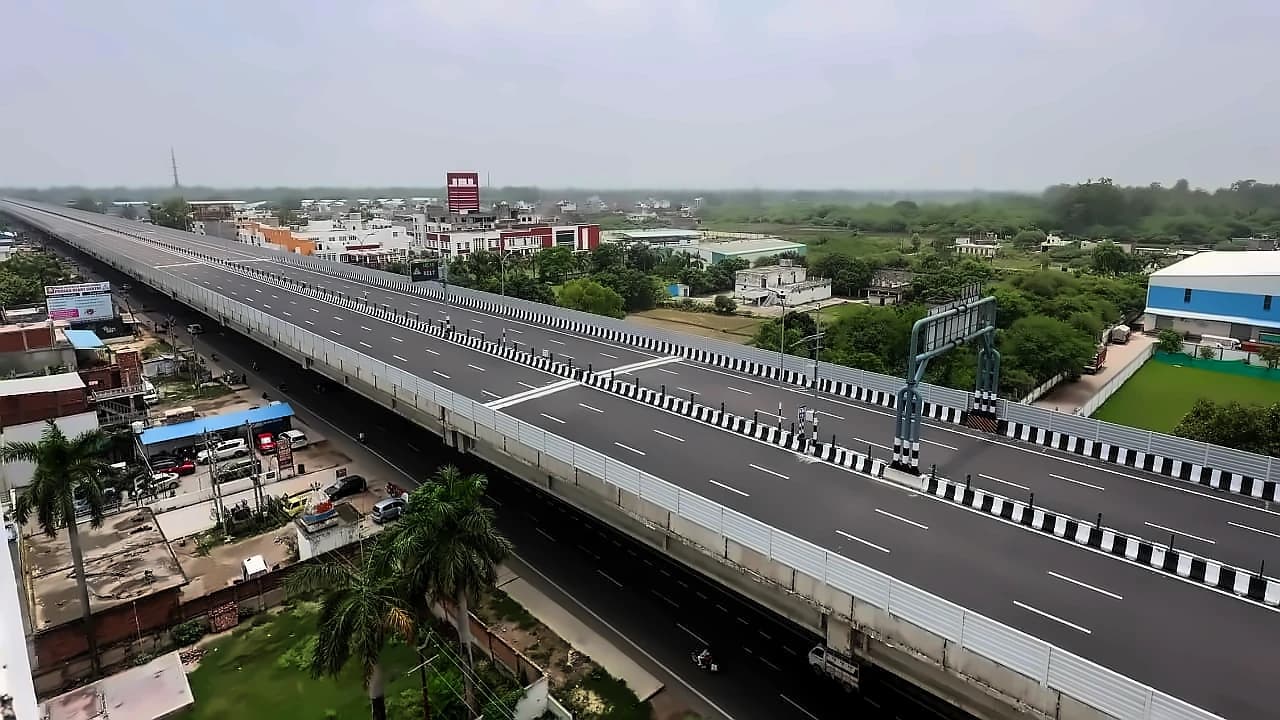
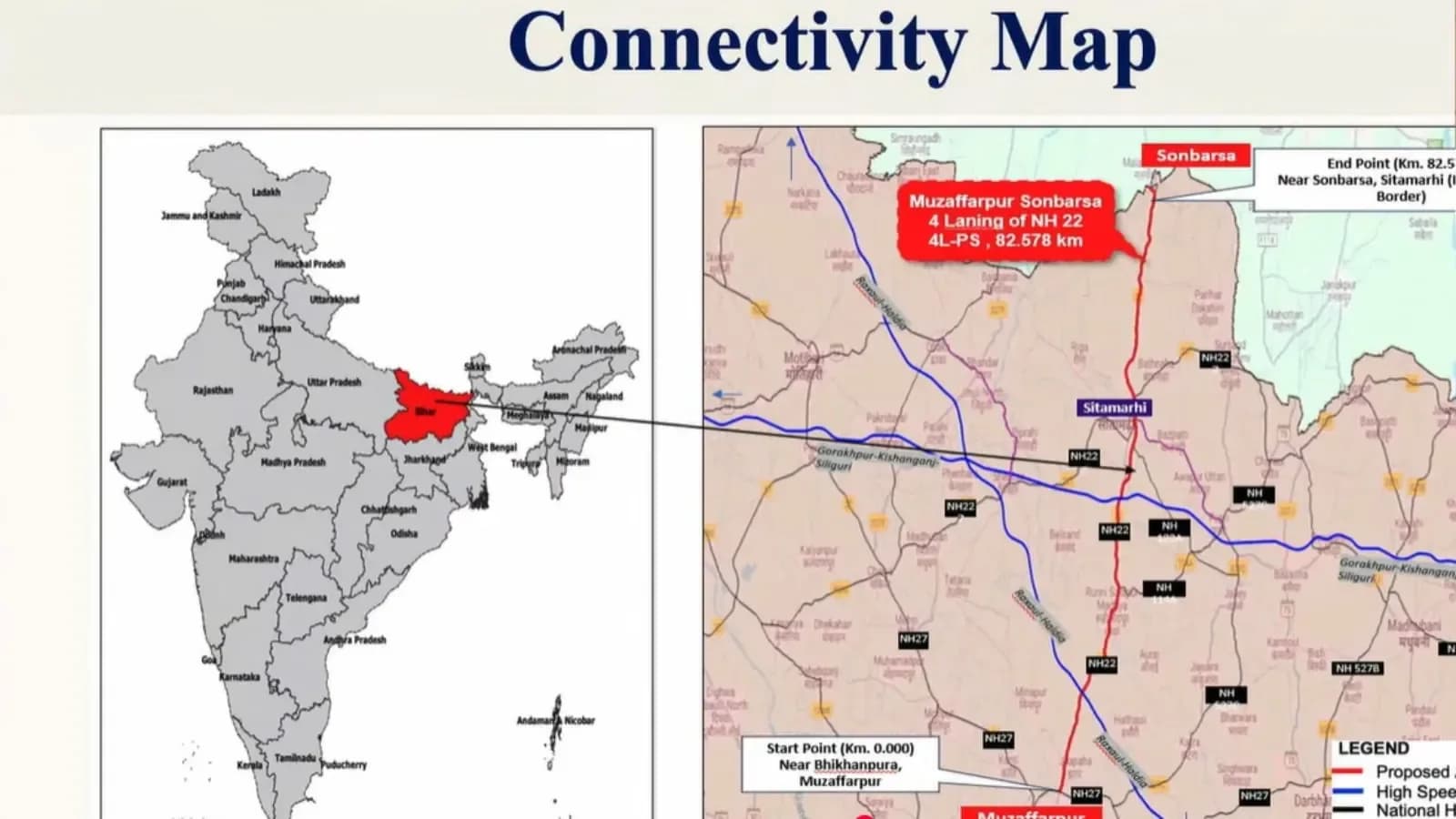
The Union Cabinet has approved ₹13,041 crore worth of infrastructure projects, including a ₹3,591-crore highway project for the four-laning of the Muzaffarpur-Sitamarhi-Sonbarsa stretch of National Highway 22, according to reports from Upstox Securities. This significant infrastructure development will create a 210-kilometer corridor connecting Muzaffarpur on NH-27 with Sonbarsa on the India-Nepal border, representing one of the major highway expansion projects in the region. The projects are expected to generate substantial additional freight capacity, reduce logistics costs and create employment opportunities during construction.
The upgraded corridor will provide enhanced connectivity between Muzaffarpur and Sonbarsa, creating a direct route from the Bihar district to the India-Nepal border. As reported by Upstox Securities, this 210-kilometer stretch will significantly improve transportation infrastructure in the region, potentially reducing travel time from two hours to one hour by improving road capacity and easing congestion. The project is expected to add 12 million tonnes of annual freight capacity, save ₹172.97 crore in logistics costs every year and generate 49 lakh human-days of employment. The corridor will also connect five PM Gati Shakti economic nodes, four social nodes and two logistics nodes, supporting economic activity and tourism while improving access to destinations such as Baba Garibnath Temple in Muzaffarpur and Punaura Dham (Mata Janki Temple) in Sitamarhi.
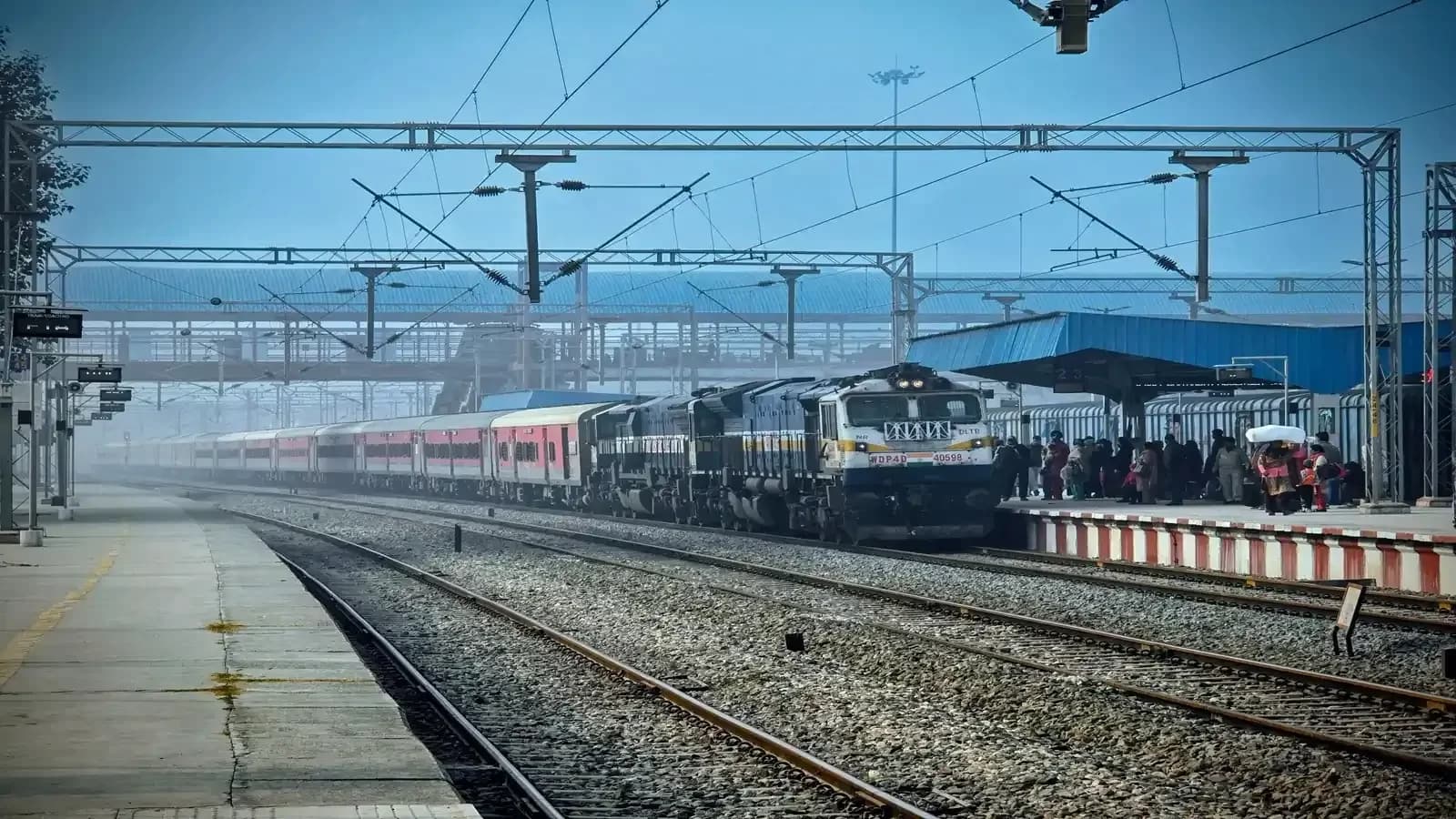
The Cabinet approved four railway projects with a combined outlay of ₹9,450 crore, aimed at quadrupling sections of the Howrah-Chennai main railway line to increase passenger and freight capacity on the key east coast corridor. As reported by Business Standard, the projects will add about 410 km to the Indian Railways network and are scheduled for completion by 2030-31. The first three railway projects involve adding the third and fourth lines on key sections, ultimately creating a complete quadrupled, four-line route from Howrah to Chennai. The railway connectivity projects approved include Kharagpur-Bhadrak (fourth line) worth ₹3,352 crore covering 173 km with a four-year completion period, Bhadrak-Haridaspur fourth line (₹1,583 crore) covering 75 km, Gummidipundi-Gudur third and fourth line (₹2,229 crore) covering 90 km, and Cuttack-Paradeep third and fourth line (₹2,286 crore) covering 72 km. "Howrah to Chennai is a very crucial railway connectivity route. It is part of the crucial seven trunk routes of the Indian Railways. They comprise 11% of the route but carry 40% of the traffic. These are very important lines and that is why doubling and quadrupling is being done in a focused manner," said Railway Minister Ashwini Vaishnaw, while briefing the media on the Cabinet decisions.
The infrastructure projects are expected to deliver significant environmental benefits through greater rail-based movement of freight. The Kharagpur-Bhadrak project alone will save 7.74 crore kg of carbon dioxide annually while the Cuttack-Paradeep project will save 20.86 crore kg of carbon dioxide annually. The projects will also reduce carbon dioxide emissions through greater rail-based movement of freight, supporting the government's sustainability objectives while enhancing transportation efficiency across multiple routes. Additionally, the railway projects will reduce oil imports by 13 crore litres and CO2 emissions by 65 crore kg, equivalent to the plantation of 2.60 crore trees, according to the Railway Ministry.
The railway quadrupling projects will significantly expand India's railway network, with the four projects covering 08 districts across West Bengal, Odisha, Tamil Nadu and Andhra Pradesh increasing the existing network by about 410 kilometers. According to the government release, the projects will improve connectivity to approximately 6,448 villages with a population of about 6 million people. "The increased line capacity will significantly enhance mobility, resulting in improved operational efficiency and service reliability for Indian Railways. These multi-tracking proposals are poised to streamline operations and alleviate congestion," the government stated. The projects are planned on PM-Gati Shakti National Master Plan with focus on enhancing multi-modal connectivity and logistic efficiency through integrated planning and stakeholder consultations. The Railway Ministry noted that the projects will improve capacity on routes carrying coal, iron ore, cement, iron and steel, containers, automobiles and food grains.