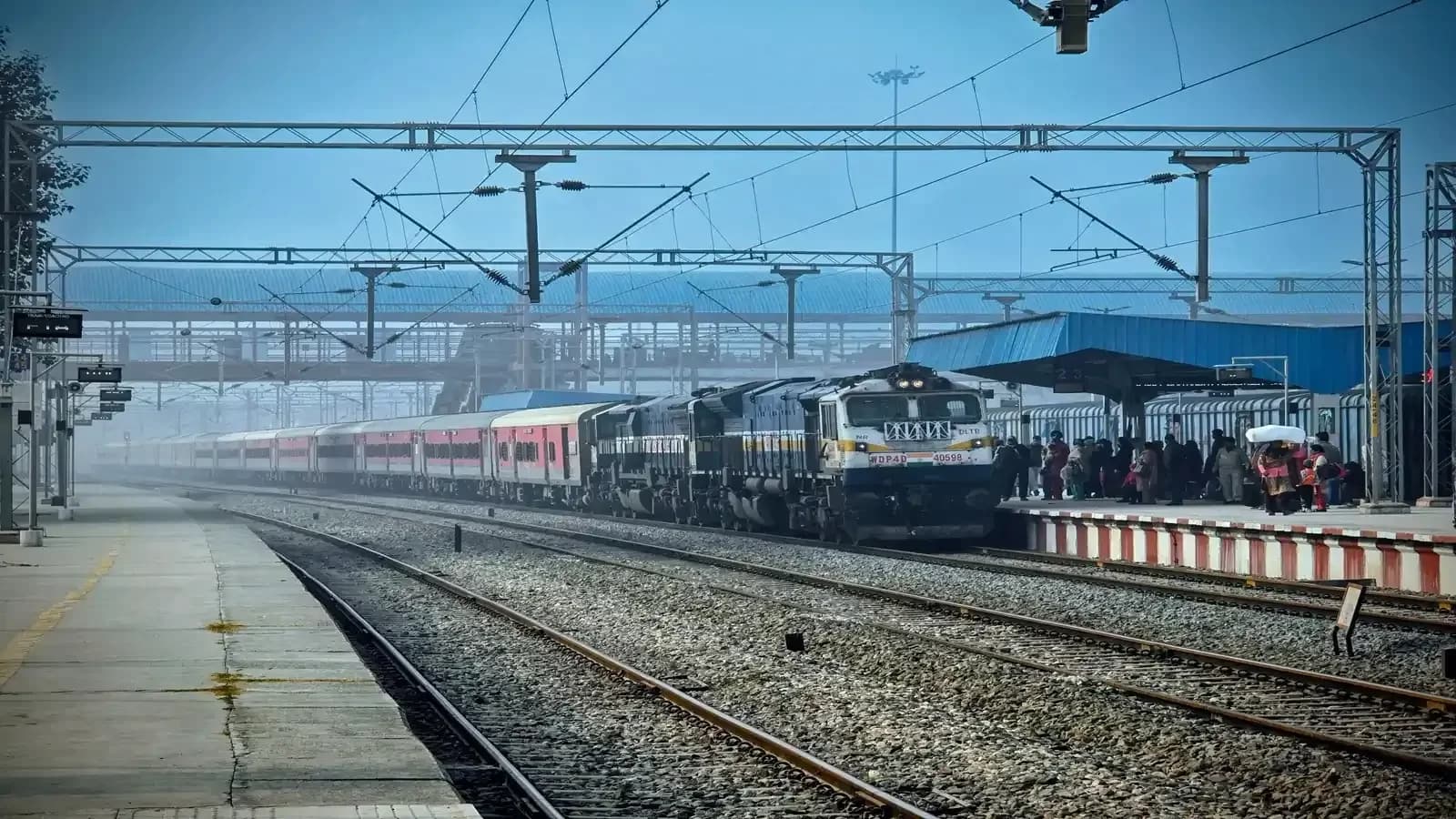
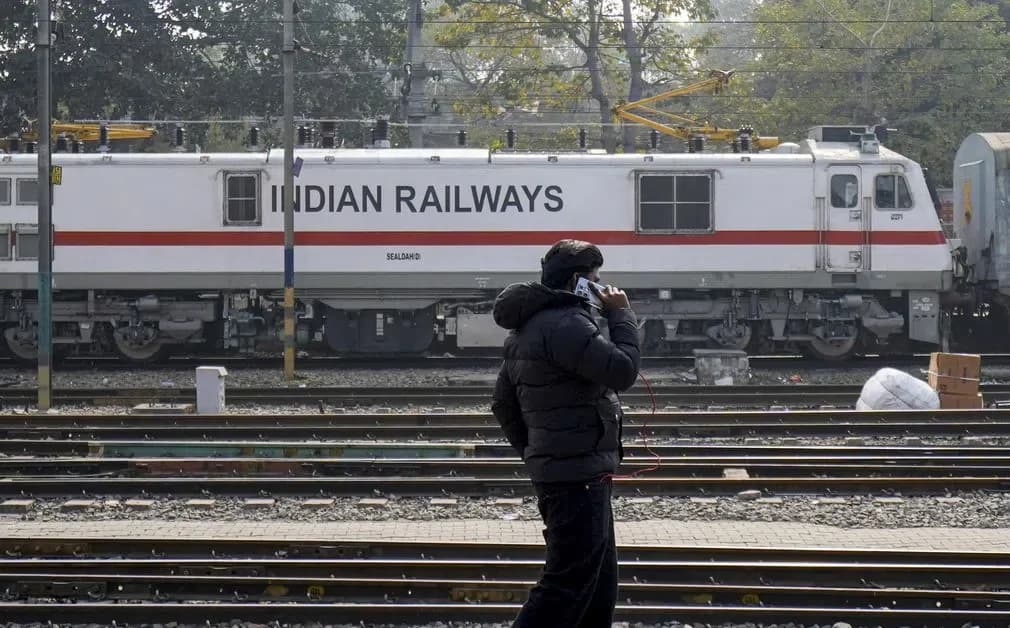
The Cabinet Committee on Economic Affairs (CCEA), chaired by Prime Minister Narendra Modi, on Wednesday approved eight railway multitracking projects with a combined estimated cost of ₹20,804 crore, covering 31 districts across nine states. According to government statements, these projects will add about 1,196 km to the existing Indian Railways network and are planned to be completed by 2029-30. The approval represents a significant infrastructure development initiative aimed at enhancing railway connectivity and freight capacity across the country. Union Minister Ashwini Vaishnaw highlighted during the Cabinet briefing that these projects are part of the railway modernisation work underway over the past 12 years, focusing on the four-laning and quadrupling of seven high-density railway corridors.
Five projects with a combined estimated cost of ₹10,021 crore are spread across Tamil Nadu, Andhra Pradesh, Karnataka and Telangana. These include the 77-km third and fourth lines between Arakkonam and Renigunta; the 47-km third and fourth lines between Whitefield and Bangarapet; the 147-km doubling of the Hosur-Omalur section; the 159-km doubling of the Salem-Karur-Dindigul section; and 110 km of multitracking between Secunderabad (Ghatkesar) and Kazipet. These projects will cover 17 districts and increase the railway network by about 540 km, improving connectivity for about 2,121 villages with a population of around 5.2 million. The projects are strategically located to enhance connectivity to key destinations including Tirupati, Kolar Gold Fields, Mettur Dam, Kodaikanal Hills and Sathyamangalam Wildlife Sanctuary, positioning them as critical infrastructure for both passenger and freight transportation. According to the Ministry of Railways, the approved multi-tracking works will also improve connectivity to approximately 2,121 villages with a combined population of about 52 lakh.
Separately, the CCEA approved three multitracking projects worth ₹10,783 crore across West Bengal, Jharkhand, Odisha, Madhya Pradesh and Chhattisgarh. These comprise the fourth line between Kharagpur and Jharsuguda (Bagdehi), the fourth line between Katni and Pendra Road, and the third line between Bilaspur (Uslapur) and Pendra Road. These projects will cover 14 districts, add about 656 km to the railway network and improve connectivity for around 4,790 villages with a population of about 5.6 million. The projects are expected to provide seamless connectivity for the movement of people, goods and services, with improved rail connectivity to several prominent tourist destinations including Taratarini Temple, the ancient Shri Khetra Jagannath Temple near Jharsuguda, Bandhavgarh Tiger Reserve, Amarkantak Temple, Achanakmar Tiger Reserve, Ratanpur Mahamaya Temple and Malhar Archaeological Site. The routes are also important for transporting commodities such as coal, cement, iron and steel.
The projects are expected to generate additional freight traffic of 74 MTPA (million tonnes per annum) - 47 MTPA from the southern projects and 27 MTPA from the eastern and central projects. According to the government, these routes are used for transporting commodities including coal, cement, iron and steel, with the southern projects also carrying containers, automobiles, foodgrains, petroleum products and fertilisers. The capacity augmentation under the five projects is expected to generate additional freight traffic of 47 MTPA, while the three eastern projects will support 27 MTPA additional freight traffic. The government noted that shifting more freight to rail could also reduce logistics costs and support India's climate goals, with the emissions reduction equivalent to the environmental benefit of planting around 2.48 crore trees.
All eight projects have been planned under the PM Gati Shakti National Master Plan, with a focus on multimodal connectivity and logistics efficiency through integrated planning and stakeholder consultations. The increased line capacity from the projects is expected to improve mobility, operational efficiency and service reliability while helping streamline train operations and reduce congestion. The projects are expected to provide seamless connectivity for the movement of people, goods and services, with the capacity enhancement supporting additional freight traffic of 47 MTPA from the southern projects and 27 MTPA from the eastern and central projects. The Railways, as an environment-friendly and energy-efficient mode of transport, would contribute to climate goals while reducing the country's logistics costs. The ministry emphasized that these projects are aligned with PM Modi's vision of a New India which will make people of the region Atmanirbhar through comprehensive development and increased employment and self-employment opportunities.