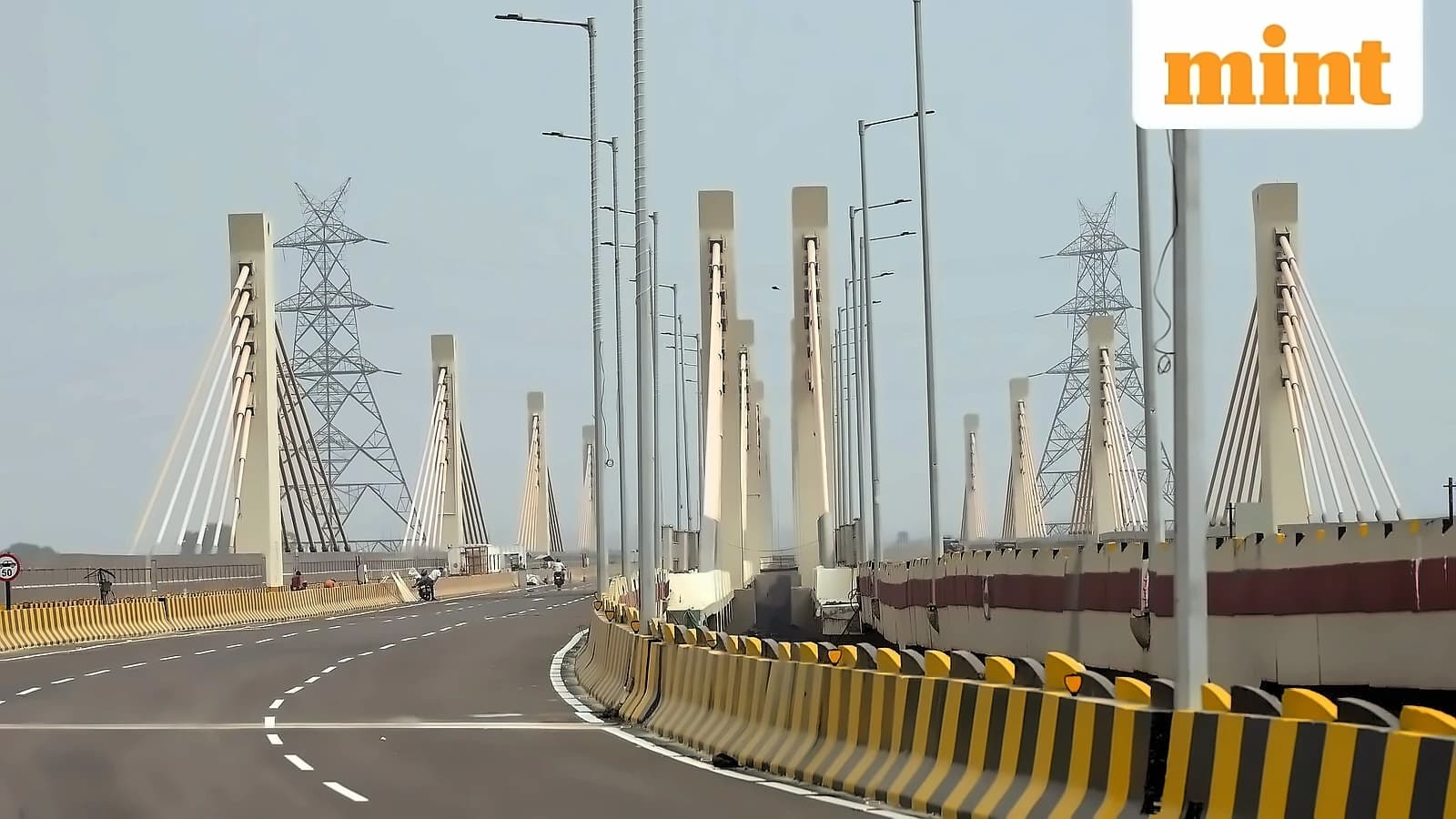
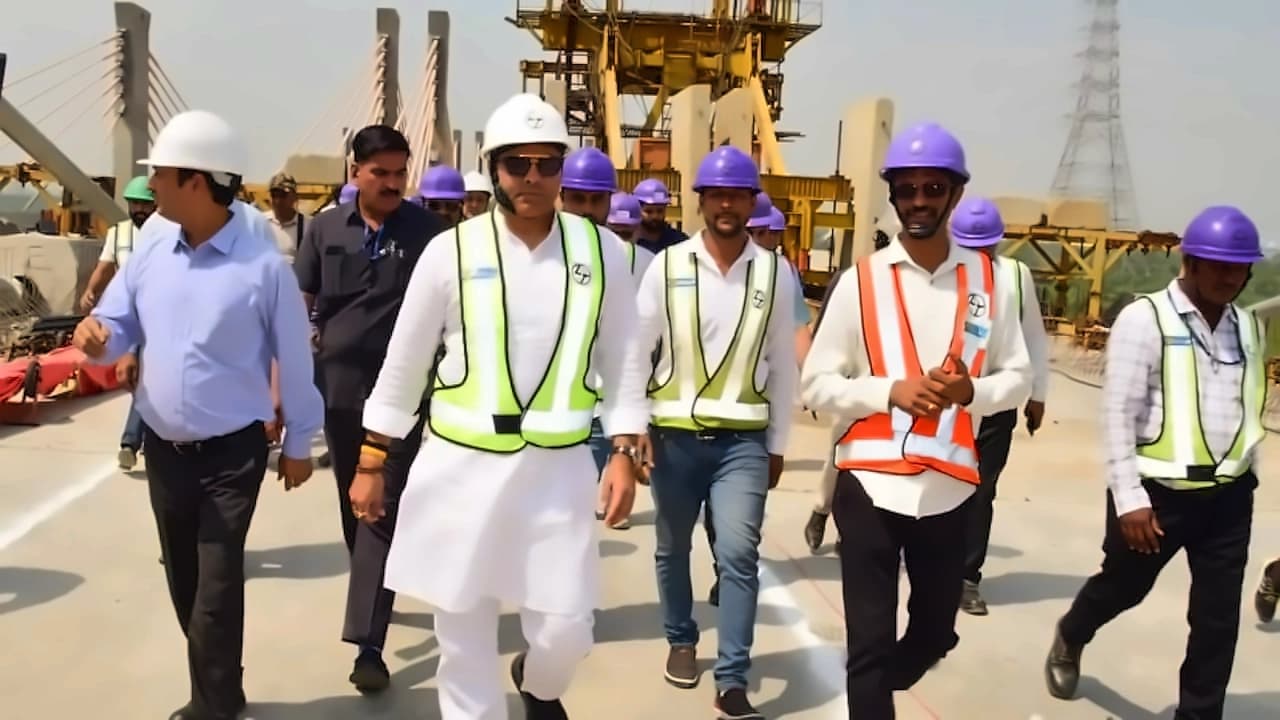
The long-delayed Barapullah Phase 3 corridor is set to officially open on September 29, with Public Works Department (PWD) Minister Parvesh Verma announcing the date after inspecting the project site. Union Home Minister Amit Shah is scheduled to inaugurate the project in the presence of Delhi Chief Minister Rekha Gupta, as reported by Hindustan Times. The newly constructed 3.5-kilometre, four-lane elevated corridor is designed to establish a direct, uninterrupted link between Mayur Vihar Phase I and Sarai Kale Khan. The project will not function in isolation but will seamlessly integrate with the existing Barapullah flyover network, creating a continuous, signal-free corridor spanning nearly nine kilometres.
In a significant infrastructure development, UTTIPEC has approved a 5.5-km six-lane elevated corridor on Maa Anandmayee Marg, along with a new four-lane Road Over Bridge at Mukarba Chowk. The largest project is a six-lane elevated corridor on Maa Anandmayee Marg, stretching between Outer Ring Road and Mehrauli-Badarpur Road, designed to bypass about 12 intersections and reduce delays on a route that also carries traffic linked to the Okhla Phase I and II industrial areas. The plan also includes an underpass and roundabout at the Crowne Plaza intersection on Okhla Estate Marg, with through-traffic shifted to the elevated section allowing more room for pedestrians and non-motorised transport.
The primary benefit of the Phase 3 extension is the massive reduction in daily commute durations. As reported by Hindustan Times, motorists travelling from Noida and East Delhi to South Delhi destinations, such as AIIMS, will see their journey shrink from the standard 35 to 40 minutes down to just 15 minutes. The corridor features nine interconnected loops that distribute vehicles across multiple entry and exit points, mitigating the risk of congestion at key junctions. The road will allow vehicles to bypass several traffic signals and congested stretches on the route to South Delhi, making it particularly relevant for commuters travelling between Mayur Vihar, East Delhi and Noida towards Sarai Kale Khan and AIIMS.
A major engineering milestone of the project is the inclusion of Delhi's 10th road bridge across the Yamuna River, which features an extra-dosed design with spans measuring approximately 125 metres. According to Hindustan Times, PWD Minister Parvesh Verma described the Yamuna crossing as having the potential to become a riverfront attraction if the river is cleaned up. "This is the country's first flyover to feature both a cycle track and facilities for pedestrians," Verma said, noting that people will naturally visit the bridge once the Yamuna is cleaned up. The infrastructure project also incorporates dedicated cycle tracks and pedestrian pathways, making it one of the few flyovers in the National Capital Region (NCR) to promote safer transit options for non-motorised commuters.
The ambitious infrastructure project has faced multiple challenges, ultimately being completed at a revised cost of ₹1,635 crore, representing an escalation of roughly ₹375 crore from its initial project estimates of ₹1,260 crore. As reported by Hindustan Times, the project was originally approved in 2014 with construction beginning in 2015, but was originally scheduled to be completed in 2017. The higher cost has been linked to the prolonged delay and changes during the project's execution, with the project missing multiple completion deadlines including the latest deadline of June 30, 2026. The Delhi Anti-Corruption Branch has registered a case earlier this year over alleged irregularities linked to the project, with the allegations currently under investigation.
Separately, UTTIPEC approved Multi Modal Integration plans for six Metro stations: GTB Nagar, Sarita Vihar, Akshardham, Rohini West/Dr Baba Saheb Ambedkar Hospital, Malviya Nagar and Shastri Park. The plans cover roughly a 300-metre area around each station, with measures for pedestrian safety, walkability, station access, last-mile connectivity and interchange between transport modes. With these six approvals, all 31 MMI plans prepared by the Delhi Metro Rail Corporation for Phase I and Phase II corridors have now received UTTIPEC clearance. At Mukarba Chowk, the existing Road Over Bridge on the Outer Ring Road will be widened from six lanes to 10, while a separate four-lane ROB will be constructed over the Delhi-Sonipat railway line, connecting Jahangirpuri Industrial Area with Sanjay Gandhi Transport Nagar and expected to divert around 20% of traffic currently using Mukarba Chowk.