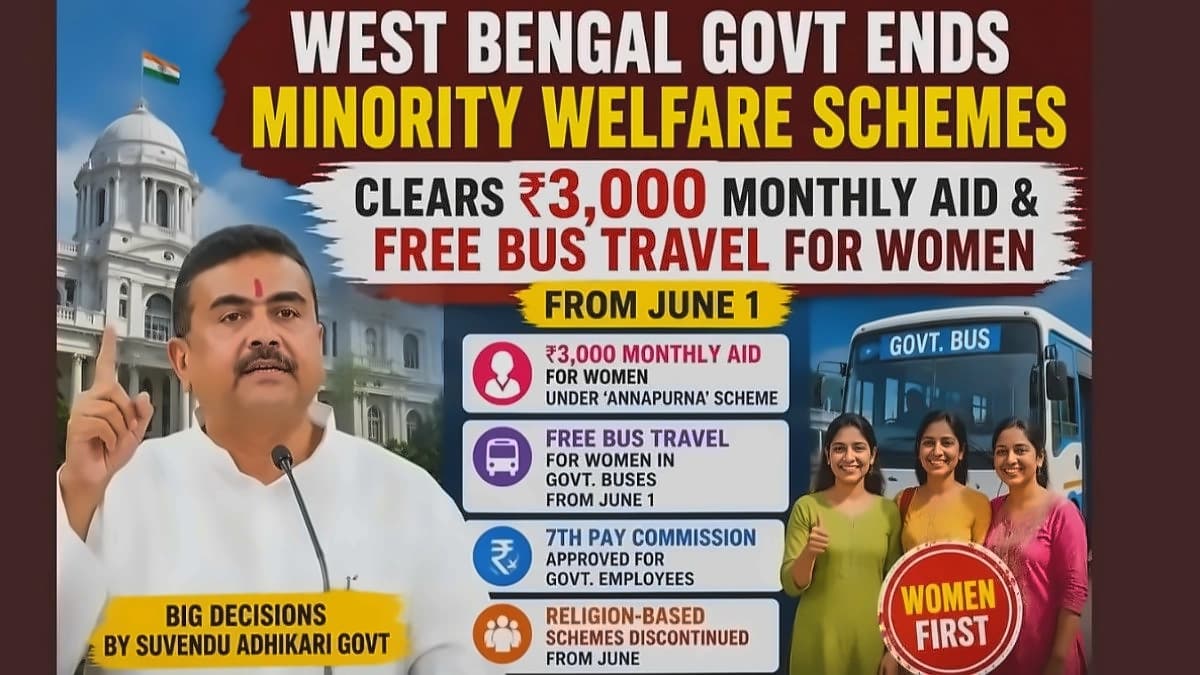
The West Bengal cabinet has approved the 'Annapurna' scheme providing ₹3,000 monthly assistance to women in the state, effective from 1 June 2026, according to reports from Mint. Women, Child, and Social Welfare Minister Agnimitra Paul announced this decision at a press conference following the cabinet meeting at Nabanna on 18 May 2026. The scheme was proposed by the Bharatiya Janata Party (BJP) during its election campaign in the eastern state, representing a significant increase from the previous TMC government's ₹1,500 provided under the 'Lakhsmir Bhandar' scheme. As per Mint, the new West Bengal Annapurna Bhandar Scheme will replace the existing Lakshmir Bhandar Scheme for eligible beneficiaries.
As reported by Mint, women currently receiving assistance under the previous government's 'Lakshmir Bhandar' scheme will be automatically entitled to the Annapurna Yojna without requiring reapplication. Minister Paul confirmed that money will be sent through direct bank transfer to eligible beneficiaries. The scheme extends benefits to women who applied for citizenship under the CAA and approached tribunals for inclusion in voter rolls following the SIR exercise. New applicants will be able to register through a web portal that the state government plans to launch soon. According to Mint, women applying for the scheme must meet specific conditions including being a permanent resident of West Bengal, belonging to a low-income or Economically Weaker Section (EWS) family, and holding a BPL, AAY or PHH ration card. However, permanent or retired government employees, individuals removed from voter rolls, and applicants whose citizenship or voter status is under verification may not qualify for the scheme.
According to Mint reports, the cabinet also approved free travel for women in government-run buses from 1 June 2026. This complements the financial assistance component of the Annapurna scheme, providing comprehensive support to women across multiple sectors. The monthly financial assistance will be transferred directly into Aadhaar-linked bank accounts of beneficiaries through Direct Benefit Transfer (DBT). The government is expected to carry out strict verification of beneficiaries before the launch to remove fake and ineligible applicants. Officials indicated that deceased beneficiaries, non-residents and those with pending citizenship or voter verification issues may not receive benefits under the new scheme.
The West Bengal cabinet decided to discontinue assistance schemes providing monthly stipends to imams, muezzins and purohits from June 2026, as announced by Women, Child and Social Welfare Minister Agnimitra Paul. These schemes, introduced by the earlier Trinamool Congress government, offered financial support to religious leaders through the departments of Information and Cultural Affairs and Minority Affairs and Madrasa Education. Under the previous arrangement, imams of registered mosques were receiving ₹3,000 monthly, while muezzins and purohits were getting ₹2,000 each. Minister Paul clarified that student scholarship schemes in the state would continue and would not be affected by the latest cabinet decision. The cabinet has approved the discontinuation of schemes based on religious categorisation, with a notification on this decision to be issued.
As reported by Mint, the cabinet approved in principle the formation of the Seventh State Pay Commission to revise state employees' salaries upward. Minister Paul stated that the scope of pay hikes would extend to staff of statutory entities including civic bodies, local bodies, education boards, and state-run education institutions. The commission's details will be duly notified, though the implementation date was not specified in the announcement. According to Mint, the Seventh State Pay Commission will revise salaries not only for regular state government workers but also for employees working in statutory bodies, civic bodies, local bodies, education boards and state-run educational institutions. This comprehensive approach reflects the government's commitment to addressing salary revisions across all state-funded entities.
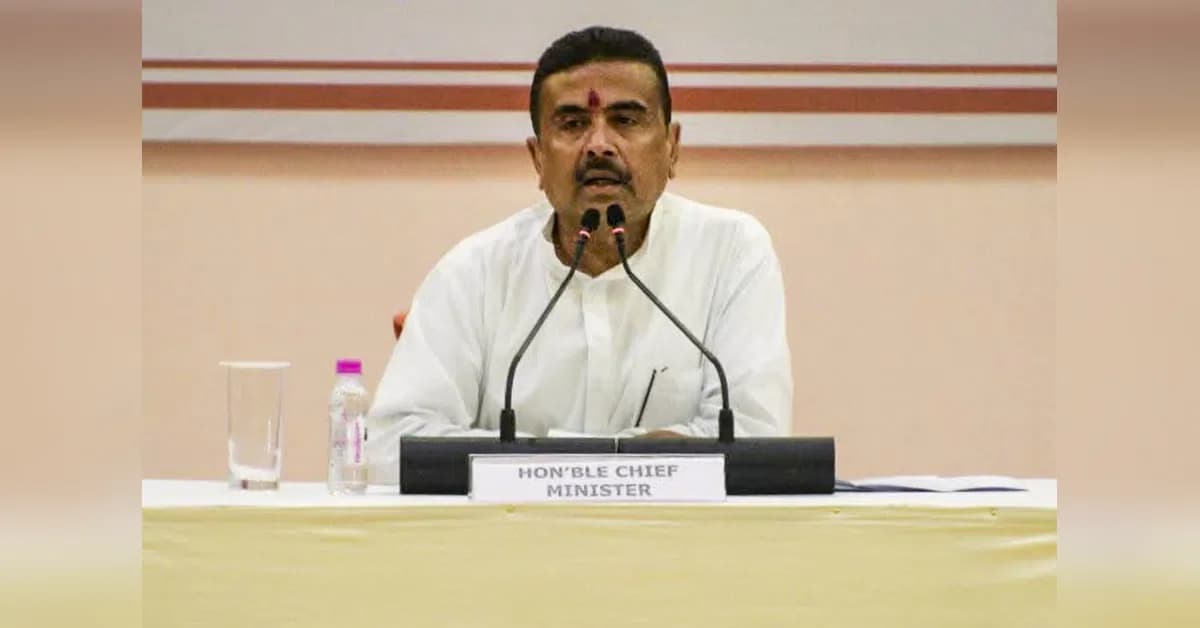
According to Mint reports, the cabinet chaired by Chief Minister Suvendu Adhikari also decided to hold cabinet meetings every 15 days (fortnightly) going forward. This change in the meeting schedule reflects the new government's approach to administrative efficiency and policy implementation. The cabinet meeting on 18 May 2026 was the second meeting of the state council of ministers under the current administration. The latest cabinet decisions signal major policy changes under the new BJP government in West Bengal, with the administration focusing on implementing election promises while also revisiting schemes introduced by the previous TMC government.