West Bengal has successfully implemented the Ayushman Bharat Pradhan Mantri Jan Arogya Yojana (AB PM-JAY), marking a major milestone in India's journey towards universal health coverage. According to the latest press release, the MoU signing ceremony took place on June 8, 2026, at Vigyan Bhawan in New Delhi. A memorandum of understanding (MoU) for the implementation of the AB PM-JAY scheme was signed between the National Health Authority (NHA), under the aegis of the Union Health Ministry and West Bengal's Department of Health and Family Welfare. With this signing, West Bengal became the 36th state/Union Territory in the country to implement AB PM-JAY. The MoU signing ceremony was presided over by Union Health Minister J P Nadda, in the presence of the West Bengal Chief Minister Suvendu Adhikari. The ceremony also included Pratap Rao Jadhav, Minister of State for Health & Family Welfare, Ministry of Ayush; Anupriya Patel, Union Minister of State for Health and Family Welfare and Chemicals and Fertilizers; Punya Salila Srivastava, Union Health Secretary; Manoj Kumar Agarwal, Chief Secretary, West Bengal; and other senior officials from the Ministry of Health and Family Welfare, National Health Authority and Government of West Bengal.
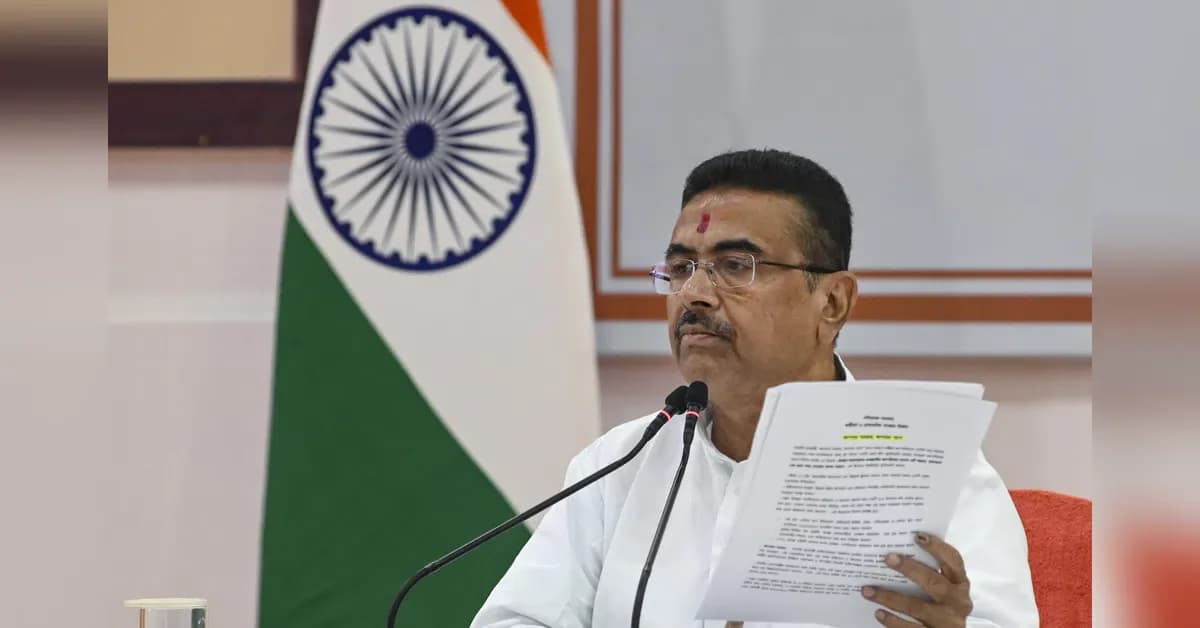
The MoU signing ceremony was presided over by Union Health Minister J P Nadda, in the presence of the West Bengal Chief Minister Suvendu Adhikari. The Ayushman Bharat PM-JAY is a centrally sponsored scheme that provides health cover of up to ₹5 lakh per family per year for secondary and tertiary care hospitalisation to eligible beneficiaries. As reported by the official statement, the scheme operates on a cost-sharing basis between the Centre and States/Union Territories based on specific geographic and administrative categories. In general states, the cost is shared in the ratio 60:40 between the Centre and the state government, while in North-Eastern and Himalayan States the ratio is 90:10.
All Indian citizens aged 70 years and above are eligible for coverage under AB PM-JAY, irrespective of income levels. This means there is no income-based eligibility criterion for senior citizens aged 70 years and above. For citizens aged 70 years and above who are already covered under public schemes such as Central Government Health Scheme (CGHS), Ex-Servicemen Contributory Health Scheme (ECHS), Ayushman CAPF and other government-backed health programmes, the rules provide flexibility. They may continue with their existing healthcare arrangement or choose to opt for AB PM-JAY instead. The Ayushman card serves as the beneficiary's identification document and can be generated digitally through the official PM-JAY beneficiary portal. Applicants can apply by visiting the portal, logging in with registered mobile number and OTP, selecting their state and district, searching for eligibility using name or Aadhaar number, completing verification, uploading photograph and providing required details, and submitting the application for download once approved.
Since its launch in 2018, the scheme has emerged as a cornerstone of India's healthcare transformation, according to the official statement. The scheme has reduced out-of-pocket expenditure and improved access to quality treatment through a vast network of empanelled public and private hospitals. The implementation in West Bengal is expected to extend financial protection against catastrophic health expenditure to millions of eligible beneficiaries in the state while enabling seamless portability of healthcare benefits across the country. This development marks a major milestone in the journey towards achieving equitable and accessible healthcare for all citizens across the nation, as stated in the press release. The programme is designed to provide financial protection against major medical expenses, particularly for families that may struggle to bear the cost of hospitalisation, with coverage available for secondary and tertiary care treatment at both public and empanelled private hospitals.