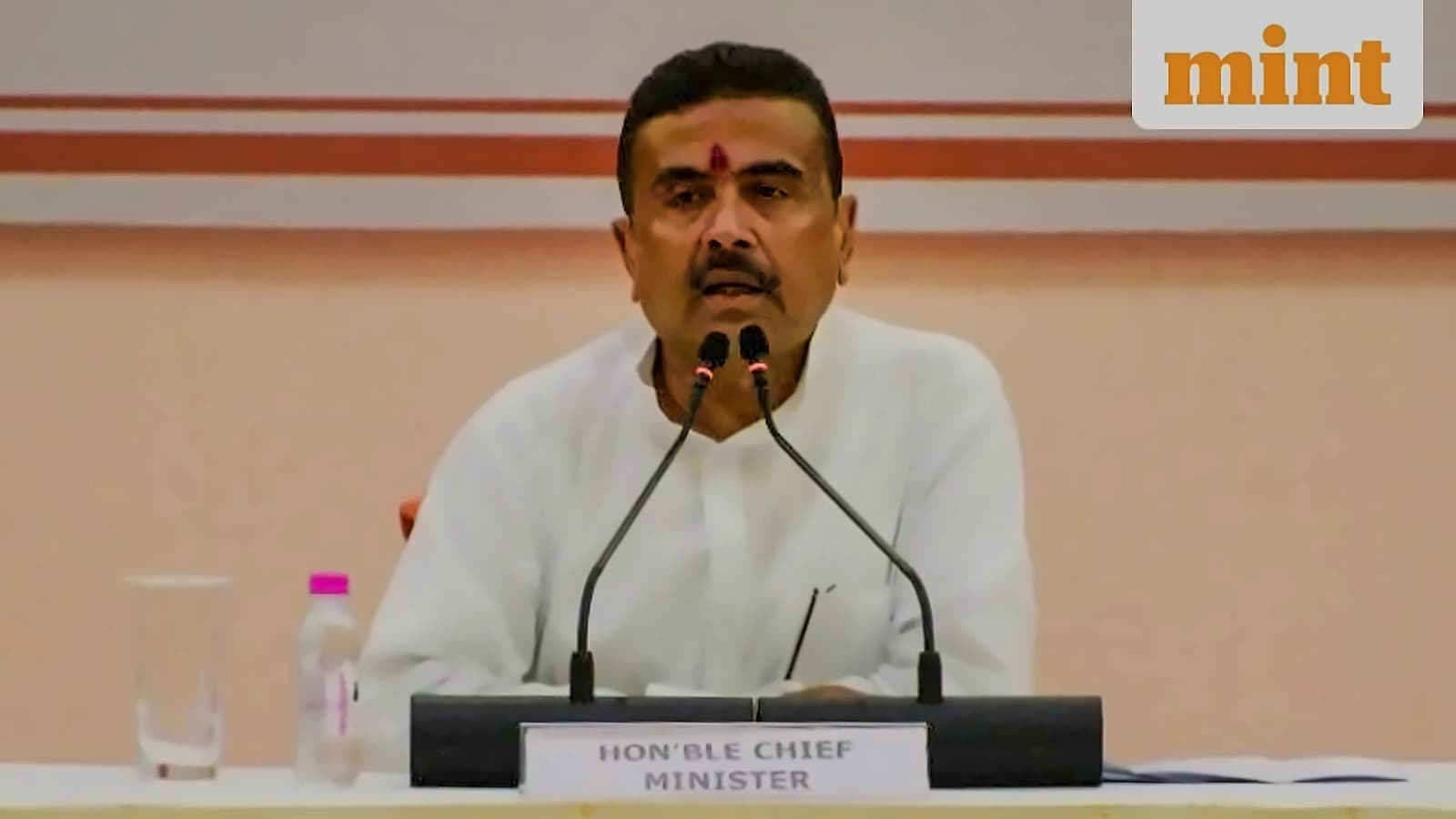
The West Bengal government has approved in-principle forming its 7th pay commission to decide salary and dearness allowance (DA) hikes for state government employees, educational institutions, government corporation and board staff, and state government-aided bodies. According to an AIR report, the decision was made at a Cabinet meeting on May 18 chaired by Chief Minister Suvendu Adhikari at Nabanna, the West Bengal state secretariat. However, after the meeting, state Women, Child, and Social Welfare Minister Agnimitra Paul confirmed that DA was not on the agenda. The State Pay Commission will revise the salaries of its employees, stating that the scope of the pay hike would also extend to staff of statutory entities such as civic bodies and local bodies, education boards, and those working in state-run educational institutions. As per the latest reports, the details of the commission's set-up will be duly notified, though no specific implementation date has been specified.
The last DA hike in the state was a 4% increase in February, announced by state finance minister Chandrima Bhattacharya in her interim budget. After the February revision, DA for state government employees rose to 22%. Prior to this, the state had hiked DA component from 14% to 18% in April 2025. Despite the fresh hike in the Interim Budget 2026, state government employees are still under the 6th pay commission and DA continues to be considerably lower than the allowance offered to central government staff.
The West Bengal cabinet has ended assistance schemes for imams, muezzins, and temple priests that are based on religious categorisation. From June 1, new schemes will not use religion as a criterion. As per Minister Paul, the cabinet has approved discontinuation of schemes based on religious categorisation, with a new notification outlining approaches that do not identify beneficiaries by religion to be issued. The cabinet has also approved the 'Annapurna' scheme for women, which will provide ₹3,000 per month from June 1. Women who applied for citizenship under the CAA and those who approached tribunals for inclusion of names in voter rolls will also be entitled to receive the Annapurna scheme benefit.
State government employees have long been demanding DA on a par with central staff. Central government employees and pensioners are covered by the 7th Central Pay Commission (CPC) which offers a different pay structure and increases gap in pay. Now, with the 8th CPC underway, there are concerns the gap will widen. The issue is currently pending before the Supreme Court. With the change in government, employees are hopeful that the new administration will announce DA in line with central rates.
Announcing the state government's decision to roll out financial schemes, minister Paul said all decisions will take effect starting June 1. These include the 'Annapurna' financial support scheme for women, free travel for women on government-run buses, and 7th pay commission to revise state employees' salaries upward. The cabinet also approved free travel for women on state-run buses from June 1, though the government does not plan to increase the number of buses at this time. According to Paul, those currently receiving assistance under the previous government's Lakshmir Bhandar scheme will be automatically entitled to the Annapurna Yojna. There is no need to reapply for it. Money will be sent through direct bank transfer. The government would soon launch a web portal to facilitate fresh applications for the programme from those who had yet to receive the assistance.
The cabinet has approved the scrapping of the existing state OBC list based on a 2024 Calcutta High Court judgment. The minister announced that the cabinet has decided to revise and cancel the current OBC list and quota percentages as per the May 22, 2024, Calcutta High Court judgment. The list's controversy centres on the inclusion of 77 communities, of which 75 are Muslim. Their inclusion into the state's Other Backwards Classes (OBC) list was initiated during the TMC regime. The decision sparked major political and legal battles, with the Calcutta High Court cancelling the notice and invalidating nearly 5 lakh caste certificates issued since 2010. The state will form a panel to determine eligibility for the OBC quota, with relevant State budgetary allocations also being adjusted accordingly.