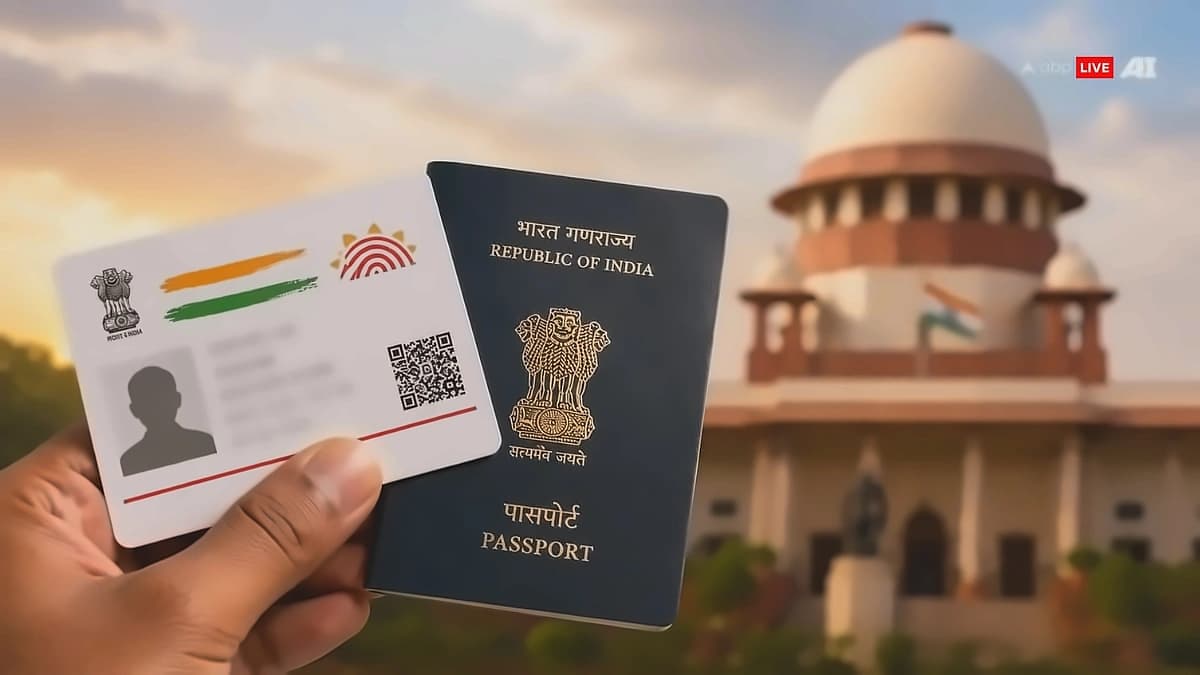
The Unique Identification Authority of India (UIDAI) has issued a detailed clarification stating that Aadhaar is not considered proof of date of birth, despite being a valid identity document. According to reports from Mint, the UIDAI took to social media to clarify that while Aadhaar serves as proof of identity when used with authentication, it does not function as date of birth proof. The authority emphasized that it is up to the Aadhaar user to determine their own view on the use of Aadhaar for purposes relating to establishing the date of birth. The latest clarification comes after the UIDAI received several queries from individuals and organisations seeking clarification on whether Aadhaar can be accepted as an official document to confirm a person's date of birth, with different institutions interpreting the provisions of the Aadhaar Act, 2016 in varying ways. The clarification was issued through an official circular addressed to Aadhaar User Agencies (AUAs) and e-KYC User Agencies (KUAs), aiming to resolve ongoing confusion regarding the use of Aadhaar for verifying an individual's date of birth.
As reported by Mint, the Aadhaar Act, 2016, is silent with regard to its acceptance as proof of date of birth. According to the official notice issued by Sanjeev Yadav, Director, UIDAI, in the event of a dispute regarding the correctness of the date of birth in Aadhaar, the burden of proof lies with the Aadhaar number holder. The notice added that it is up to individual All Aadhaar User Agencies (AUAs) and e-KYC User Agencies (KUAs) to determine their own view on the use of Aadhaar for purposes relating to establishing the date of birth. UIDAI stated that Aadhaar, whether in physical or electronic form, is accepted as proof of identity, subject to authentication and conditions specified by regulations. Since the date of birth is recorded based on the resident's self-declaration, in case of any dispute, the responsibility to prove the correct date of birth lies with the individual. The latest circular reinforces earlier guidance issued in December 2023 and previous communications from 2018, which consistently maintained that Aadhaar can be used for identity authentication but should not be relied upon as proof of date of birth.
According to the UIDAI clarification reported by Mint, the date of birth is often recorded based on a self-declaration provided by the resident rather than independently verified primary records. During enrolment or updates, the UIDAI records the date of birth simply as 'claimed' by the resident based on submitted documents like Birth Certificates, Passports, or SSLC certificates. If a resident lacks valid supporting documents, the DOB is recorded as 'Declared' or 'Approximate', in which cases the system defaults the date to January 1 of the calculated calendar year. The latest clarification confirms that when someone signs up for or updates their Aadhaar, their date of birth is recorded based on the documents they give, including birth certificate, SSLC certificate, passport, or date of birth certificate from a Group A Gazetted Officer. In cases where only an approximate age is provided, the resident verbally states their age to the enrolment operator, and the Aadhaar system calculates the year of birth by default. This means Aadhaar data alone cannot be considered conclusive evidence of a person's date of birth, as the authority emphasized that the date of birth recorded in Aadhaar is based on documents submitted by the resident or self-declared or approximate information.
As reported by Mint, 'Aadhaar is only a proof of the fact the person who is trying to obtain a subsidy/service by identifying himself on the basis of Aadhaar number is the same person who had enrolled for Aadhaar after providing his biometrics and other documents at the time of his Enrolment', according to a separate memorandum by Assistant Director General Ashok Kumar. The official uses of Aadhaar, according to the UIDAI, include ensuring positive authentication and verifying that the person seeking a subsidy or service is the same person who enrolled. Aadhaar may be used as proof of identity or address, but should not be used as proof of date of birth. According to the latest clarification, Aadhaar in any form, including the Aadhaar card, e-Aadhaar, masked Aadhaar, offline Aadhaar XML, and the QR code on the card, can be used as proof of identity and address, along with other acceptable documents, subject to conditions laid down by the authority. Interestingly, UIDAI has left some discretion to agencies, stating that AUAs and KUAs may take their own view on using Aadhaar for DOB-related purposes, but they must remain aware that Aadhaar is not legally established as DOB proof, giving institutions operational flexibility while placing responsibility on them to ensure compliance with legal standards.
For individuals, this clarification is particularly important when applying for passport or visa applications, as applicants may still need to provide valid DOB documents, such as birth certificates or passports. The UIDAI's latest clarification settles a long-standing ambiguity that has created confusion for both individuals and institutions. Both individuals and institutions must ensure that appropriate documents are used for DOB verification to avoid legal or procedural complications. The circular emphasizes that Aadhaar is fundamentally designed as a proof of identity, which works only when authenticated, and while Aadhaar contains demographic details including date of birth, the Aadhaar Act, 2016 allows Aadhaar to establish identity but does not explicitly recognize Aadhaar as proof of date of birth. This distinction is crucial, especially in legal, financial, and administrative processes where accurate DOB verification is required, ensuring that institutions maintain compliance with legal standards while providing operational flexibility in their verification practices.