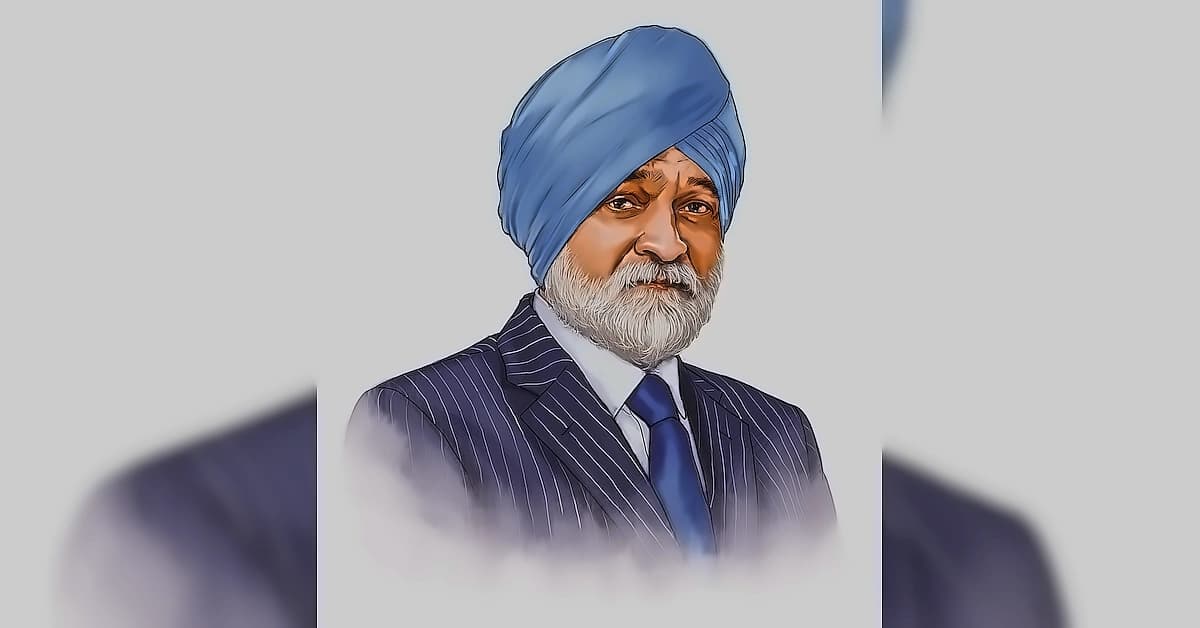
The Tamil Nadu government has appointed a six-member Revenue Augmentation Committee headed by economist Montek Singh Ahluwalia to develop strategies for boosting the state's tax and non-tax revenues. According to reports from Business Standard, Ahluwalia served as the deputy chairman of the erstwhile Planning Commission and will be supported by other distinguished members including K P Krishnan (Chair Professor of Economics at NCAER), Arbind Modi (tax policy expert), Najib Shah (former CBEC chairman), M A Siddique (Additional Chief Secretary to State Finance Department), and M Suresh Babu (Director of Madras Institute of Development Studies).
The committee's formation comes as Tamil Nadu faces significant fiscal challenges, with outstanding debt of ₹13.18 trillion representing 28.3% of gross state domestic product (GSDP). As reported by Business Standard, this exceeds the 25% threshold under the fiscal responsibility framework and compares unfavorably with Gujarat at 17.6%, Maharashtra at 19.7%, and Karnataka at 23.4%. The state's revenue deficit in 2025-26 was roughly 2.5 times that of Karnataka or Maharashtra, while Gujarat recorded a surplus. Every child born in Tamil Nadu carries an implied debt burden of ₹1.29 lakh, higher than in peer states.
According to the state government's recent white paper, the SOTR-to-GSDP ratio fell to 5.45% in 2025-26, the lowest in two decades and showing the sharpest decline among peer states in recent years. As reported by Business Standard, direct debt had almost doubled over five years, rising from ₹5.13 trillion to around ₹10 trillion, while committed expenditure increased from ₹1.25 trillion to ₹1.89 trillion. The state maintains around 1.7 million salaried government employees and pensioners, compared with approximately 900,000 in Gujarat, 1.4 million in Maharashtra, and around 1.2 million in Karnataka.
The committee's terms of reference include advising the government on measures to augment state revenues and improve revenue buoyancy, efficiency and self-reliance. According to Business Standard, the panel will identify new and under-tapped revenue sources, examine non-tax avenues including PSU dividends, land and asset monetisation, and improved user charges. The committee will also suggest measures for revenue security, plugging systemic leakages, and enhancing revenue from alcohol, while recommending systemic changes in administration and technology use in revenue-collecting departments.