India's fiscal management has failed to create adequate fiscal space for crisis response, according to a Business Standard analysis. The country's fiscal deficit in FY27 is projected at 4.3% of GDP after a slow glide path that brought the central fiscal deficit down to 4.4% of GDP in FY26 from 6.7% in FY22. Together with state-level fiscal deficits, which increased in FY24 and FY25, public debt as a share of GDP has remained above 80%, with debt projected to fall below this threshold only in 2030. This represents one of the slowest fiscal corrections after a crisis, creating financial repression and keeping commercial interest rates elevated.
The analysis identifies faster privatisation as a key area for reducing fiscal deficit. While India has invested considerably in public infrastructure since the Air India sale, proceeds from future PSE sales should be used to reduce public debt and create fiscal space for future crises. The number of PSEs in India has surprisingly increased instead of decreasing, contrary to the government's 'Maximum Governance, Minimal Government' slogan. A detailed study at the National Institute of Public Finance and Policy argued there was no strategic reason to hold so many public-sector enterprises, with sale proceeds traditionally used to finance public infrastructure. As per the latest analysis, selling a large chunk of these companies to pare down the public debt would create the fiscal space needed to handle future crises, though this would be too late for the current crisis.
The Pradhan Mantri Garib Kalyan Anna Yojana (PMGKAY) provides free food to 814 million citizens (56% of population), costing 0.7% of GDP but with costs now rising above 1% of GDP. According to the Sixth National Family Health Survey, India's child malnutrition rate was 32% in 2023-24, almost unchanged from 2019-21. At the recent ET Global Summit, Prime Minister Modi explained the rationale for providing free food to both 200 million below poverty line and 600 million above poverty line, citing concerns about potential poverty relapse. The real reason for this extraordinary largesse is that the government is unable to ensure jobs for so many people and provides them with this huge "freebie" to get their vote. Now every party in every election vies with one another to provide more freebies, leading to bigger central and state-level deficits.
Business inflation expectations for March 2026 increased by 57 basis points from 5.07% to 5.64%, with firms maintaining inflation expectations above 5% for three consecutive months. Businesses expect one-year ahead Consumer Price Index headline inflation at 4.94%, up 24 basis points from February 2026. The Monetary Policy Committee faces pressure to raise interest rates, with no relief expected. The Reserve Bank of India extended enhanced credit periods up to 450 days for export credit until June 30, 2026, while the government announced a ₹2.5 trillion credit forbearance scheme for micro, small and medium enterprises. There are cries to constrain capital outflows to manage the falling rupee, but this could hurt India even more in the longer run.
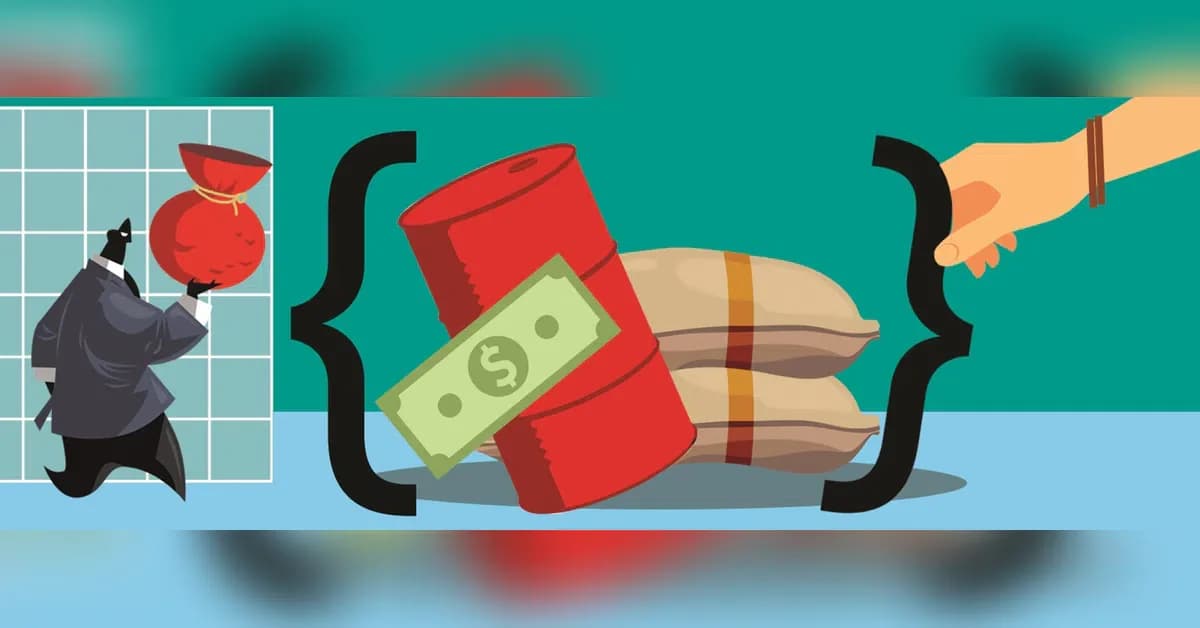
The analysis warns that India should expect more crises in the future, particularly as global uncertainty rises, emphasizing the critical need for fiscal space to respond effectively. The government faces constraints in increasing fuel prices and cutting capital expenditure due to rising fertiliser subsidies, while monetary policy remains constrained by rupee depreciation and inflation pressures. The author concludes that fiscal space should be the fourth 'F' that Finance Minister Nirmala Sitharaman should focus on in future, alongside the traditional three Fs of foreign exchange, fuel, and fertiliser. If India had created more fiscal space in the three good years following the end of the Covid crisis in 2022-23, it would have more options to deal with the current one. The current crisis demonstrates that without adequate fiscal space, India is badly unprepared with only limited options at its disposal.