The Supreme Court on Wednesday (May 27) upheld the Centre's decision to retrospectively levy 28% GST on the full face value of bets placed through real money gaming platforms. According to Bar and Bench, a two-judge Bench of Justice JB Pardiwala and Justice R Mahadevan held that the levy was constitutionally valid and did not violate the constitutional framework governing GST. The court confirmed that 'online gaming activities, including fantasy sports and other games played on digital platforms, involving staking upon uncertain outcomes, constitute betting and gambling for the purpose of GST framework'. The ruling comes after the Centre's August 2025 decision to ban online gaming and betting, with the new law called the Promotion and Regulation of Online Gaming Rules, 2026 coming into force on May 1. As per the latest judgment, the court stated that 'the levy of GST on the supply of actionable claims arising from betting and gambling is constitutionally valid and does not transgress Articles 366(12) and 366(12A) of the Constitution'. The court further observed that 'online gaming platforms cannot be treated as mere intermediaries, such activities amount to actionable claims under the GST regime' and that the amendments validating the levy were clarificatory in nature and would therefore operate retrospectively from 2017. The heart of the verdict lies in a single, far-reaching proposition that even skill-based games acquire the character of betting and gambling for GST purposes once money is staked on uncertain outcomes, effectively dismantling decades of jurisprudence that the gaming industry had relied on as its primary defence.
The Supreme Court's ruling has significant financial implications for the gaming industry, with the Centre's submissions revealing substantial tax demands. According to Business Standard, the cumulative tax demands against online gaming companies stand at around ₹91,684.81 crore for online gaming companies and ₹16,820.19 crore for casinos. With penalties and interest, the amount could potentially double. An industry source told Business Standard that while the cumulative GST demand on the sector exceeded ₹2 trillion, including penalties, no company in the industry had the capacity to meet such liabilities. The source added that 'companies will barely be able to meet even 20% of the total GST demand' and that companies would have to liquidate themselves and declare bankruptcy. The GST Council had in August 2023 amended the law to mandate 28% GST on the full face value of bets, not just on gross gaming revenue, with the controversy intensifying after the GST Council decided in 2023 to impose 28% GST on the full face value of online gaming, casinos and horse racing. The demands against the industry initially stood at around ₹1.12 lakh crore, with interest and penalties potentially pushing the total exposure to around ₹2.5 lakh crore. The Court clarified that pending show-cause notices, adjudication proceedings and demands against online gaming, fantasy sports and casino operators will now be decided in line with Wednesday's judgment, and vacated its earlier interim stay on GST proceedings.
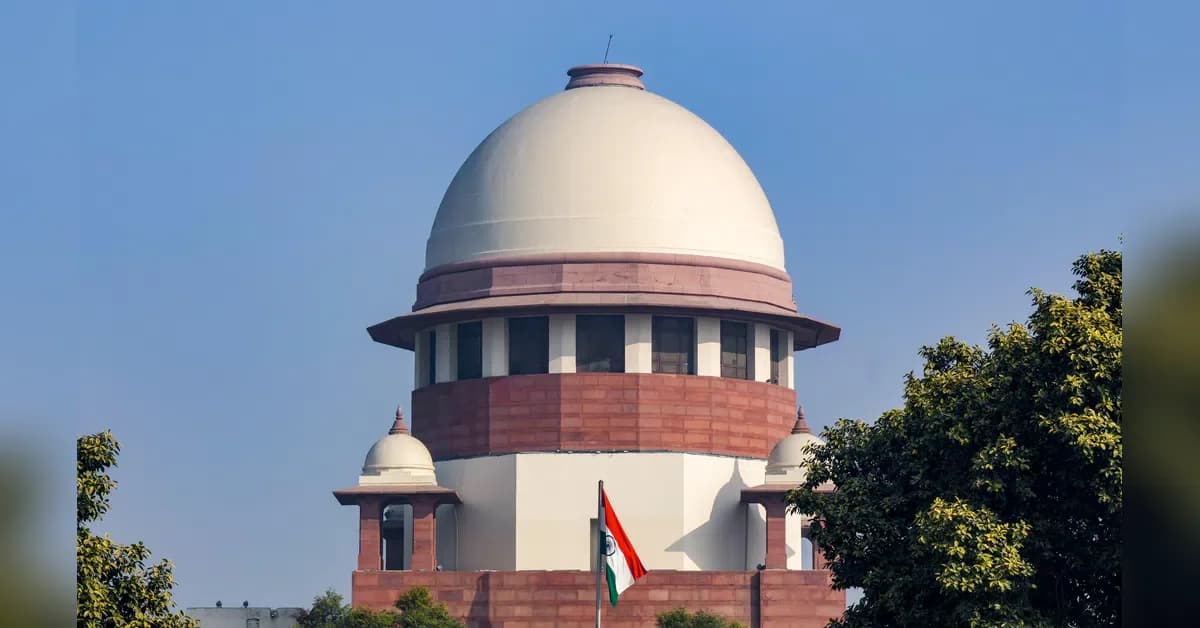
The apex court further held that once betting or wagering becomes part of a game, whether it is based on skill or chance no longer remains the central issue. As reported by Bar and Bench, the Supreme Court stated that 'even if such online games involve skill, states can impose a ban on them in case money is involved'. The court noted that putting money on uncertain outcomes raises concerns around addiction and repeated attempts to recover losses or gain more. Rejecting the contention that betting on games of skill falls beyond the legislative competence of states, the Bench held that states are still empowered to regulate or prohibit betting activities connected to such games, even if games involving skill may not independently amount to gambling. The court also accepted concerns raised by states on public health and public order, taking note of issues including addiction, financial losses and suicides associated with online real-money gaming. In the latest ruling, the court emphasized that 'the States had a duty to maintain public tranquility and public health, considering the growing problems of addiction and deaths due to financial losses suffered online'. The court also noted that the Tamil Nadu law was based on empirical data collected through a panel chaired by a former Madras High Court judge. The Court additionally upheld CGST rules that empowered the levy of GST on the full value of bets placed through online gaming platforms as well as casinos.
Tamil Nadu first introduced an ordinance in November 2020, which was later replaced by the Tamil Nadu Gaming and Police Laws (Amendment) Act, 2021. According to Bar and Bench, the law amended the Tamil Nadu Gaming Act, 1930 by expanding the meaning of 'gaming', introducing Section 3-A to prohibit wagering or betting in cyberspace, and changing the earlier protection for 'games of mere skill'. This meant that even games traditionally treated as skill-based, including rummy and poker, could attract penalties if played online with money involved. The state had defended the legislation by arguing that online gaming had led to addiction, financial losses and instances of suicide. Gaming companies challenged the law before the Madras High Court, arguing that courts had earlier recognised games such as rummy as games of skill and that such activities were protected under Article 19(1)(g). The Madras High Court had struck down the law in 2021 while allowing the state to introduce a fresh constitutionally valid framework, finding the amendments violative of the fundamental right to practice a profession, occupation or trade.
The Supreme Court's dual rulings have created substantial uncertainty for the online gaming sector, with experts warning of potential industry collapse. According to Business Standard, most online gaming companies in India have already either shut shop, scaled down operations, or pivoted to other sectors after the Centre's August 2025 decision to ban online gaming and betting. Vidushpat Singhania, managing partner at Krida Legal, said the top court's second ruling allowing states' right to legislate and ban online gaming creates substantial uncertainty for legitimate skill-gaming businesses. 'Particularly concerning for the industry is the court's observation that wagering money on games with uncertain outcomes may fall within the ambit of 'betting and gambling', irrespective of whether the underlying game is one of skill or chance', he said. Multiple executives told Business Standard that the Supreme Court's ruling was a major setback for the sector, especially for companies that had begun to pivot away from real-money games toward products such as micro-dramas and casual games. An industry source noted that 'the industry is gone. On a cumulative basis, companies will barely be able to meet even 20% of the total GST demand' and that companies would have to liquidate themselves and declare bankruptcy. The GST verdict is expected to inflict severe pain on listed gaming stocks once markets fully price in the liability. History provides a preview: when the GST Council first approved the 28% levy on the full face value in July 2023, shares of Delta Corp tumbled as much as 28% intraday, while Nazara Technologies tanked 14% before recovering some losses. The reversal of the interim stay now reopens the door to coercive tax proceedings, with Delta Corp facing a reported GST demand of around ₹33,500 crore on its casino operations alone.
In August 2021, the Madras High Court struck down the relevant portions of the amendment, holding that the broadened definition of gaming permeated the entire legislation and could not be severed. The Karnataka High Court invalidated the amendment in February 2022, observing that it was substantially similar to the Tamil Nadu law and holding that merely shifting a game of skill from a physical to an online format did not alter its essential character. Both states subsequently moved the Supreme Court challenging the High Court rulings. The central issue before the apex court was whether states possess the legislative authority to enact such prohibitory laws governing online gaming involving stakes. The legal challenge arose from amendments brought by Tamil Nadu and Karnataka to curb online gaming involving stakes, with both states subsequently approaching the Supreme Court, leading to Wednesday's ruling affirming their legislative powers. The Court also set aside the Karnataka High Court judgment that had ruled in favour of Gameskraft, and restored the September 2022 show-cause notice demanding around ₹21,000 crore in GST. The government had told the Court that cumulative tax demands through show-cause notices stood at approximately ₹91,684 crore for online gaming companies alone, rising to ₹1,08,505 crore when casinos are included.