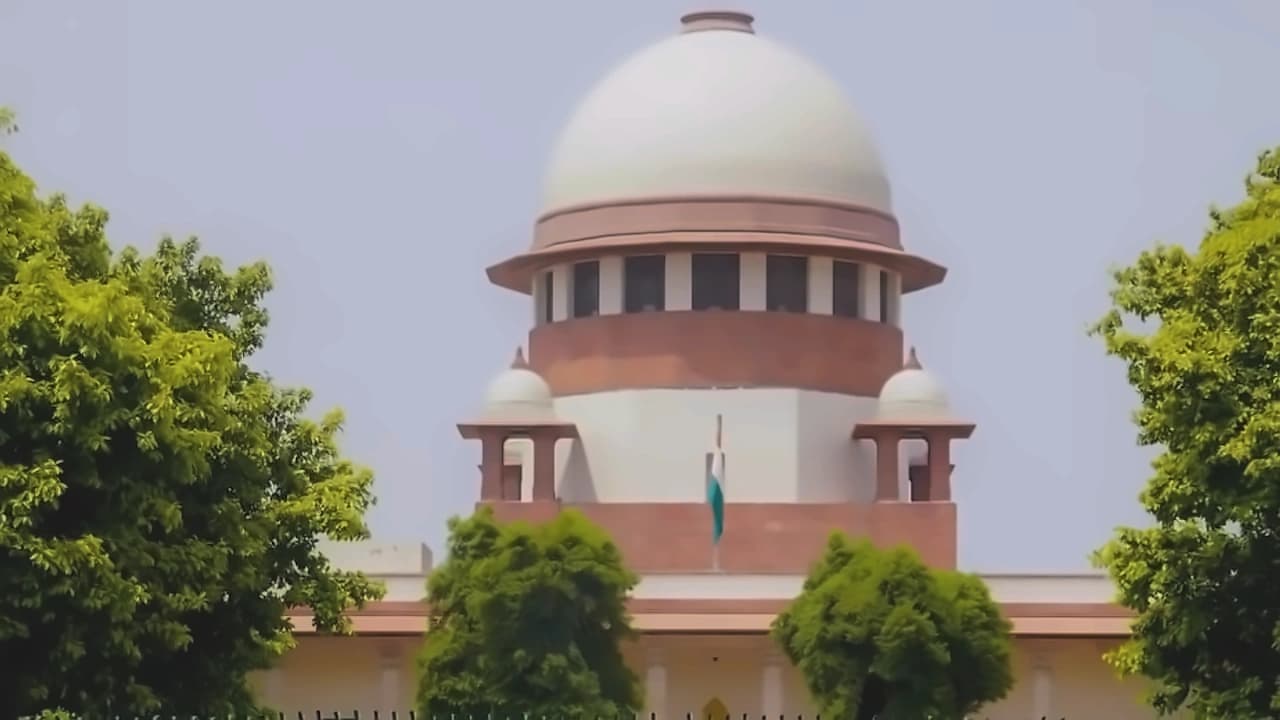
The Supreme Court delivered a landmark ruling on Wednesday, quashing the Centre's 2021 Office Memorandum that created a mechanism for granting retrospective environmental clearances to projects that had commenced work without obtaining prior environmental approval. According to reports from NDTV, PTI News, Rediff Moneynews, and Business Standard, a bench comprising Chief Justice Surya Kant, Justice Joymalya Bagchi, and Justice Vipul M Pancholi issued a unanimous verdict on the matter. As reported by Business Standard, the Court held that the 2021 OM is an administrative order and envisages a perpetual regime for the grant of ECs to projects undertaken without prior EC, substantially altering the nature of the enquiry and criteria for grant of EC under the 2006 Notification. The Court further observed that the 2021 OM supplants an earlier delegated legislation through an administrative instruction, which is impermissible in law, and that being a perpetual amnesty scheme applicable to all permissible projects, it fails to lay down an intelligible differentia for the selection of projects for the grant of post-facto EC having a rational nexus to supervening public interest, and is thereby ultra vires the object of the 1986 Act. The Court also noted that the OM does not satisfy the test of proportionality and reasonableness and is violative of Article 14 (right to equality) and 21 (right to life) of the Constitution, thus providing constitutional justification for the quashing.
Despite quashing the memorandum, the Supreme Court provided some leeway to the government by holding that the judgment will apply prospectively and projects granted green nod earlier will remain undisturbed. As reported by NDTV, PTI News, Rediff Moneynews, and Business Standard, the bench reaffirmed that prior environmental clearances are the governing rule under the environmental framework and projects cannot ordinarily commence operations first and seek approval later. According to Business Standard, the Court clarified that all environmental clearances granted under the 2017 notification or the 2021 OM shall remain valid unless individually assailed in accordance with law. The Court utilized Article 142 of the Constitution to prevent an immediate economic shock while decisively closing the legal loophole for all future developers. The Court clarified that its directions shall not constrain the powers of this Court to grant ex-post-facto EC under Article 142 to do complete justice in appropriate cases, affirming that the prior Environmental Clearance regime under the 2006 EIA Notification is mandatory and does not accommodate post-facto clearances without formal statutory amendments. The Court also noted that the decriminalisation of regulatory contraventions under the Jan Vishwas Act, 2023, reinforces the Union's power under Section 3 of the Environment (Protection) Act, 1986, to formulate conditional amnesty schemes for non-compliant projects essential to public interest. The bench made clear that no further applications for grant of ECs under the 2017 notification and the 2021 OM shall be entertained, and the Central government is also restrained from passing administrative orders in future to grant post-facto ECs to projects which commenced in violation of the 2006 notification, save and except by way of a valid notification in exercise of powers under Section 3 of the Environment (Protection) Act, 1986.
The bench held that the Centre may, in exceptional circumstances and in the larger public interest, introduce a limited, time-bound amnesty scheme through a valid statutory notification. According to NDTV, PTI News, Rediff Moneynews, and Business Standard, such a mechanism cannot be created through an executive office memorandum or be allowed to operate as a permanent route for regularising violations. As reported by Business Standard, if the government wishes to create an amnesty scheme, it must do so through a valid, time-bound statutory notification issued under Section 3 of the Environment (Protection) Act, 1986, ensuring that any future mechanisms are subjected to public scrutiny and strict temporal limits. The Court noted that the decriminalisation of regulatory contraventions under the Jan Vishwas Act, 2023, reinforces the Union's power under Section 3 of the Environment (Protection) Act, 1986, to formulate conditional amnesty schemes for non-compliant projects essential to public interest. The Court also observed that the top court can grant post-facto environmental clearances to projects if it deems fit.
On April 1, 2026, the top court had reserved its verdict on a batch of pleas, including review petitions, related to the granting of retrospective environmental clearances to projects found violating green norms. As reported by NDTV, PTI News, Rediff Moneynews, and Business Standard, the case involved as many as 49 petitions after hearing the matter for six days, with the pleas including review petitions related to the granting of retrospective ECs to projects found violating environmental norms. The ruling came on a review petition filed by environmental group Vanashakti against the apex court's November 2025 decision that had revived retrospective environmental clearances. The verdict came after the court had initially barred the Centre from granting ex post facto clearances to projects that began operations without mandatory environmental approvals, but was later stayed to prevent the potential waste of thousands of crores in public investment. On November 18, 2025, a three-judge bench headed by then Chief Justice B R Gavai had reversed its own verdict by a majority of 2:1, paving the way for retrospective environmental clearance to projects found violating environmental norms, stating that otherwise "thousands of crores of rupees would go in waste". The Apex Court had held that numerous vital public projects constructed with nearly ₹20,000 crore of the public exchequer money would be demolished if the May 16, 2025, verdict, which barred the Centre from granting retrospective environmental clearance to projects, was not recalled. While dissenting over the recall of the judgment dated May 16, 2025, passed in the case of Vanashakti v. Union of India (2025 INSC 718), Justice Ujjal Bhuyan remarked that the Supreme Court should not backtrack on the sound environmental jurisprudence. The verdict came after the court had struck down both the 2017 notification and the 2021 OM in May 2025, but that ruling was partly recalled on a review petition filed by the Confederation of Real Estate Developers' Associations of India (Credai).