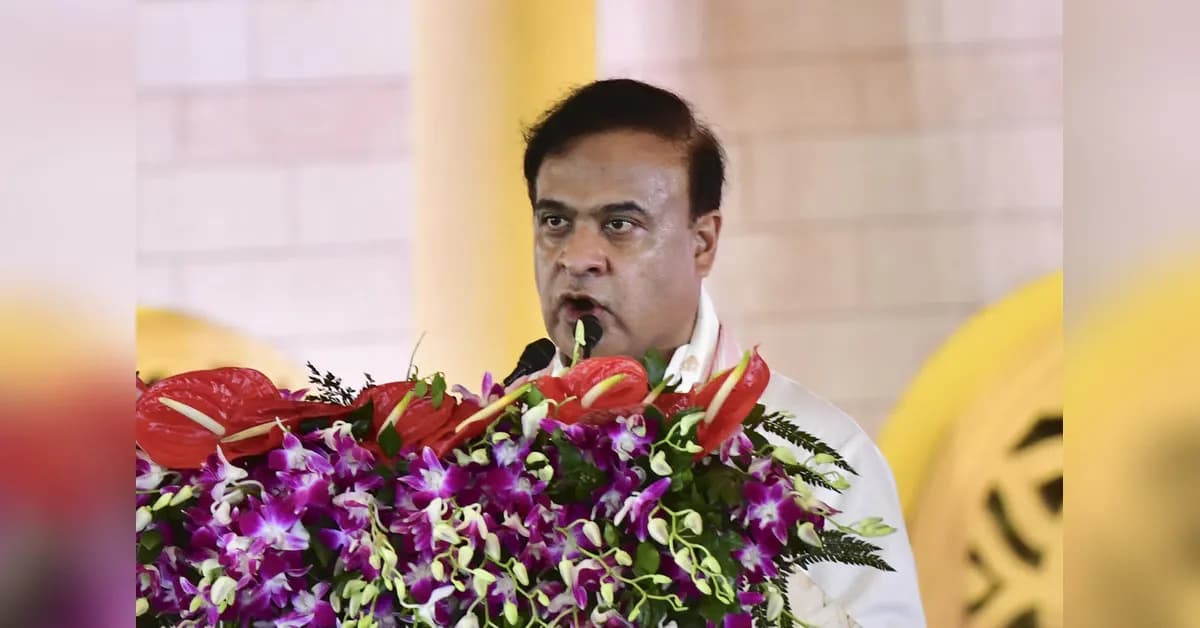
Former Union Minister P. Chidambaram delivered a strong rebuke to the 'One Nation, One Election' proposal during his appearance before the Joint Committee of Parliament (JPC) on Monday, August 24, 2026. According to sources, Chidambaram described the initiative as 'monstrous', 'mindless' and 'unconstitutional', arguing that the proposed legislation violates the Constitution's basic structure. The senior Congress leader contended that curtailing the tenure of a legislature elected for a fixed five-year term would directly undermine constitutional principles and parliamentary democracy. Chidambaram also stated that his conscience did not permit him to support the bills and contended that the government lacked the required two-thirds majority needed for the constitutional amendment to be passed. The committee recorded his concerns and invited specific suggestions for improving the proposed legislation.
The Constitution (129th Amendment) Bill, 2024, and the Union Territories (Amendment) Bill, 2024, which aim to synchronise Lok Sabha and state assembly polls, were sent to the 31-member joint committee of Parliament headed by PP Chaudhary, a BJP MP from Rajasthan. According to reports from PTI, Chaudhary stated that if the constitutional amendment is approved in Parliament by 2028, the rollout of 'One Nation, One Election' can begin that same year. The bills were introduced in Lok Sabha in December 2024 and were referred to the joint committee following the Opposition's demand for broader scrutiny. As per PTI, Chaudhary emphasized that two-thirds of members of Parliament have to support the bills for their passage, noting that another government-sponsored Constitution amendment bill was defeated in the Lok Sabha in April. The decision to hold assembly elections alongside the Lok Sabha elections in 2029 will depend on the willingness of the state governments, as reported by Bhaskar English.
The committee held a three-part meeting on Monday, with the first part featuring Chidambaram, second part with Padma awardees, and third with two independent think-tanks. A group of around 10 Padma awardees, including Tarlochan Singh, Navin Khanna, Meenakshi Jain and Niru Kumar, appeared before the panel. While some supported simultaneous elections, others cautioned that the move could create 'chaos' in the country. Ms. Jain argued that repeated enforcement of the Model Code of Conduct disrupted development projects and said synchronised elections would allow uninterrupted implementation of regional development programmes. Dr. Saumitra Rawat pointed to the strain recurrent polls placed on the healthcare system through repeated diversion of medical and administrative personnel. The committee also heard submissions from Nation First Policy Research and the Vidhi Centre for Legal Policy, both of which suggested that the law in its present form has many infirmities and called for clearly defined and judicially reviewable grounds for postponing Assembly elections.
According to PTI reports, Chaudhary highlighted that 30% of government school time is currently used in poll-related work every year. He emphasized that if simultaneous elections are held, everyone will benefit from it, with the biggest beneficiary being the country's youth. The committee has been mandated by Parliament to examine the legislations and fix shortcomings, ensuring that simultaneous polls are held successfully. The bills were formulated after a high-level panel headed by former president Ram Nath Kovind recommended holding Lok Sabha, state assembly and local body elections simultaneously in a phased manner, with Union Home Minister Amit Shah also being a member. Parliament has tasked the committee with examining both Constitution amendment bills and making recommendations.
As reported by PTI, elections to the Lok Sabha and all State Legislative Assemblies were conducted simultaneously from 1951 to 1967. The first general elections to the Lok Sabha and State Assemblies were held together in 1951-52, a practice that continued for three subsequent general elections in 1957, 1962, and 1967. However, this cycle was disrupted in 1968 and 1969 due to premature dissolution of some state legislative assemblies. Since then, only a few Lok Sabha terms have lasted the full five years, such as the Eighth, Tenth, Fourteenth, and Fifteenth, while others were dissolved early. State Assemblies have faced similar disruptions over the years, with premature dissolutions and term extensions becoming a recurring challenge that has firmly disrupted the cycle of simultaneous elections.