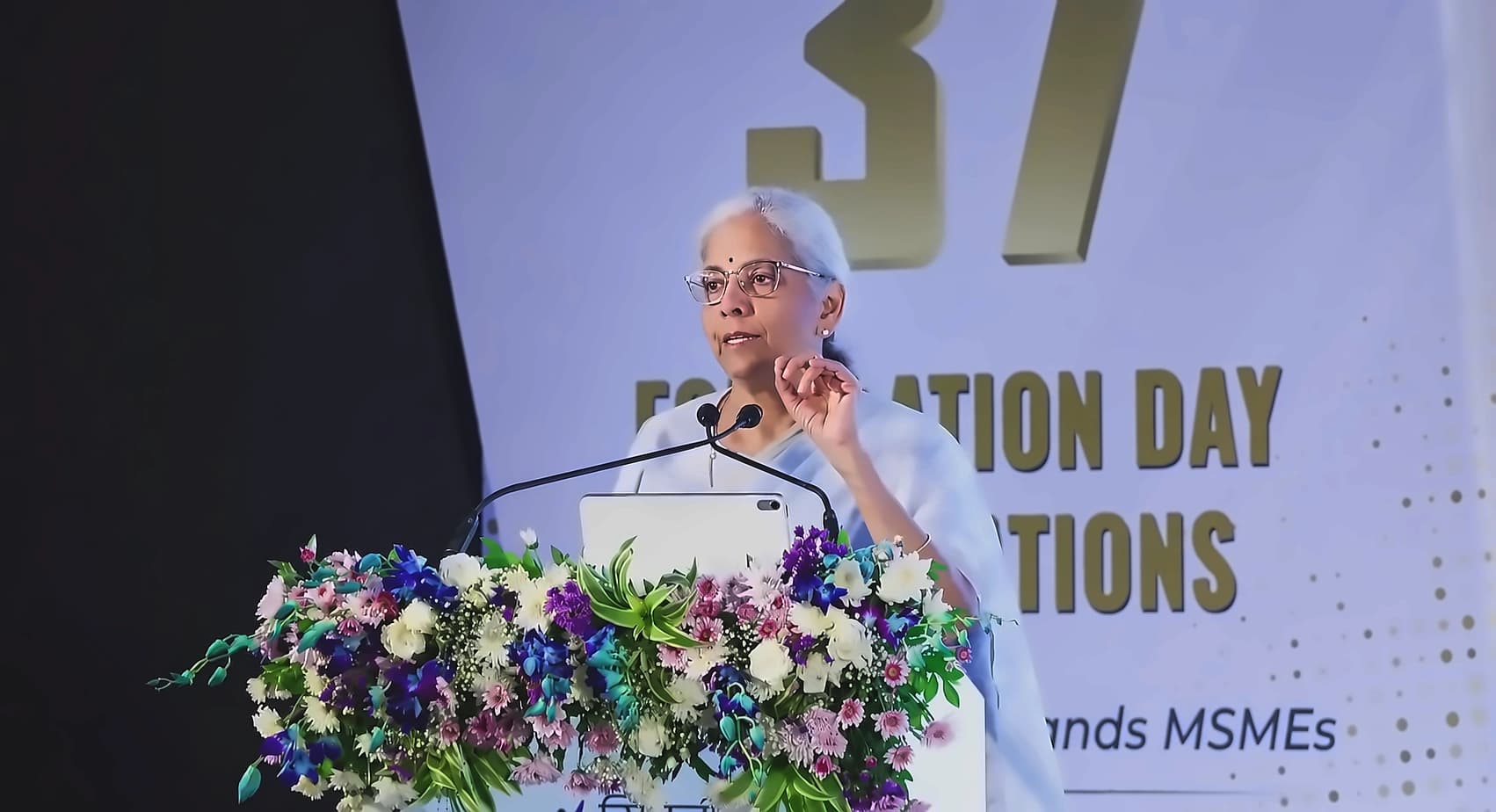
Union Finance Minister Nirmala Sitharaman announced on Monday that the government is willing to listen to concerns raised by stock market investors regarding the tax system, including issues related to Long-Term Capital Gains (LTCG) and Short-Term Capital Gains (STCG) taxation. Speaking to reporters on the sidelines of the TEXPROCIL Export Awards event, Sitharaman said the government remains open to receiving suggestions and feedback from investors on the matter. According to reports from The Economic Times, she stated that "on this specific issue, and on any issue, we are always ready and willing to listen to the people. We will certainly take their inputs." Her remarks come amid growing discussions among market participants over the impact of capital gains taxation on equity market participation and investor sentiment. The comments come at a time when domestic equity markets have been witnessing increased volatility due to global geopolitical tensions, crude oil price movements, foreign investor flows and concerns related to inflation and interest rates. Sitharaman's statement is being viewed by investors as a signal that the government is willing to engage with stakeholders and consider their concerns regarding market-related taxation issues.
LTCG and STCG are taxes imposed on profits earned from selling shares and other financial assets. Short-Term Capital Gains (STCG) tax is charged when shares are sold within a shorter holding period, while Long-Term Capital Gains (LTCG) tax applies when investments are held for a longer duration before being sold. As reported by The Economic Times, Sitharaman's remarks come amid growing discussions among market participants over the impact of capital gains taxation on equity market participation and investor sentiment. However, the Finance Minister did not announce any formal review or change in the taxation structure during her statement, with her comments only indicating that the government is open to hearing feedback and suggestions from stakeholders regarding the current tax framework. Foreign portfolio investors have been fleeing Indian markets, driven by higher capital gains taxes, a weaker rupee, and shifting global allocations. FPIs were net sellers of securities worth a record ₹1.8 trillion in FY26, the highest in 34 years and up from ₹1.3 trillion in FY25. The highest outflows were seen in March 2026 at around ₹1.18 trillion.
The Indian rupee has fallen by 11% in FY26 and by over 5% since the US-Iran war began on 28 February this year, hitting a record low of 96.90 against the US dollar on 20 May. According to The Economic Times, Sitharaman warned that the ongoing West Asia conflict could drive up fuel prices and hurt India's exports in an uncertain global environment. "The West Asia crisis not only is a diplomatic or a geopolitical issue, but for businesses and common people it can mean higher fuel cost, delayed cargo, costlier shipping, shortage of inputs, pressure on working capital and uncertainty in export orders," she said. Describing high international crude prices as "ever changing" and "seriously dynamic", Sitharaman said these price fluctuations are also leading to "unimaginable increase" in international fertiliser prices and high gold prices, creating challenges on India's external position. Prime Minister Narendra Modi's call to conserve foreign exchange should be viewed in the context of three Fs--fuel, fertiliser and foreign exchange, she added.
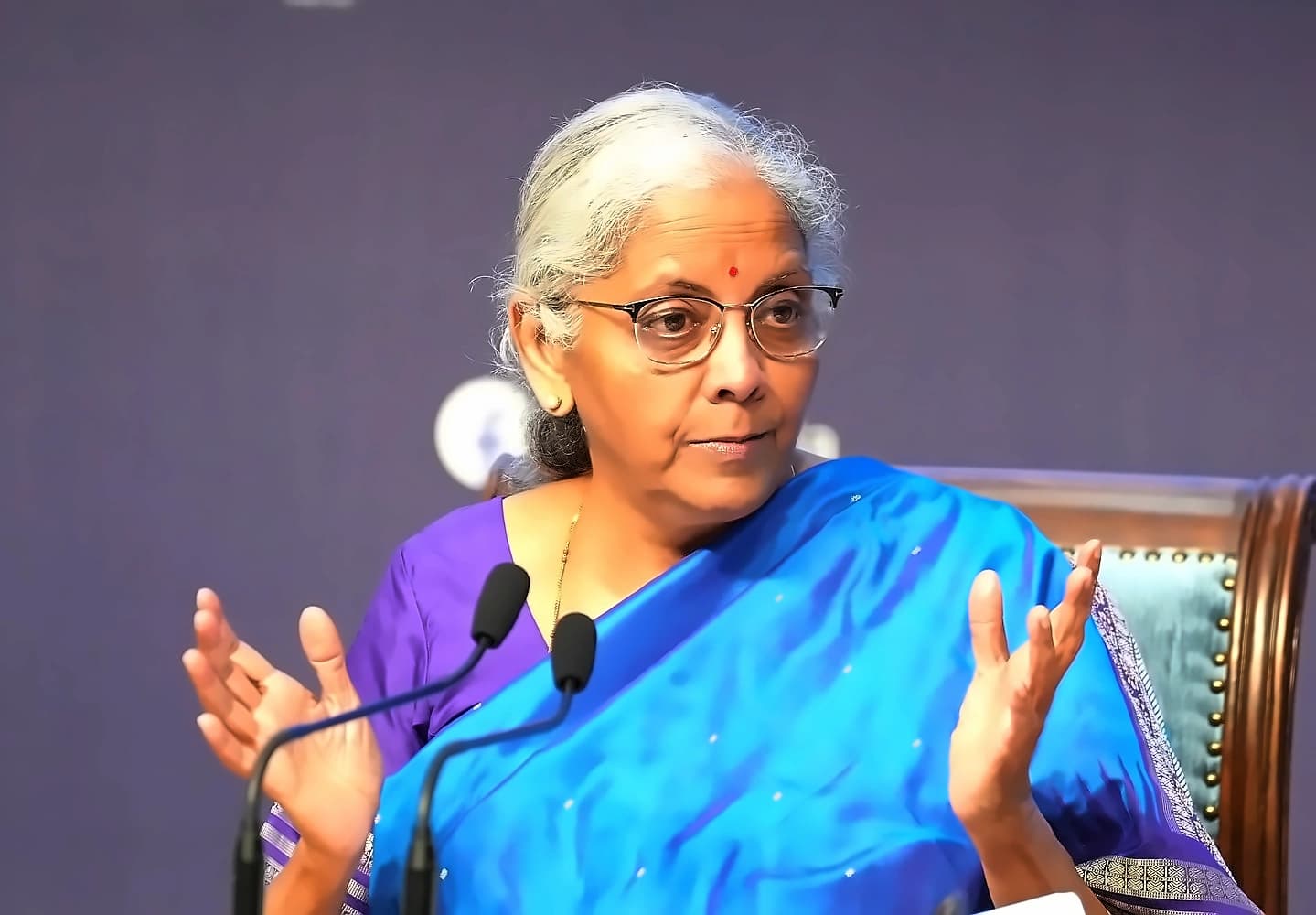
While addressing questions on the economy and fuel prices, Sitharaman defended the recent increase in petrol and diesel prices, saying the revisions were being carried out by oil marketing companies in response to soaring global crude prices. According to The Economic Times, she clarified that "the increases now are coming from oil marketing companies (OMCs) because they are the ones procuring (raw material crude oil) and selling (finished product - fuel)." The government has since 15 May hiked the price of retail fuels four times, resulting in a cumulative increase of around ₹7.5 per litre in the price of petrol and diesel. The Finance Minister also revealed that the central government had previously absorbed massive shocks--resulting in a ₹1 lakh crore fiscal hit from reducing central taxes--to insulate consumers for over two and a half months. Sitharaman emphasized that price hikes are purely operational and driven by global procurement realities rather than sudden government policy changes.
Sitharaman is optimistic that the Economic Stabilisation Fund (ESF) of ₹1 trillion, announced in the Union Budget for FY27, will help cushion some of the impact of the current crisis. "This was an emergency cushion created before the full impact of the West Asia situation, so that India could respond quickly to global shocks, supply chain disruptions and also sudden stress in any sector," she said. The government has since 15 May hiked the price of retail fuels four times, resulting in a cumulative increase of around ₹7.5 per litre in the price of petrol and diesel. Sitharaman also called upon SIDBI to expand cash flow-based lending and digital lending partnerships, especially for small and first-time borrowers, and to build strong green credit products to finance solar rooftops, energy-efficient machinery, green certification and waste-to-wealth units. "SIDBI's role must now expand from being only a lender to becoming a market maker and risk-sharing partner for India's MSME and startup ecosystem," she said.