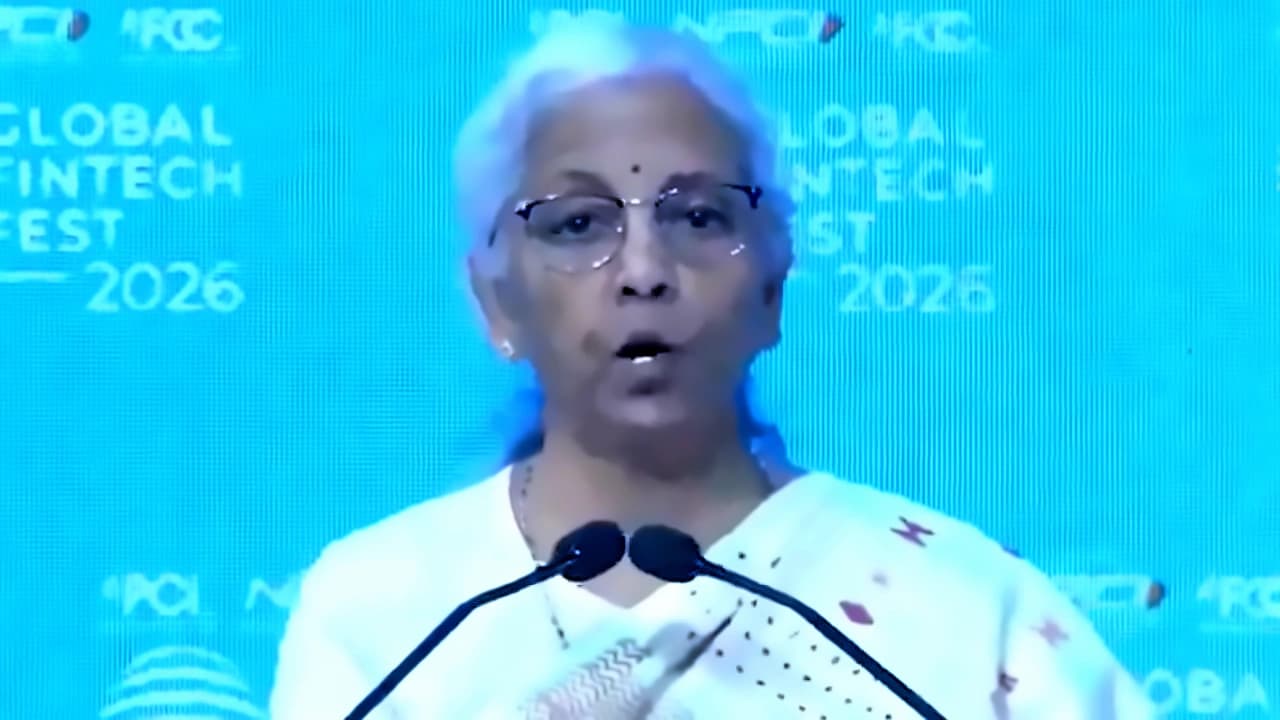
Union Finance Minister Nirmala Sitharaman called for independent research on tax policy to become part of public discourse during the Eighth International Tax Conference on 'New Age Taxation' held on Wednesday. According to reports from Business Standard, ANI, and Zee News, Sitharaman emphasized that tax professionals must look beyond sectoral interests and put the national interest first. She stated that 'A mature tax policy debate must go beyond sectoral considerations' and urged tax professionals to 'rise above sectoral consideration and put nation first'. Speaking at the International Tax Research and Analysis Foundation's (ITRAF) 8th International Tax Conference in Bengaluru, Sitharaman called on ITRAF to move from quiet commentary to visible, independent research that could contribute to public policy discussions. She referred to institutions such as the UK's Institute for Fiscal Studies and the Netherlands-based IBFD as examples of research bodies that examine policy choices in depth. Independent tax research, she said, should become part of public discourse and help inform the choices shaping India's economic future. As per Zee News, Sitharaman urged ITRAF to transition from quiet commentary to visible independent research, stating 'My first submission to ITRAF is a simple one. You have so far contributed quietly and I would now urge you to contribute visibly'. She noted that the commentary produced by ITRAF was of high quality and already reached professionals in the field, but stressed that its work should also have a greater presence in policy discussions and among the public at large.
Finance Minister Nirmala Sitharaman challenged tax professionals and industry bodies to move beyond traditional demands for exemptions and rate cuts, asking them to identify provisions that no longer serve the tax system even when their own sectors benefit from them. As reported by Business Standard, ANI, and Zee News, Sitharaman said India was better placed economically despite challenges around the world and called for a more mature, evidence-based tax policy debate focused on the national interest. She urged tax professionals, industry representatives and policy researchers to submit quantified alternatives that explain the impact of proposed changes on revenue, administration, compliance costs and other taxpayers, rather than making representations based solely on sectoral interests. The Finance Minister said such research and debate would be important to India's journey towards Viksit Bharat 2047. She emphasized that professionals should identify potential unintended consequences of proposed changes and place the broader national interest ahead of sectoral considerations. According to Zee News, Sitharaman observed that institutional representations routinely narrow down to requests for rate reductions, exemptions, or concessions. She urged bodies to submit qualified, impact-assessed cases for reform that rise above sectoral interests to support the journey toward Viksit Bharat 2047. 'So, I wish to hear a submission that says, 'here is a provision that no longer serves the tax system and ought to be removed even though we presently benefit from it', Sitharaman said. She noted that if a provision is said to impose an excessive compliance burden, professionals should tell how many taxpayers it affects, how much time or cost it imposes, and what an alternative would mean for revenue. 'If a change is proposed, show us not only who gains from it but also its consequences for the tax base itself, administration and other taxpayers', she added.
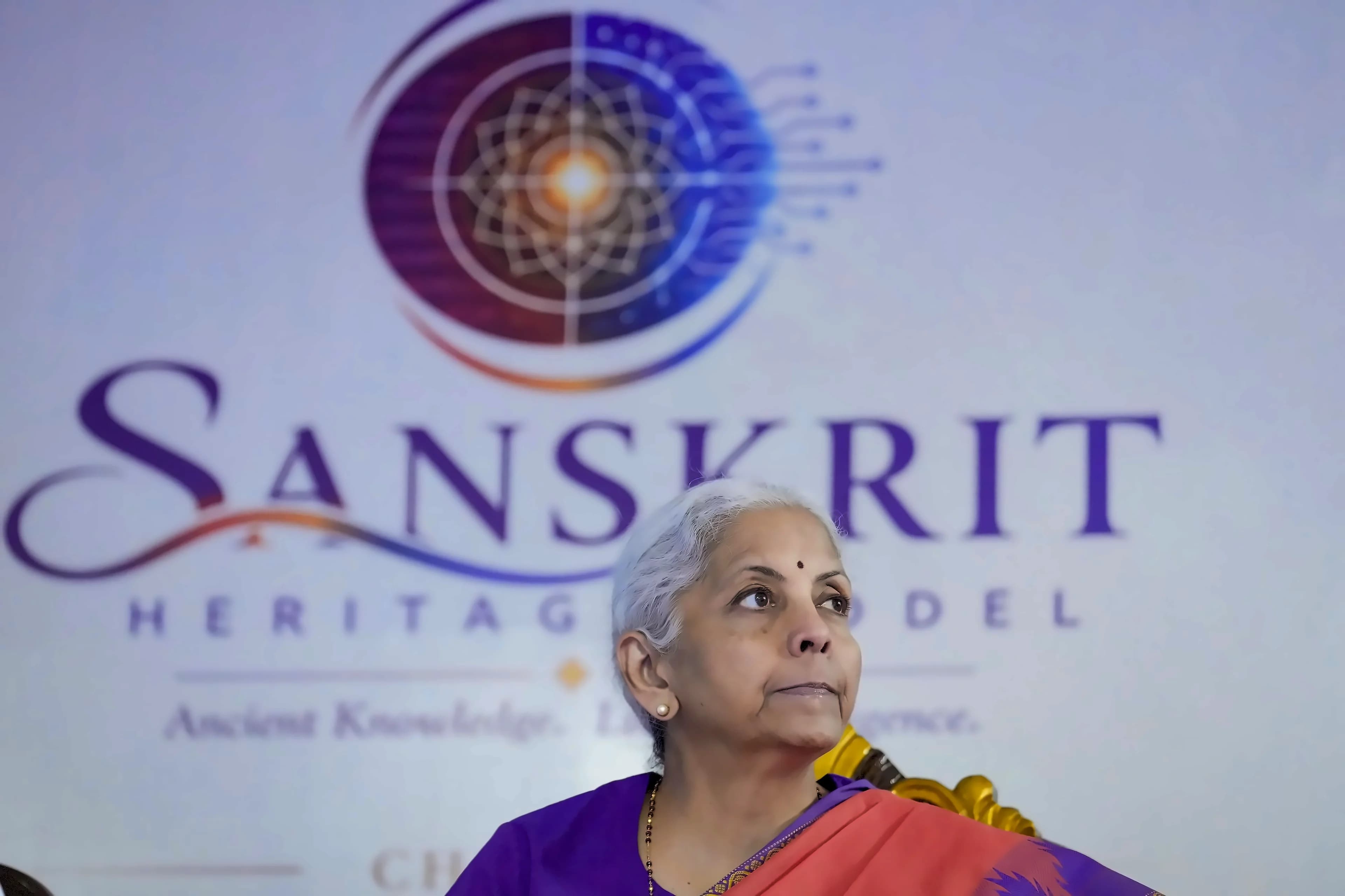
Finance Minister Nirmala Sitharaman announced that the GST Council's next meeting on October 7 will focus on process reforms under what she termed 'GST 2.0', including e-invoicing and input tax credit rules. According to Business Standard, Sitharaman said the previous GST Council meeting had focused on rate rationalisation, while process reforms had been deferred to the next meeting. She noted that 'Not yet at 3.0. In 2 itself we are doing it' when asked about extending e-invoicing to all taxpayers, including composition scheme dealers, and rationalising input tax credit provisions. Several issues raised at the conference will be considered as part of the process-reform agenda, with Sitharaman inviting industry to submit specific representations on anomalies in the GST framework that the government may not have addressed. She emphasized that 'Consultation must mean more than giving everyone an opportunity to place a representation on record. It should be a genuine exercise of evidence, experience, and ideas'. Sitharaman also urged tax professionals, industry bodies and researchers to move beyond seeking lower tax rates, exemptions and concessions and contribute more actively to evidence-based tax policy by identifying provisions that may no longer serve the tax system.
Highlighting ITRAF's credentials and achievements, Finance Minister Nirmala Sitharaman praised the organisation's composition and international engagement during her address. According to Zee News, Sitharaman said the organisation includes former Chief Financial Officers and tax heads of some of India's largest technology companies, Senior Advocates, partners of leading professional firms and academicians who have taught generations of tax practitioners. She described these members as 'stalwarts of the field' who have contributed to commentary on international taxation 'quietly and consistently' for a decade. The minister further pointed to ITRAF's substantial body of published work, noting that the foundation has brought out seven volumes, with forewords contributed by some of the most respected names in international taxation globally. She highlighted ITRAF's international engagement, noting that its conferences have been held in collaboration with institutions in The Hague, the London School of Economics and the Chartered Institute of Taxation in London. As per Zee News, Sitharaman emphasized that ITRAF's expertise should reach policymakers as well as the wider public, stating that 'the commentary you produce is of high quality and it reaches the profession, but it should also reach the policy processes and it should reach the public at large'. Also Read Sitharaman also praised the contribution of tax policy expert Parthasarathi Shome, who chairs ITRAF, recalling her interaction with him after she became Minister of State for Finance in 2014. She said she had valued a report submitted to the government by Shome and had gone back to it on several occasions. Drawing comparisons with institutions abroad, Sitharaman referred to the Institute for Fiscal Studies in the UK, the International Bureau of Fiscal Documentation in Amsterdam and the Oxford Centre for Business Taxation, saying such institutions had contributed to tax policy debates through independent research and analysis.
On digital economy taxation, Finance Minister Nirmala Sitharaman cautioned against taking decisions without examining their implications for India, other jurisdictions and future investment. According to Business Standard, Sitharaman said issues involving cloud services, digital products and the consumption of digital services raised difficult questions about where the tax should be imposed and on whom. 'The complexity has to be coolly studied, the implications for India and implications for outside, coolly studied, and above all, the implication that it can have in terms of further investments coming into India, coolly studied as well', she said. She also recounted India's experience with the global two-pillar tax negotiations, noting that India had withdrawn two taxes on digital companies during the negotiations, partly to build confidence in the emerging global agreement. 'We had hoped that the two-pillar taxation would give us some solution. It is waiting. It has not come to a conclusion either way', she said. Sitharaman cautioned against viewing the issue simply as a question of whether India was losing tax revenue, saying the taxation of digital businesses was part of a broader global negotiation. On cryptocurrency, Sitharaman said the issue remained under discussion among stakeholders in India and with other countries, noting that India currently taxes such transactions at source, with the tax being reconciled with the final tax liability. She also highlighted the government's position on the Supreme Court's ruling in the Tiger Global case, noting that a Central Board of Direct Taxes (CBDT) notification issued on March 31 had clarified the government's position on investments coming from treaty jurisdictions.
Looking ahead, Finance Minister Nirmala Sitharaman outlined the evolving landscape of tax policy debates that will increasingly address complex issues of the digital economy. According to Business Standard, she said the tax policy debate would increasingly have to address issues such as significant economic presence, virtual permanent establishments, the taxation of artificial intelligence and robotics, the gig economy, global mobility, virtual digital assets, global capability centres and the treatment of goods and services in digital transactions. She noted that Bengaluru was particularly relevant to these debates because of its concentration of technology companies and global capability centres. Sitharaman also addressed the government's approach to foreign investment, noting that the government had progressively widened foreign direct investment (FDI) limits since 2014, with most investments now coming through the automatic route, except in areas involving security considerations. She highlighted that global investors were looking to diversify supply chains under the 'China plus one' strategy and that India's macroeconomic fundamentals remained attractive to investors. The minister also stressed that the government's digital payment infrastructure had expanded significantly, but adoption remained uneven, with small and high-street shops continuing to prefer cash payments despite wider availability of digital payment infrastructure.